
Articles
| Name | Author | |
|---|---|---|
| CASE STUDY: Launching an electronic logbook at easyJet | Philip Hyde, Implementation Project Manager, easyJet | View article |
| CASE STUDY: A change for the better at World2Fly | Alvaro Coromina Sanz, IT and Innovation Director, World2Fly | View article |
| CASE STUDY: Digitalizing Scheduled Maintenance: WestJet’s Production Control success story | James Homeniuk, Manager eMRO Platform, WestJet | View article |
| CASE STUDY: from data silos to insight | Andres Kjerulf, Director of Airworthiness, Texel Air | View article |
| CASE STUDY: From prediction to action at KLM Cityhopper | Robin Duteweerd, Fleet Manager, KLM Cityhopper | View article |
CASE STUDY: Digitalizing Scheduled Maintenance: WestJet’s Production Control success story
Author: James Homeniuk, Manager eMRO Platform, WestJet
Subscribe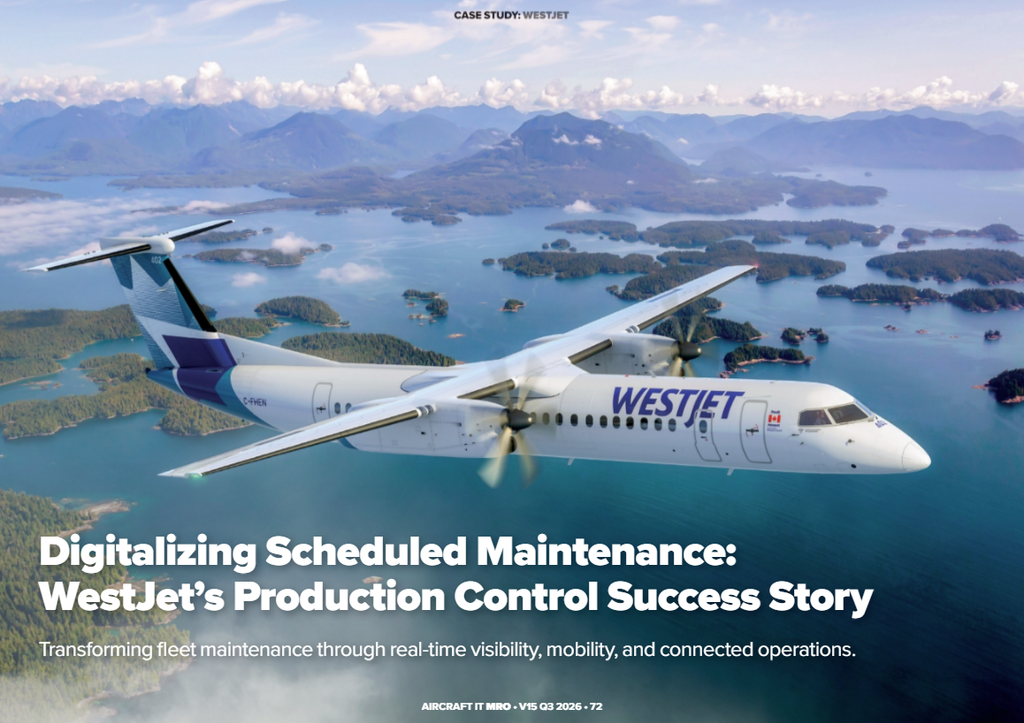
Transforming fleet maintenance through real-time visibility, mobility, and connected operations.
This case study explores WestJet’s journey to transform hangar maintenance production control from a traditional paper-based process to a fully mobile, paperless operating model. While the transition itself is the focus of this article, it is helpful to first provide some context about our airline, the scale of our operation, and the unique complexities involved in maintaining a modern and diverse fleet.
WestJet
For many years, WestJet was known as a relatively small Canadian carrier. Today, however, the airline operates a fleet of approximately 180–185 aircraft (Figure 1). This growth has brought operational complexity, particularly within aircraft maintenance, where efficient coordination, visibility, and control are essential to keeping the fleet compliant and available for service.
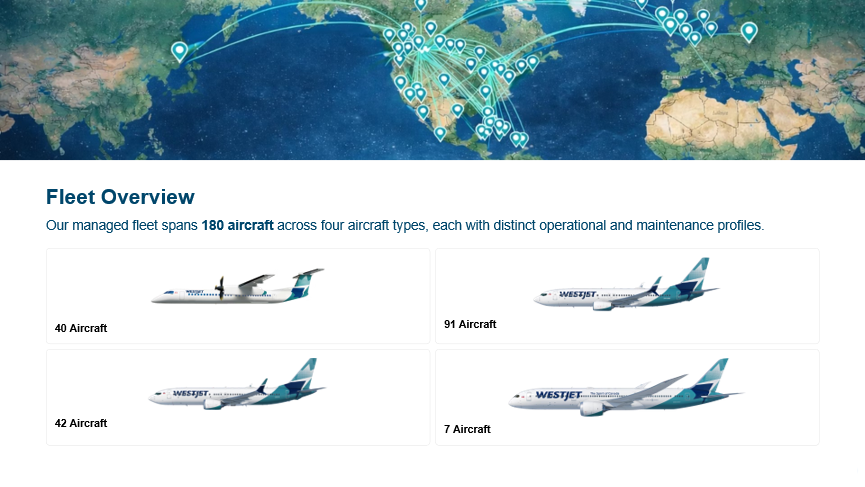
Figure 1
The majority of WestJet’s fleet comprises Boeing narrowbody and widebody aircraft. As part of the airline’s ongoing growth strategy, we are continuing to expand both segments, adding Boeing 737-8 MAX and future 737 MAX 10 aircraft to the narrowbody fleet, while growing our long-haul capability with additional Boeing 787 Dreamliners.
WestJet has been a long-standing Trax customer and, in conjunction with our migration to the Trax cloud platform, we successfully transitioned to eMRO in 2024.
As our paperless maintenance strategy matured, we began exploring new opportunities to streamline processes and improve operational efficiency across the organization. This digital-first approach encouraged us to rethink how we manage maintenance activities and accelerate the adoption of applications that further strengthen our technology ecosystem.
THE WESTJET CHALLENGE
When we reviewed our maintenance platform, we also looked closely at where the airline was heading. With operations across Asia, Europe, North America, the Caribbean, and Mexico, we needed to understand the commercial growth strategy and the demands it would place on Technical Operations. At the same time, we examined how we perform scheduled maintenance within our own facilities. Third-party MROs have always been a key part of our heavy maintenance strategy and will continue to play an important role. However, as the airline grew, we needed to determine how our internal MRO capabilities could evolve to support that growth. This became a significant challenge, one that emerged with urgency in the second quarter of 2025.
As our paperless transformation progressed, we realized that the needs of the business had changed. Some of the applications we initially adopted were well suited to a maintenance model focused primarily online maintenance operations, which remains an important part of our strategy today. However, we also needed a solution that could manage scheduled maintenance activity, coordinate teams, and provide visibility over multi-day checks and more complex work packages. As these requirements grew, the limitations became clear (Figure 2).
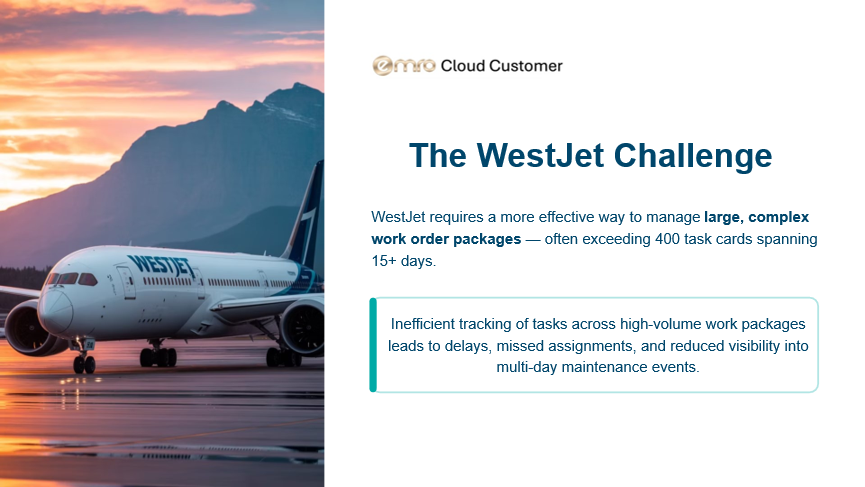
Figure 2
We gathered feedback from across the operation to better understand how we could manage increasingly high task card volumes, often exceeding 400 cards on a single maintenance visit. Having already brought Boeing 787 Phase 1 checks in-house, we were familiar with the level of planning, coordination, and visibility required to manage work packages of that scale. At the same time, we were evaluating the possibility of performing Boeing 737 MAX 8 C1 checks internally. Our target was to complete these checks within a 15-day window, matching the performance expectations we set with our external MRO partners.
As we assessed these opportunities, we also identified growing pressure on our existing line maintenance processes. Input from maintenance leads and frontline teams proved particularly valuable, highlighting operational challenges that were not always visible through the systems and reporting tools available to us. Their feedback helped us better understand where gaps existed and what capabilities would be needed to support more complex scheduled maintenance activity in the future.
OUR CURRENT STATE
WestJet Line Control has been a highly effective tool for our operation, and we remain very satisfied with its performance. However, as our maintenance strategy evolved, we identified several areas that required a different approach. The first was the growing volume of work orders. As maintenance events became larger and more complex, the sheer number of task cards created a more cluttered environment, making it increasingly difficult to manage and track work efficiently within the application. The challenge was finding a way to maintain visibility and control while handling significantly larger work packages.
The second challenge involved the maintenance execution timeline itself (Figure 3). Multi-day scheduled checks operate within defined time windows, requiring careful coordination of resources, priorities, and task completion. As we expanded the scope of work performed in-house, we needed a solution that would provide better oversight of progress and help ensure critical activities remained on schedule throughout the maintenance event.
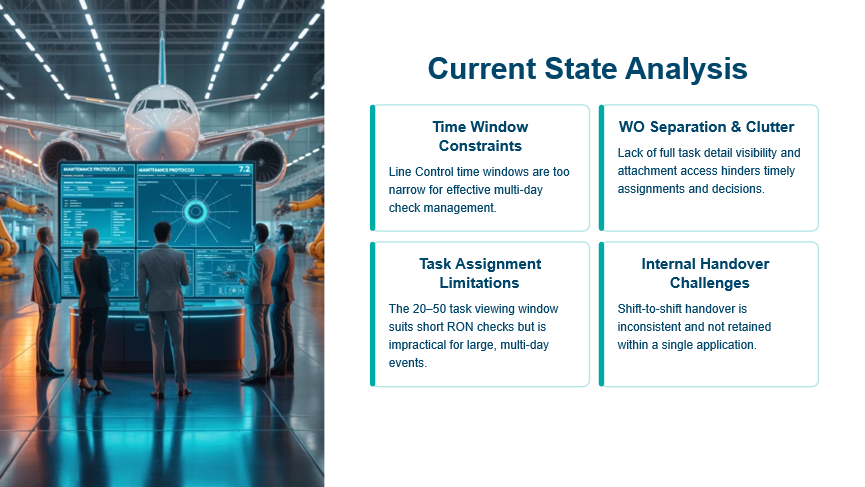
Figure 3
As part of our paperless strategy, we continually assess where efficiencies can be gained and how best to utilize available resources. One of the key lessons we learned was that even the most capable technicians can be hindered if they are working with an application that is not optimized for the task at hand. Instead of improving productivity, the wrong tool can consume valuable time and reduce overall efficiency. This became an important consideration as we evaluated how to support larger and more complex maintenance activities.
We also encountered limitations around task assignment. While we have a highly skilled workforce, asking technicians to manage 20 or more task cards during a 12-hour shift through a platform better suited to line maintenance was not always the most effective approach. Shift-to-shift handovers presented another challenge, as information was not always captured or retained consistently within a single system. As we looked to the future, the question became how to manage longer-duration checks more effectively while maintaining visibility and accountability throughout the process.
Our objective was to equip teams with applications that matched the way they work. Just as importantly, we wanted to avoid a return to legacy practices where critical information was spread across tools such as OneNote or other standalone applications. Maintaining a single source of truth, with clear visibility and retained operational knowledge, was a fundamental requirement as we continued our digital and paperless transformation journey.
SOLUTION CRITERIA
When we brought together the project team and key business stakeholders, we were determined to define our objectives clearly from the outset (Figure 4). We wanted a solution that would support our paperless strategy while addressing the operational challenges associated with larger and more complex maintenance events. It was important that everyone shared a common understanding of what success would look like and how the new process would support both our immediate needs and long-term goals.
The discussions focused on improving visibility, increasing efficiency, and ensuring that maintenance teams had the right tools to manage scheduled work effectively. We also wanted to create a consistent operating model that would support better task management, stronger shift-to-shift continuity, and a single source of operational information. By establishing these requirements early, we were able to align the business and technical teams around a clear vision for the future.
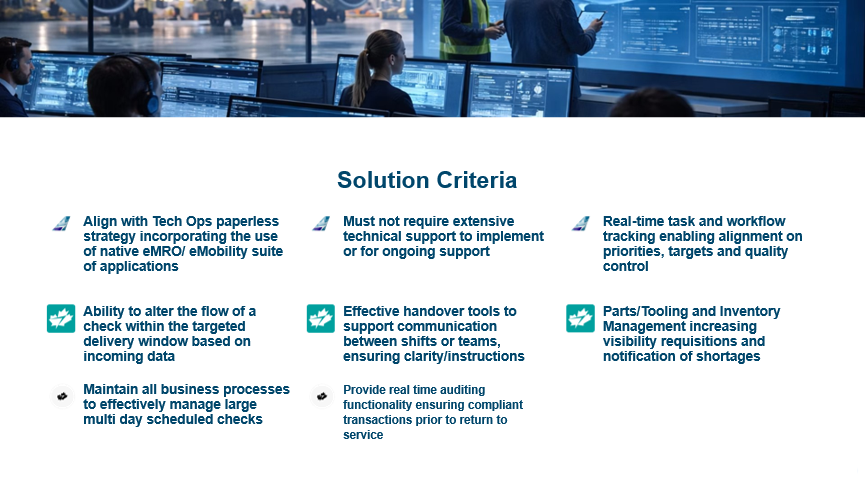
Figure 4
We remained firmly aligned with our paperless strategy, which continues to be a core element of our long-term roadmap. Our objective was not only to eliminate paper from maintenance execution, but also to reduce the need for extensive internal technical support. A key advantage of building a strong digital ecosystem is the ability to adopt and integrate new applications without creating a significant dependency on internal development resources. We wanted an agile approach that would allow us to introduce new capabilities quickly while ensuring they complemented the systems already in place.
Another key requirement was real-time visibility of task flow. As maintenance checks become longer and more complex, real-time oversight becomes increasingly important. We needed confidence that work was progressing according to plan, that milestones were being met, and that aircraft would be ready for release as scheduled. Our expectation was that an internally performed check should be managed with the same level of planning, control, and visibility that we expect from our external MRO partners. For example, a Boeing 737 MAX 8 C1 check completed within our own facilities should be planned and monitored no differently than one performed by a third-party provider.
Parts, tooling, and inventory management were also important considerations. As the complexity of maintenance activity increased, so did the need for better visibility into the resources required to support it. Auditing readiness was another priority. Like many aviation organizations, we have a workforce that is becoming increasingly younger and more digitally focused. We needed stronger real-time oversight and audit capability throughout the maintenance event, ensuring that as a check neared completion, we had clear visibility into any outstanding issues and confidence that the aircraft could be released safely and on time.
At the same time, we were working within a very short implementation window. We wanted to achieve these improvements without fundamentally changing the way our business operated. Whether it was the applications we used or the way frontline teams managed and executed tasks, maintaining established paperless processes was essential. Our goal was to enhance capability and visibility without introducing unnecessary complexity or forcing major changes to proven workflows.
THE SOLUTION
The solution we selected was Trax’s eMobility Production Control application (Figure 5.1). After evaluating our requirements against the challenges we had identified, it became clear that the application offered the functionality and flexibility needed to support our evolving maintenance strategy. It aligned closely with our paperless vision while providing the visibility, coordination, and control required for larger scheduled maintenance events.
What appealed to us most was its ability to manage complex, multi-day maintenance checks within a single operational environment. The platform provided real-time insight into task progress, resource allocation, and overall check status, helping maintenance leaders make informed decisions throughout the execution process. It also supported the level of oversight we needed for in-house maintenance events while maintaining the same operational discipline and visibility we expect when work is performed by our external MRO partners.
Just as importantly, Production Control plugged directly into our existing Trax ecosystem without requiring significant changes to our established processes. This allowed us to enhance our capabilities while preserving the paperless workflows and operational practices that had already been successfully adopted across the organization.
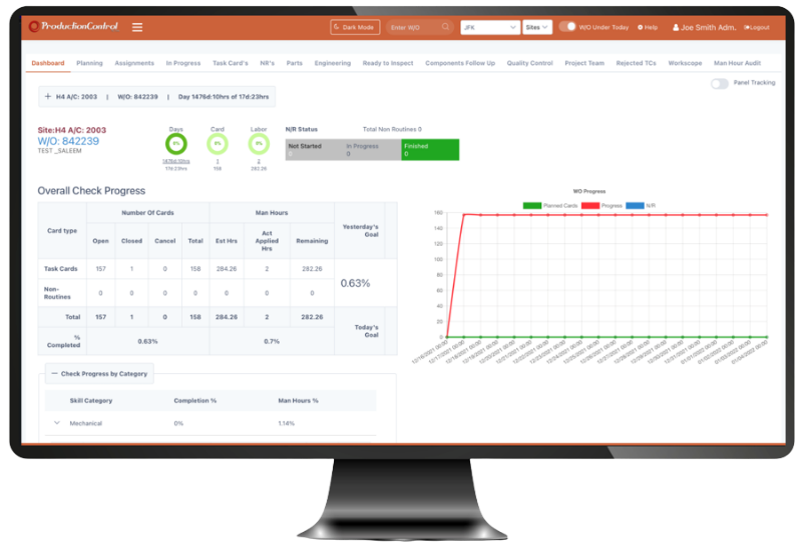
Figure 5.1
As we evaluated Production Control, we measured it against the key criteria we had established for the project (Figure 5). Our assessment focused on its ability to support paperless maintenance operations, provide real-time visibility of work progress, improve coordination across teams, and manage the complexity of multi-day scheduled maintenance events.
The more we evaluated the application, the closer it aligned with our operational requirements. It offered the functionality needed to support our planned in-house maintenance growth while integrating into our existing Trax ecosystem. Just as importantly, it met the business objectives we had defined at the outset, allowing us to enhance oversight, efficiency, and control without fundamentally changing the way our teams already worked.
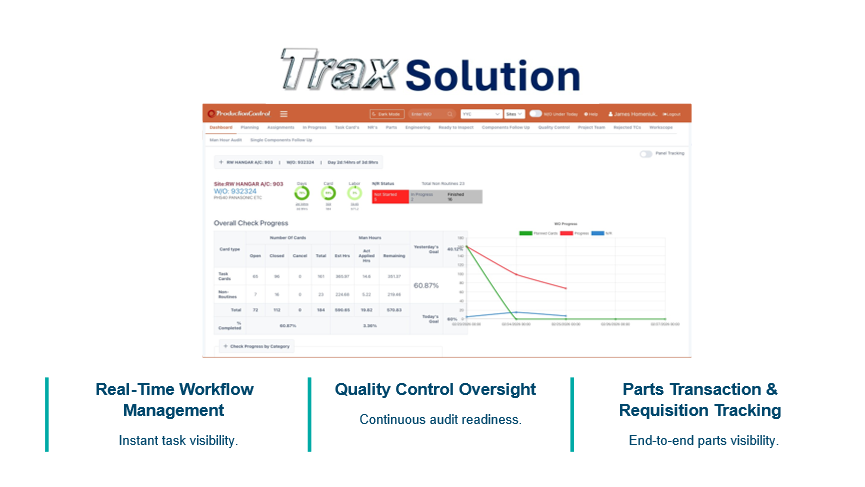
Figure 5
The screenshot shown in Figure 5.1 is taken from one of our Boeing 787 Phase 1 heavy maintenance checks in Calgary. While it represents a single maintenance event, it highlights one of the solution’s greatest strengths: the ability to provide a significant amount of operational visibility at a glance. Maintenance leads can quickly access critical information, monitor progress, and make informed decisions in real time.
One of the major benefits for WestJet was the speed of deployment. We were able to implement Production Control within a very short timeframe while maintaining our overall business plan and implementation schedule. Just as importantly, we retained the real-time workflow and operational oversight that were essential to our maintenance strategy. Our objective was straightforward: ensure aircraft entered and exited maintenance on schedule so that the next planned visit could begin efficiently, without disrupting fleet availability or resource allocation.
Before implementing Production Control, we underestimated the value it would bring to quality control oversight. The application enables maintenance leads to monitor task card completion in real time, supported by alerts, notifications, and immediate visibility into non-routine findings as they are raised. This allows teams to assess and respond to issues much earlier in the maintenance process. Coordination between unplanned maintenance activity and inventory management also improved significantly. As a result, when unexpected findings arise during a check, we can quickly source the required materials, maintain the schedule, and still target an on-time aircraft release.
Production Control also strengthened resource planning, which becomes increasingly important during longer-duration maintenance events involving shift changes, crew rotations, and multiple handovers. It provides real-time visibility across the entire maintenance visit, ensuring continuity from one shift to the next and helping teams maintain focus on critical priorities. Production Control met the key criteria we had established at the outset of the project, while the planning views shown in Figure 5 provide forecasting and waterfall capabilities that support effective execution throughout the check.
THE IMPLEMENTATION PROJECT
Figure 6 illustrates our project roadmap and highlights how ambitious the timeline was. The business presented us with a clear challenge, which we shared with the Trax team from the outset: identify a solution and deploy it quickly enough to support our evolving maintenance strategy. Speed of execution was not simply a preference – it was a business requirement.
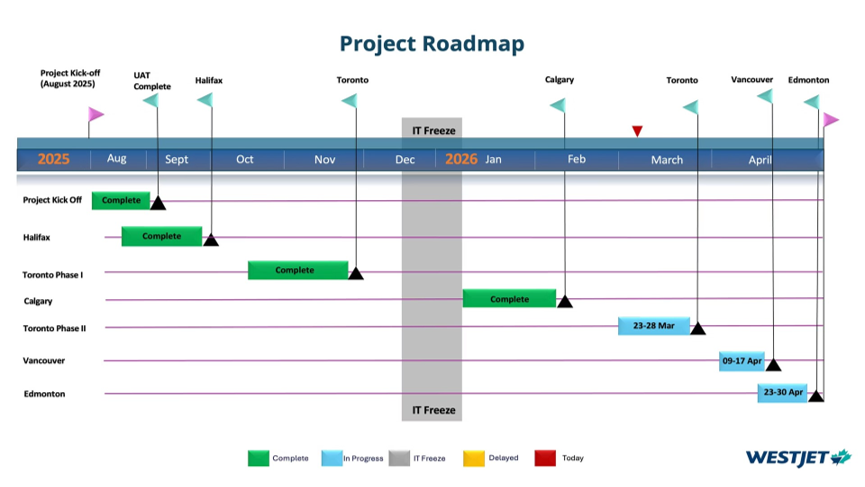
Figure 6
Once we were in agreement on the project plan, we officially kicked off the initiative on August 3, 2025. The application was immediately deployed into our User Acceptance Testing (UAT) environment, and within five days we had completed UAT testing and were ready to move into production. Six weeks later, our first Boeing 737 MAX 8 C1 check entered the hangar. In seven weeks, we had completed process evaluations, developed and delivered training, created our own simulation-based training scenarios for leads, established quality standards for managing work within the application, and successfully executed the first check. Not only did the aircraft leave the hangar on schedule – but it was also released eight hours ahead of plan.
Our original strategy was to adopt a phased implementation and soft-launch approach. Some questioned why we chose that path, but the decision reflected the realities of an aggressive project schedule and a demanding business plan. At the same time, we were managing several other priorities and technology initiatives across the organization. The phased approach allowed us to introduce the solution in a controlled manner while maintaining momentum. Our initial objective was to complete deployment across six maintenance bases by the end of April 2026.
However, as we evaluated the quality control capabilities within Production Control, our thinking changed. The value delivered by the application became apparent very quickly, and we accelerated our plans. What began as a solution for managing multi-day scheduled maintenance checks soon expanded beyond C1 checks and Boeing 787 Phase 1 events.
Today, that strategy spans our entire fleet, from the De Havilland Dash 8-400 (Q400) to the Boeing 787 Dreamliner. Whether an aircraft is undergoing a major maintenance visit, a phased inspection, or a short-duration hangar event lasting only a few hours, Production Control has become the standard operating platform across our maintenance facilities. By standardizing our approach through a single solution, we have improved visibility, strengthened quality oversight, and created a consistent approach to executing hangar maintenance throughout the WestJet network.
NEXT STEPS
As we continue to move across to any of the bases, we look to confirm readiness (figure 7).
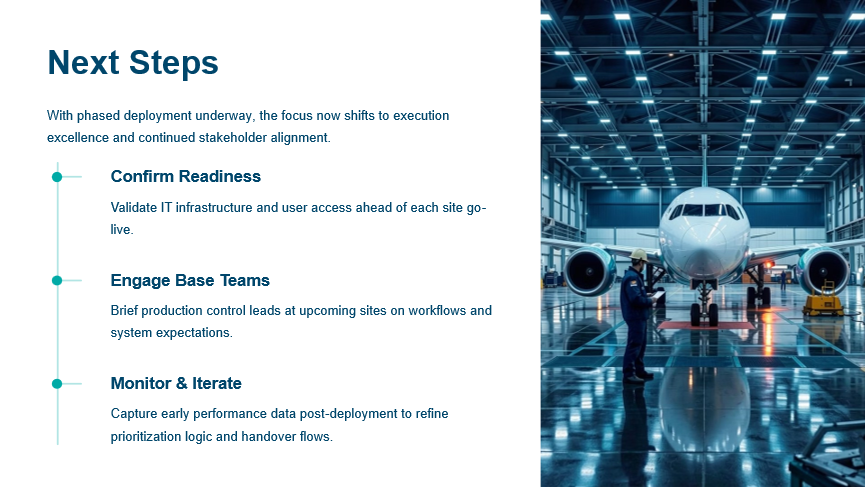
Figure 7
There was very little IT infrastructure change required to support the implementation. In fact, one of the most significant investments was providing larger monitors for users. As Production Control delivers greater levels of detail and operational visibility, we wanted to ensure that maintenance leads could easily access and interpret information without missing critical data. This was a relatively minor cost that delivered immediate operational benefits.
We also placed strong emphasis on engaging our base teams throughout the rollout. In fact, the earlier we involved local leadership teams, the better prepared they were to support adoption, training, and change management within their respective bases. Their participation played an important role in ensuring a smooth transition and accelerating acceptance of the new operating model.
Just as importantly, our involvement does not end once an implementation is complete. Continuous improvement is a core part of our digital strategy. While application adoption is a key milestone, we also focus on refining processes, enhancing functionality, and maximizing the value of the solutions over time. As part of our broader technology roadmap, we continue to expand and strengthen our digital ecosystem while remaining a Trax cloud customer and evaluating future platform enhancements.
One of the biggest challenges we faced was the urgency of implementing a solution capable of planning, coordinating, and managing complex heavy maintenance events within a very compressed timeframe. The fact that Trax hosts the platform and offers mobile, plug-and-play solutions proved to be a major advantage. It enabled rapid deployment with minimal infrastructure requirements and allowed WestJet to move quickly toward performing its first in-house C checks.
The project demonstrated how quickly mobility-focused applications within the Trax eMRO platform can be implemented and integrated into an airline’s maintenance operation. However, beyond the technology itself, what stood out was the speed and efficiency of the overall implementation. From planning through production use, the project moved at an exceptional pace. It was one of the fastest Production Control deployments completed by Trax, while for WestJet, successfully executing our first in-house C check represented a significant milestone. The project delivered a record-setting achievement for both organizations and demonstrated what can be accomplished through a shared commitment, clear objectives, and close collaboration.
THE TRAX SOLUTION
Figure 8 shows the suite of solutions and applications that Trax provides to WestJet.
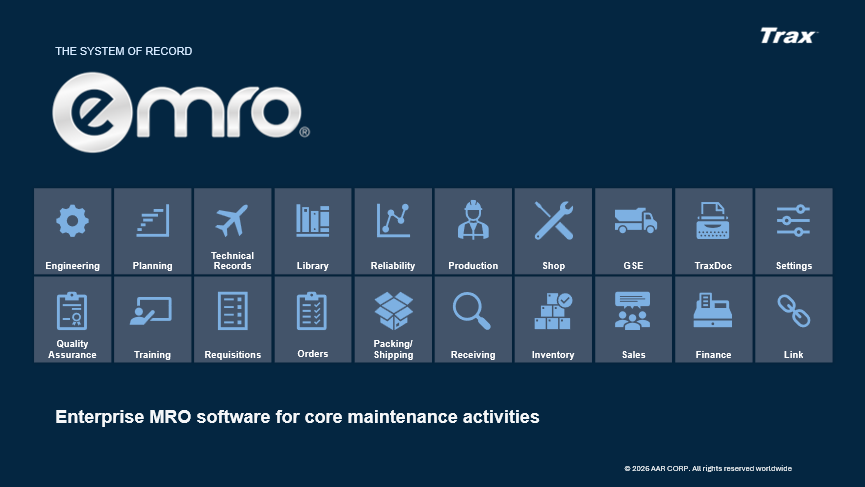
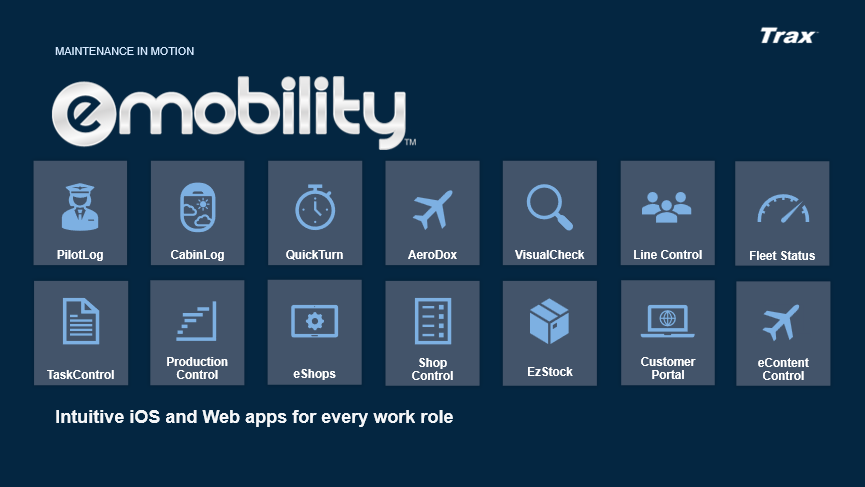
Figure 8
WestJet implemented Production Control with the existing Trax TaskControl eMobility application (figure 9), and we also use Line Control today to manage line maintenance operations.
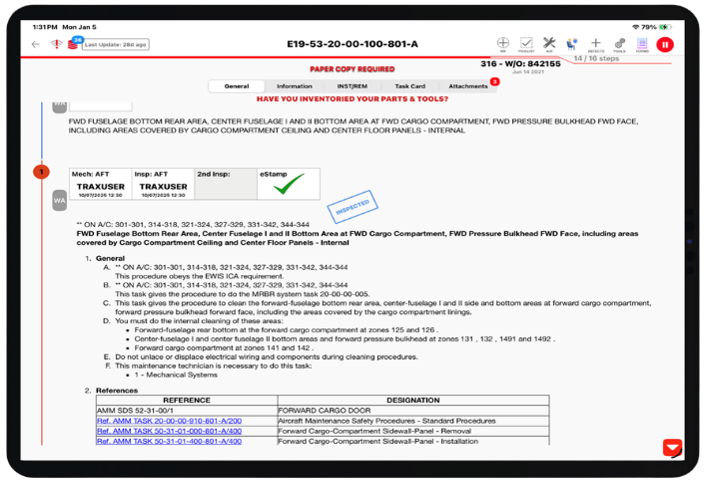
Figure 9
Trax also offers a broad portfolio of complementary solutions that extend beyond maintenance execution. These include the Electronic Logbook (ELB) suite, featuring PilotLog and QuickTurn, which are designed to support operational defect management and line maintenance activities. Additional solutions include a CabinLog cabin management application and AeroDox, which provides centralized management and access to technical manuals and documentation.
More recently, Trax has introduced Shop Control and eShop which are part of their eMobility suite of applications that enable operators to manage component repair shops more effectively while integrating directly with the Trax supply chain platform. For unserviceable components requiring repair, the solution provides enhanced visibility and capacity planning capabilities, helping maintenance organizations better manage shop workloads and turnaround times.
Trax also offers a mobile warehouse management application that supports RFID and QR-code functionality, as well as a customer portal that allows MRO customers to monitor the status of maintenance work in real time.
For WestJet, the implementation of these Trax solutions has delivered significant operational benefits and has played an important role in supporting our paperless maintenance strategy. The combination of enhanced visibility, improved coordination, and streamlined workflows has enabled us to manage increasingly complex maintenance activity with greater confidence and efficiency. We hope that sharing our experience will provide useful insights for other operators considering a similar digital transformation journey and demonstrate the value that a well-integrated maintenance technology ecosystem can deliver.
Comments (0)
There are currently no comments about this article.
To post a comment, please login or subscribe.