
Articles
| Name | Author | |
|---|---|---|
| CASE STUDY: ZIPAIR tackles turbulence with predictive real-time data | Kenichi Ura, Flight Operations team, ZIPAIR | View article |
| CASE STUDY: Time-saving digital Operational Flight Plans transform Hyperion Aviation | Noah Hummel, Flight Operations Officer and Electronic Flight Bag (EFB) Administrator, Hyperion Aviation | View article |
| CASE STUDY: Copa Airlines builds future with integrated EFB architecture | Catherine Caballero, EFB Specialist and Systems Administrator, Copa Airlines & Captain Ramon Andres Patino Duran, Flight Standards Manager, Copa Airlines | View article |
| CASE STUDY: Atlantic Airways finds a gamechanger for documents | Randi Reinert, Compliance Monitoring Manager, Atlantic Airways | View article |
| CASE STUDY: A strong partnership for Helvetic | Christian Suhner, Chief Technology Officer, Helvetic Airways & Michael Anklin, CEO, WinOps | View article |
| WHITE PAPER: Beyond the tablet | Klaus Olsen, CEO of EFB Admin Services | View article |
| CASE STUDY: Saving fuel at Azul with custom flight analytics | Juliana Paes Dos Santos, Fuel Efficiency Coordinator, Azul Brazilian Airlines | View article |
| CASE STUDY: Air Atlanta crews get in the picture | Various, Air Atlanta | View article |
CASE STUDY: Time-saving digital Operational Flight Plans transform Hyperion Aviation
Author: Noah Hummel, Flight Operations Officer and Electronic Flight Bag (EFB) Administrator, Hyperion Aviation
SubscribeNoah Hummel, Flight Operations Officer and Electronic Flight Bag (EFB) Administrator at Hyperion Aviation, talks through the challenges and benefits of going paperless
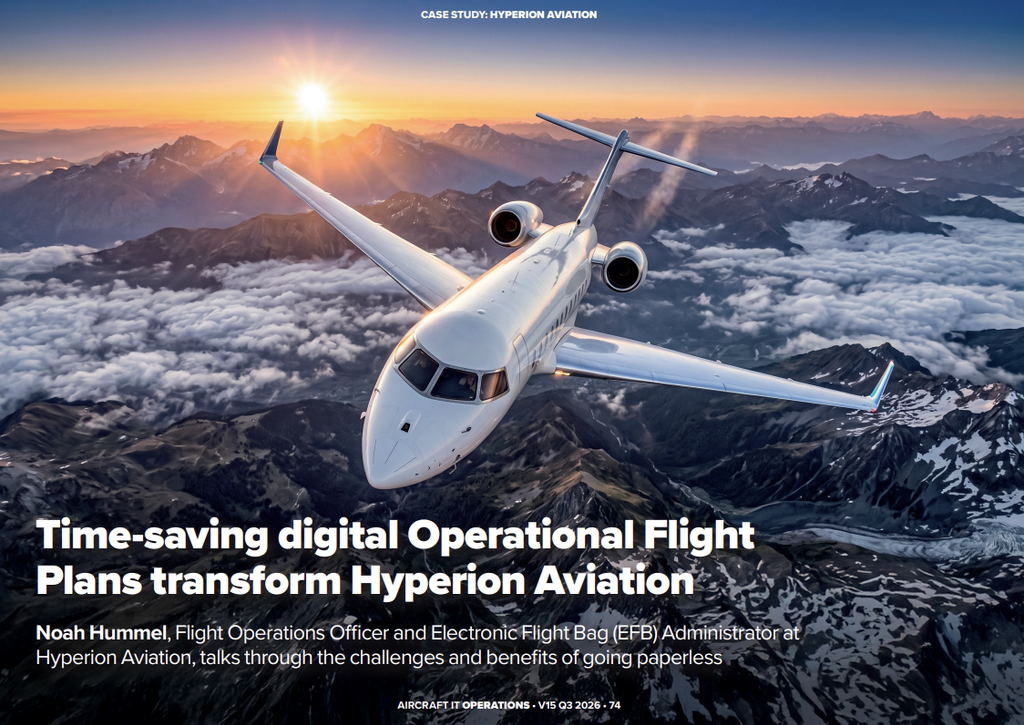
As a private jet management company, Hyperion Aviation has to respond rapidly whenever aircraft are required. Paper-based logs slowed us down considerably and increased safety risks for flights. In this article, I’d like to share with you how digital OFPs (Operational Flight Plans) with the TAILLOG EFB (Electronic Flight Book) transformed our operations. I’ll begin this case study by looking at some of the challenges we faced and how we operated before digitizing OFPs; I’ll then cover the benefits gained and lessons learned, including pilot adoption and workflows. Finally, we’ll look at an assessment of the possible future for digital flight operations.
OPERATIONAL CHALLENGES
Our underlying concern was that pilots could be more focused on filing paperwork than actually flying their aircraft, which presented a massive risk to safety. When you are fully paper-based, you face many challenges, not least having to rely on information originating from multiple channels (see figure 1).
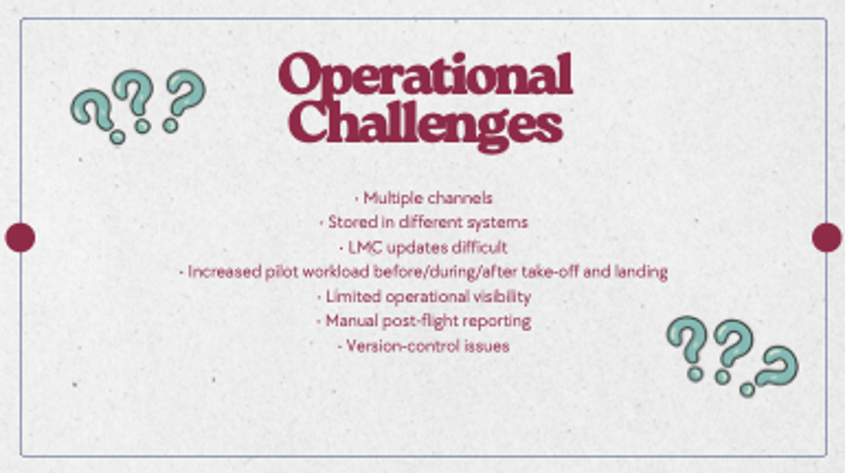
Figure 1
This can cause problems, for example, when last-minute changes are made and not everyone is aware of them. Information can quickly become outdated, and if it is stored in different systems, you might not know where to find the latest version. We also risked losing important paperwork and found it difficult to provide LMC (Line Maintenance Control) updates on a paper-based system. When you rely on paper records, version control issues are inevitable, for example, pilots might use outdated paperwork by accident.
The increasing workloads that pilots face nowadays are a growing problem for many airlines, so the extra burden due to a reliance on paper records didn’t help. With a manual system, pilots had to carry a pen and calculator to carry out time-consuming work that had limited operational visibility because we couldn’t see immediately what they had done but instead had to wait until they filed their paperwork after a flight.
THE DRIVERS OF CHANGE
We decided to move away from a paper-based system because we wanted a workflow that reduced friction for crews while improving operational visibility. Digital OFPs are user-friendly for our pilots and allow us to see what is happening on board the aircraft.
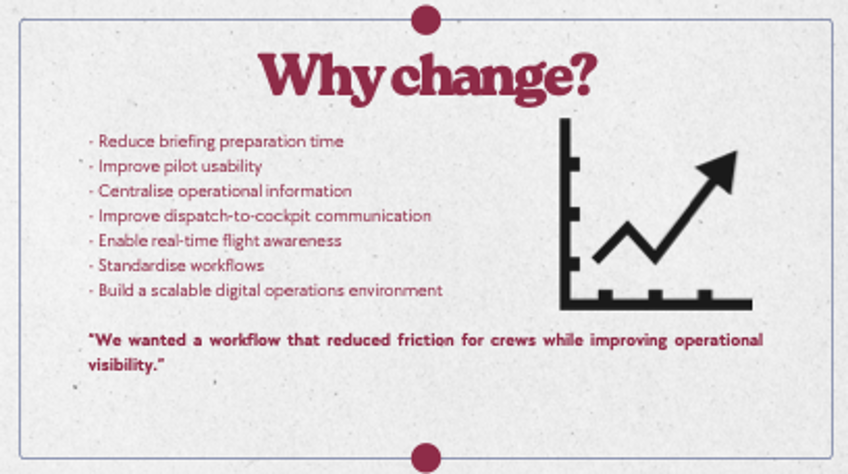
Figure 2
One of our key priorities was to reduce briefing preparation time (figure 2). This is especially important in private aviation as we often don’t have time to make small changes – owners want to be in their aircraft quickly and leave promptly.
We recognized that working digitally on iPads rather than filling out paperwork by hand could save us considerable time. In fact, even more tasks are likely to be automated in the coming years, especially with AI and by centralizing operational information, so going digital meant we were ready for whatever developments there might be in the future.
Another reason to change was to improve our dispatch-to-cockpit communication, which was something Hyperion had struggled with in the past. We had to figure out the best way to get information from the dispatch center to the cockpit quickly in a functional way that pilots were comfortable with. A key consideration for real-time flight awareness is on-board wi-fi, which we now have with Starlink, so pilots receive information in seconds. Standardized workflows are another area that benefits from moving to a single EFB. Overall, the TAILLOG EFB allows Hyperion to build a scalable digital operations environment.
THE TAILLOG SOLUTION
We have been using digital OFPs with the TAILLOG EFB for around eight years and the Danish company has offered us some very good solutions. A major advantage of TAILLOG is that it is a shared platform, so pilots can access the system at the same time.
TAILLOG provides a single EFB ecosystem as well as integrated OFP delivery, with digital pilot briefing packages replacing the previous massive packages of 50-70 pieces of paper (figure 3). Pilots work mostly on iPads with access to the latest version of information.
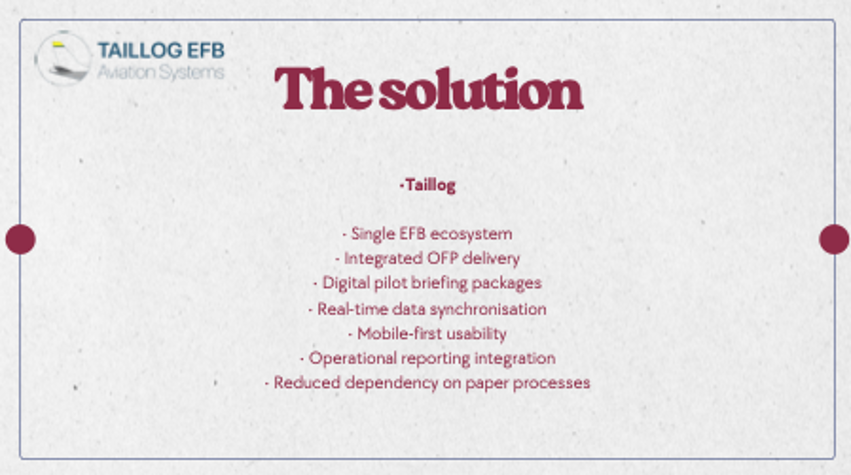
Figure 3
Another aspect that TAILLOG handles well is real-time data synchronization where pilots do everything live on their iPads, so we can monitor their activity. If a pilot does something wrong, we tell them straightaway and that saves a lot of time, rather than waiting to receive the paperwork back in the office, making changes and then getting it back to them.
Our TAILLOG solution integrates operational reporting. This includes a defect system, so if something goes wrong on an airplane, we know immediately. Our dependency on paper-based processes has been massively reduced with TAILLOG, with only the technical log still on paper. A further advantage of digital OFPs is being able to provide the relevant authorities with all the relevant information that they require.
NEW WORKFLOW
We created a new workflow when we first began using TAILLOG, as you can see in figure 4.
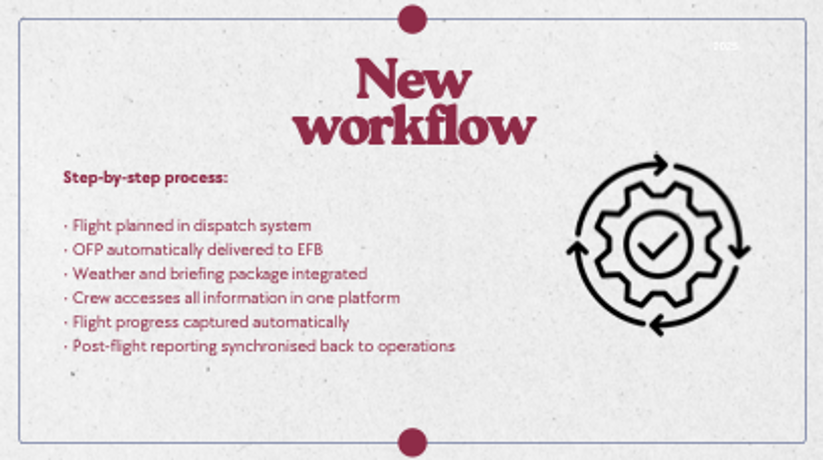
Figure 4
When we receive a flight plan, we dispatch it into our system. Then, when we get flight clearance from the owner and account manager, our OCC (Operations Control Center) and dispatch team push it through and the OFP is automatically delivered to the TAILLOG system on the EFB. The OFP consists of the full package, so you get the flight package itself, you get the weather, the NOTAMS (NOTice to AirMen) – in other words, all the information we need for a flight is available in one system on a single platform for crews to access.
TAILLOG’s functionality gives pilots automated timing capture and the navigation mode of the iPad identifies when the plane starts moving and at what speed. So TAILLOG automatically records block time, takeoff time, landing time, routing time and when you reach waypoints, as well as carrying out fuel checks every 45-60 minutes. Our flight ops team monitors fuel usage information very carefully, and the authorities also love seeing this data.
PILOT’S POSITIVE RESPONSE
The switch to TAILLOG wasn’t always easy, as some pilots were resistant to change, but we won them round with the benefits of the new system (see figure 5). As a result, the transition went smoothly overall and the view from pilots was that they were happy to have a single centralized briefing location that provides information quickly and without fuss.
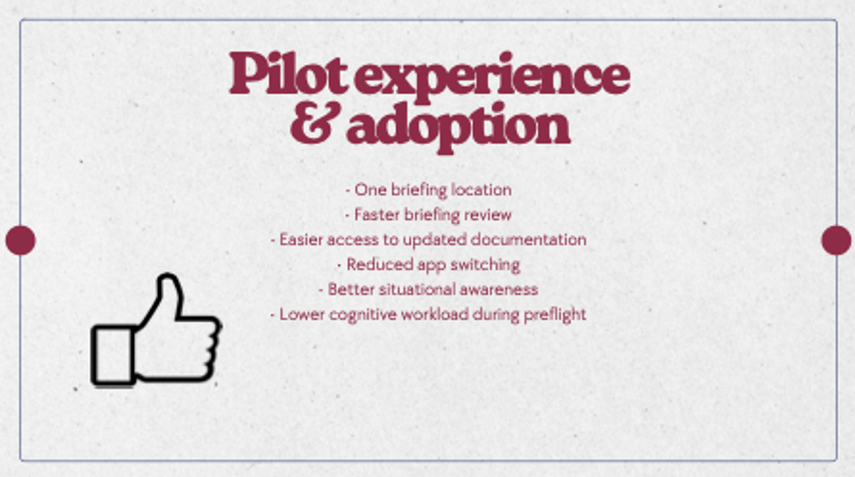
Figure 5
We are really happy that TAILLOG provides easier access to updated documentation, especially when we have last-minute changes. For example, pilots receive a warning on their iPad that there is a new OFP or that something has changed, which they can download straightaway. It is very quick and that gives us greater operational flexibility.
TAILLOG also does a good job of centralizing apps in one system. One thing that most pilots like is getting the OFB data, fuel data and the weather data quickly, which improves situational awareness and is key from a safety point of view. Having a single centralized area means pilots can focus on their job with fewer distractions, which means a lower cognitive workload for them during pre-flight, and saves minutes in preparation time.
IMPROVED EFFICIENCY AND SUSTAINABILITY
Two of the most significant benefits of digital OFPs for Hyperion are improved efficiency and enhanced sustainability (figure 6).
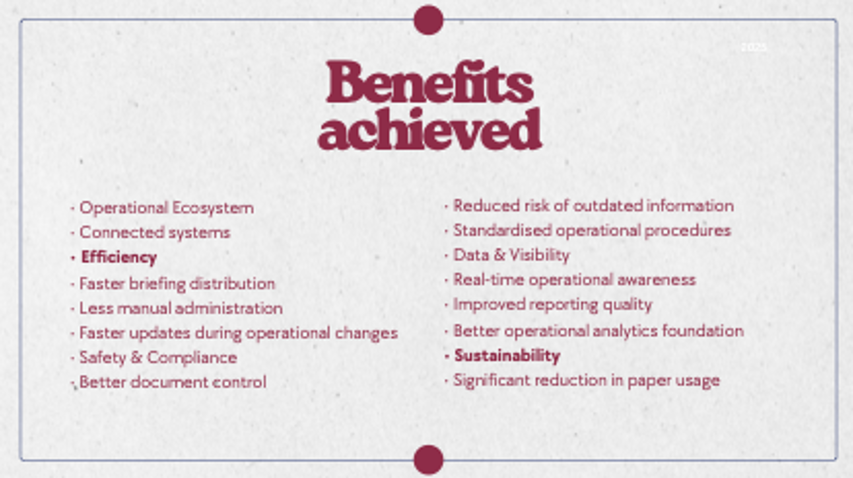
Figure 6
Every business in the aviation industry is trying to achieve greater efficiency and with TAILLOG we save time and effort. However, digital OFPs are not just about making financial savings; equally important is having happy crews, as that means happy customers at the end of the day.
We look at sustainability in multiple ways. Obviously, less paper means we are helping to save the environment. Another sustainability benefit is that all our crews work on the same single system, so we don’t have to train them constantly on different apps, which is a more sustainable situation.
OVERCOMING IMPLEMENTATION CHALLENGES
The main challenges we faced in implementing digital OFPs can be seen in figure 7.
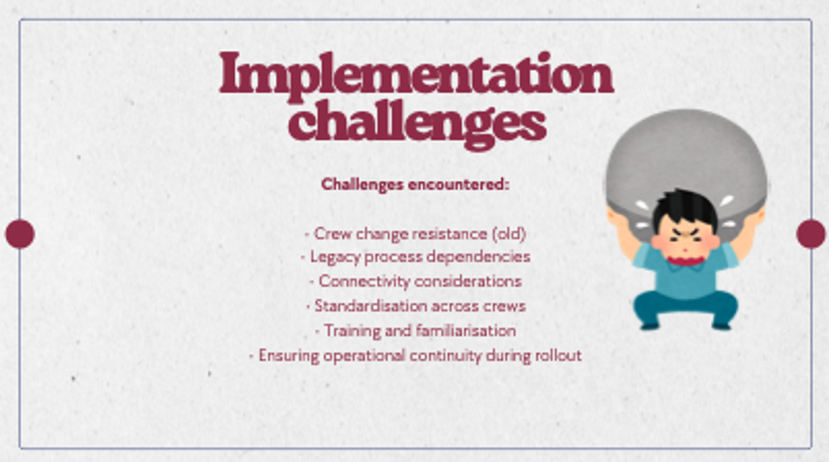
Figure 7
We expected a certain amount of reluctance from older staff to move to something new, so we were ready to take the necessary steps to get people on side. Initial resistance to change meant that we lacked standardization across crews with some people preferring to try and stay with their old applications. We also had crews who were open to change but resistant to undergoing the necessary training. Our approach in these cases was to focus strongly on training and familiarization, not just for crews, but also in the office. Hyperion is not that large, so staff training was relatively easy.
We faced some legacy process dependencies and connectivity considerations moving to digital OFPs. A primary barrier at the start was that most of our planes lacked on-board wi-fi or Starlink connectivity, but as I have noted above, this problem has largely been resolved.
Another challenge was to ensure operational continuity throughout the rollout. We were very grateful to TAILLOG for its daily communication during the rollout and for helping us to plan everything well for the rollout. The switchover took around six months, which was plenty of time to ensure it ran smoothly.
LESSONS LEARNED
We learned a number of lessons from going paperless, which relate to Hyperion’s position in corporate aviation but can also apply generally across the aviation industry (figure 8).
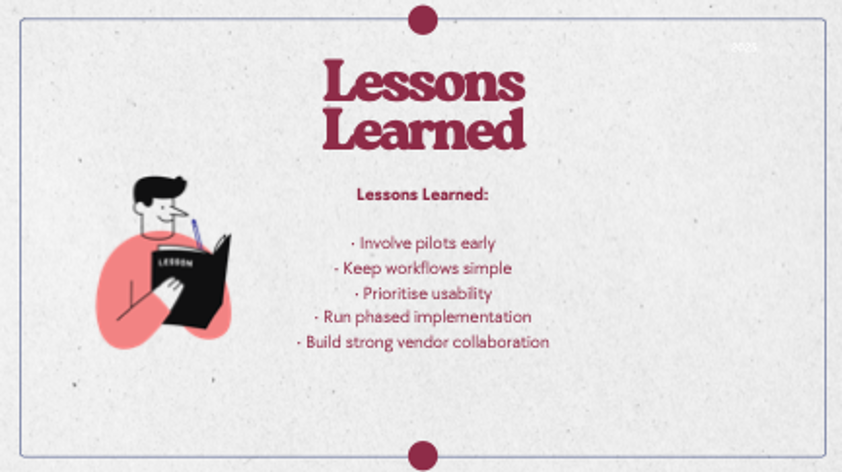
Figure 8
We recognized that it was essential for pilots to be at the center of the transformation and involved from the earliest stages. In corporate aviation, one thing I have experienced is that lead captains and technical pilots tend to have a lot of say in the decision-making process, especially with aircraft owners. By getting pilots involved with the changes very early, we knew everybody was on the same page.
Keeping workflows simple is more important than ever these days. We want things to be quick and easy, so the lesson here was don’t overcomplicate the move to digital OFPs but always ensure that you comply with local authority requirements. We also found that prioritizing usability was essential to successful implementation. If an application is difficult to use, then it is probably not worth introducing it. After all, pilots have to be comfortable switching to a new system.
Running a phased implementation over six months helped to ensure a smooth transition. We started with two months of internal testing, followed by two months working with crews, before combining everything so we could check any small details that need to be amended and ensure the authorities were happy with our new system.
A final point to remember is the benefit of building strong vendor collaboration, and I’m happy to report that TAILLOG and Hyperion have a very good collaboration. Changing to digital OFPs can take longer without a good vendor relationship and it might be more difficult for you to identify areas for improvement.
LOOKING AHEAD
Nowadays, EFBs are the backbone of aviation and most pilots would probably have a hard time operating without them (see figure 9).
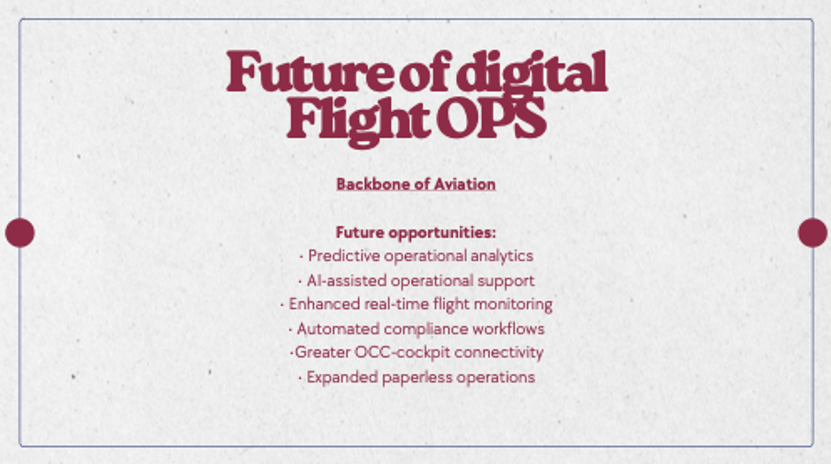
Figure 9
We have identified a number of potential opportunities in our digital flight ops, beginning with the ability to conduct more predictive operational analytics. The rise of AI-assisted operational support requires quite an investment, but you need to be in front of developments rather than reacting to them. Another good idea is enhancing your real-time flight monitoring. In corporate aviation, automated compliance workflows would be nice, especially for improving safety.
Greater connectivity between the OCC and the cockpit is something we are working on, so our OCC people can understand better what goes on in the cockpit. One way we could do this would be to send OCC staff members on flights and so they see how they could make pilots’ lives easier. As we move forward, we will continue to review and improve our paperless operations, for example, we are currently considering introducing an e-tech log.
Comments (0)
There are currently no comments about this article.
To post a comment, please login or subscribe.