
Articles
| Name | Author | |
|---|---|---|
| CASE STUDY: AirAsia Indonesia accelerates uptime and cuts costs by digitizing AOG parts sourcing | Haryo Hadie Negoro, Manager, Material & Purchasing Control, AirAsia Indonesia | Ahmad Naim Abdullah, Manager, Digital Transformation – Operations, Asia Digital Engineering (ADE) | View article |
| CASE STUDY: Southwest Airlines realizes the Power of historic data and digital maintenance | Barry Lott, Director of Aircraft Records and Maintenance Reliability, Southwest Airlines | Cameron Byrd, Founder and CEO, AIXI | View article |
| CASE STUDY: Accelerating Aviation Transformation at XWing | Jeffrey Wehrenberg, CEO, XWing | Jim Buckalew, CEO, AeroATeam | View article |
| CASE STUDY: How interCaribbean ended its paper chase by switching to electronic technical logs | Hugo Mendez, Director of Safety and Quality Assurance, interCaribbean Airways | View article |
| CASE STUDY: Modernizing asset records at CommuteAir | Heather Hinton, Director of Maintenance Programs, CommuteAir | View article |
| CASE STUDY: SolitAir embraces digital-first maintenance and engineering from day one | Sandeep Kumar, Director – Engineering & Maintenance, SolitAir | View article |
CASE STUDY: How interCaribbean ended its paper chase by switching to electronic technical logs
Author: Hugo Mendez, Director of Safety and Quality Assurance, interCaribbean Airways
Subscribe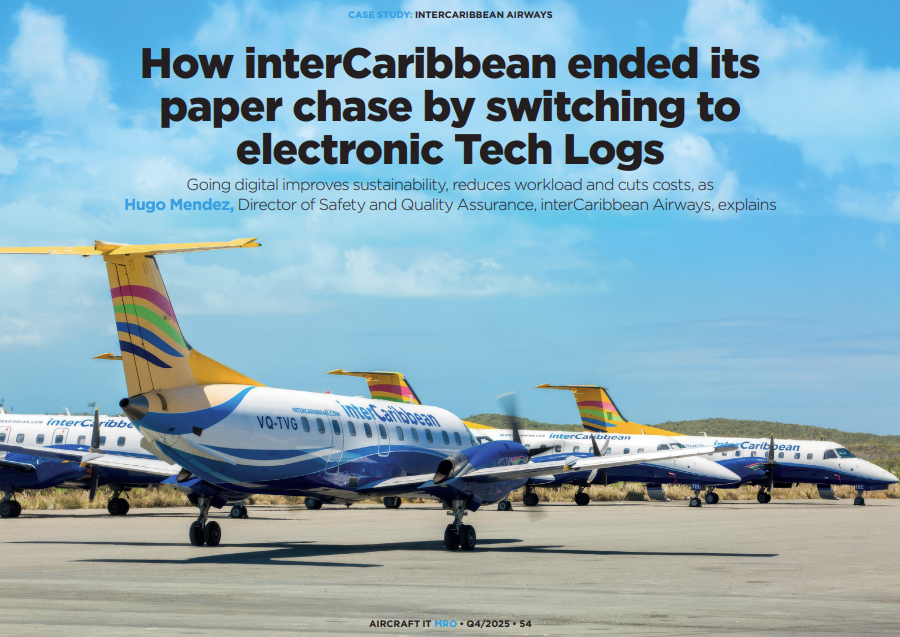
Going digital improves sustainability, reduces workload and cuts costs, as Hugo Mendez, Director of Safety and Quality Assurance, interCaribbean Airways, explains
interCaribbean Airways has enjoyed many advantages from the switch to using ETLs (electronic Technical Logs): One very important factor was improving sustainability, as I’ll explain in this case study outlining the benefits of transitioning to TrustFlight’s ETL software.
CARIBBEAN SPECIALISTS
As a brief background to interCaribbean, we have been evolving continuously since started in 1991 with a couple of Piper Aztecs. We moved to Embraer 120s and Embraer 145s, and we are now replacing our ageing Embraer fleet with ATR 42-500s, ATR 72-500s, and the Embraer 170. The airline has grown to around 600 employees, operating 50 to 54 daily flights and carrying some 500,000 customers per year, figure 1.
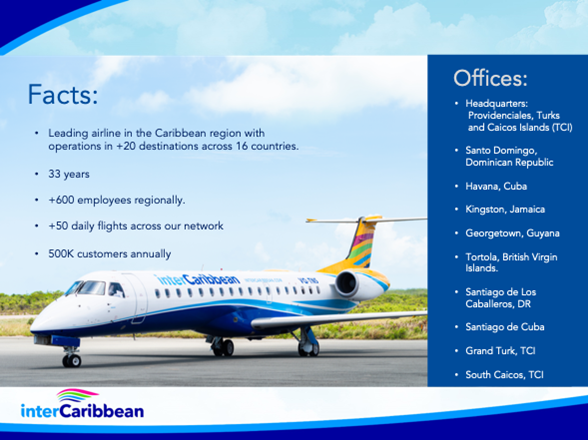
Figure 1
We are continually expanding our network, as you can see in figure 2, flying to Guyana in the south, to Nassau and Cuba in the north, and to Jamaica in the west. Our three main operations bases are our home in Providenciales, along with Barbados, and Tortola in the British Virgin Islands.
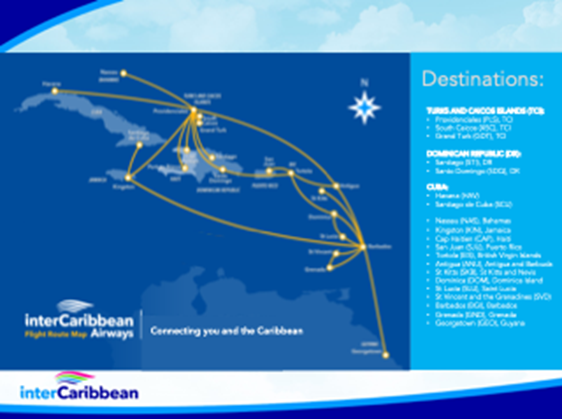
Figure 2
Our network was created specifically for travelling between Caribbean islands and we are unlike major airlines, which usually fly from point A to point B, then back to point A. In our network, you can leave San Lucia in the Eastern Caribbean in the morning and finish in Nassau or Cuba in the afternoon, without needing to go back and forth to other countries, which makes us more flexible compared with other Caribbean operators.
ENDING THE PAPER CHASE
Let’s now look at why we embarked on a digital transformation for our technical logbooks (figure 3). We had relied on printing the logs mainly in the US and bringing them by boat or air, mainly to the Turks and Caicos Islands. Each log book has about 50 pages in triplicate: a white page for technical records, a yellow page for operations, and a pink one that remains on the aircraft for a period of time. Our deliveries of paper logs were getting heavier as we increased the number of daily flights, with more paper to scan and then dispose of later.
In short, we wanted to conserve paper as well as save money on shipping costs and concluded that an electronic alternative would be a more sustainable solution. The cost comparison between paper logs and ETLs helped to convince the company to make the transition to digital. It was also a convenient time for us to move to ETLs, as we were already rolling out EFBs (Electronic Flight Bags) and transitioning to paperless is a priority for the organization.
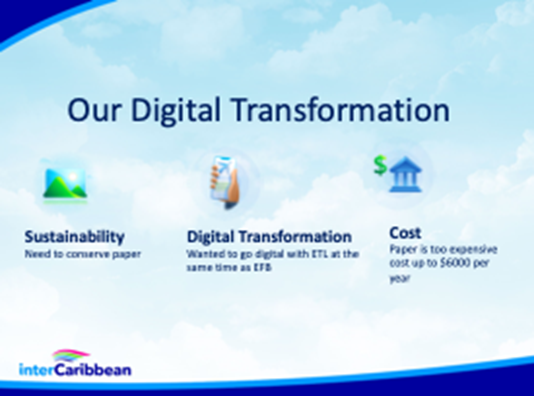
Figure 3
DIGITAL BENEFITS
We already used TrustFlight for our safety management system and decided to bring their ETLs on board. As well as sustainability, another significant ETL benefit is simplicity, figure 4. ETLs are far easier to use compared with flipping pages and adding and subtracting numbers, for example, when recording the aircraft APU (auxiliary power unit), hours to next maintenance check and total hours of the aircraft which is time consuming and prone to errors after having completed a number of flights. With an electronic technical log It takes just minutes to create flight information, and do the pre-flight and post-flight, with synchronized data and less risk of human error. The ETL solution offers the added benefits of being able to attach documents and track component hours.
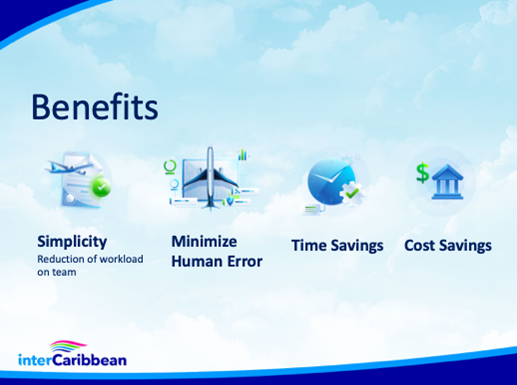
Figure 4
Our capabilities have been enhanced using the ETL’s flight status dashboard, flight and journey log and defect reporting.
FLEET STATUS DASHBOARD
On the dashboard, our operations and technical records department can view the status of the entire fleet, see figure 5. The circles at the top of figure 5 show the hours for each aircraft and the time to its next check. As soon as pilots conduct their pre-flight, we can see the current trip data, as well as review previous trips. These show any defects and how they have been corrected; in fact, we can access the entire history of an aircraft’s defects in document attachments. The software also includes the MEL (Minimum Equipment List) for the aircraft, so you don’t have to look at other software to find the information.
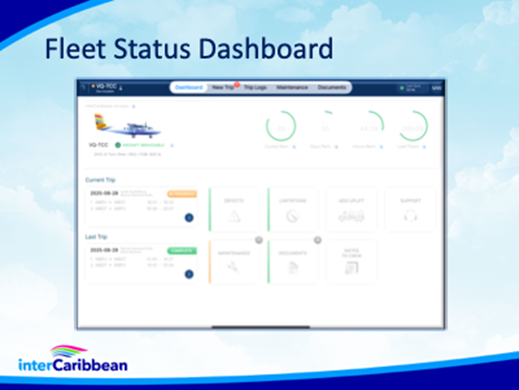
Figure 5
FLIGHT AND JOURNEY LOG
Tracking flight and journey logs is another essential feature of the ETL as shown in figure 6. The journey log includes details of current flights that are transmitted to the OCC (Operations Control Center) in one click when we land. It’s not just interCaribbean that benefits from the ETLs: if we sell an aircraft, we can print out the technical records or transfer them electronically, so the new owner receives all the technical logs.
Data transfer
If we fly to a country where we don’t have a data provider, our crews stay logged on to their device and later, when they go in to terminal building of airports or company office the availability of wi-fi allows the data to be synchronized . The flight information is then sent automatically to our OCC. In addition, our IT department has created an email address for each aircraft, so the OCC can contact the crew on board.
Allocating iPads to aircraft
An interesting decision we made early on was to issue the iPads for ETLs to each aircraft rather than to the pilots. The aircraft has a main iPad and a backup, with a paper-based log, which is being phased out now, and back up charts could be printed when needed for the flight crew and additionally sent to the EFB, currently used as another backup.
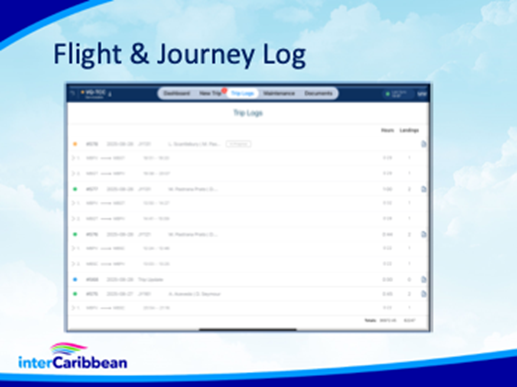
Figure 6
DEFECT REPORTING
Looking now at defect reporting, figure 7, we have found it much better using ETLs compared with paper records. We can add as much information as we need, including images or other document attachments. This makes it easier for our maintenance teams to handle their workload by tracking components using the ETL’s color-coding system – from green to red – which indicates when components are about to expire or have already expired, and the aircraft has been grounded.
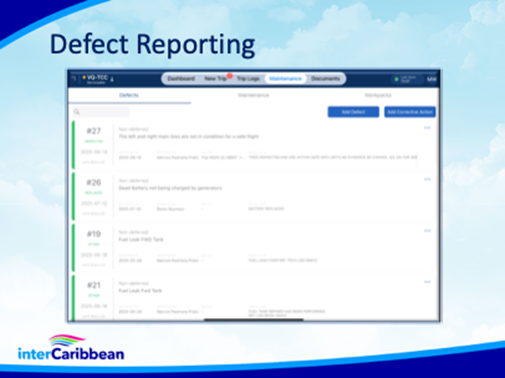
Figure 7
INTEGRATING THE DIGITAL SOLUTION
The ETLs aren’t a standalone solution: we share the data they generate across the organization, including synchronization with an RAAS aviation maintenance software, and with our crew schedule and tracking, figure 8. At the moment, we aren’t using the ETL for engine trend monitoring, which is currently done by another application, but we envisage moving this to TrustFlight’s ETL.
Integrations can be complex, so good collaboration with TrustFlight has been essential during this crucial period. We took a phased approach by tackling each requirement in turn, which helped us to manage the scope of the integrations and, gradually, to add complexity as we progressed. I think that our method highlights the fact that there is no single recipe for success; it depends on many moving parts.
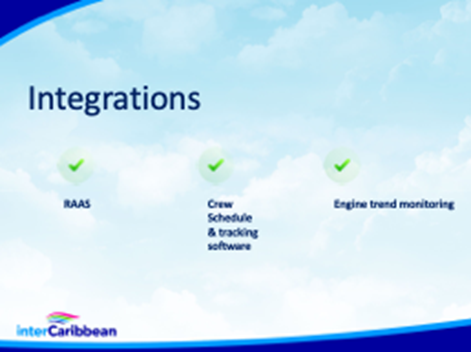
Figure 8
PATHWAY TO IMPLEMENTATION
As you can see in figure 9, our journey to ETL implementation involved multiple steps. As the Director of Safety and Quality Assurance, one of my early goals was to complete a risk assessment for the transition to digital technical logs and provide the necessary documentation to enable the organization to implement the change. This included obtaining regulatory approval for all of our manuals from local civil aviation authorities, who continue to monitor how the project is progressing.
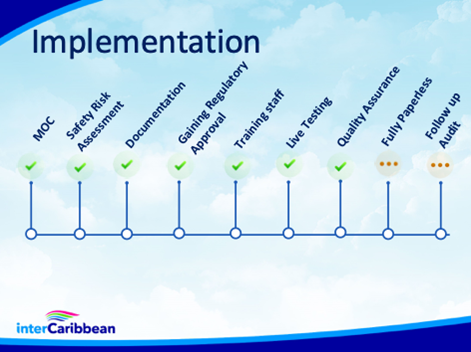
Figure 9
During the implementation, we undertook extensive staff training and live testing. This was supported by one of our technical records department colleagues with ETL training experience, who visited islands where we have bases, which went well. As a side note regarding the change in working methods, our engineers who previously stamped a paper document now have to clean their hands to swipe the iPad screen, enter their password and use the ETL.
For live testing, we trialed the ETL in parallel with our paper-based system, so that our quality assurance team could check that everything worked properly. Once satisfied, the team demonstrated to the civil aviation department that our electronic technical logs matched the paper version and we received the thumbs-up to move to a fully paperless cockpit. That then leaves the follow-up audit, which we expect to conduct by the middle of 2026, to verify that our digital transformation has been a success.
EXCELLENT TECHNICAL SUPPORT
The implementation was done without any trouble, thanks in large part to the technical support from TrustFlight. They are available 24/7 across multiple countries and they have been a great help for us during the ETL implementation process.
Comments (0)
There are currently no comments about this article.
To post a comment, please login or subscribe.