

Shannon Technical Services Selects REDiFly SMS to Strengthen Safety Operations
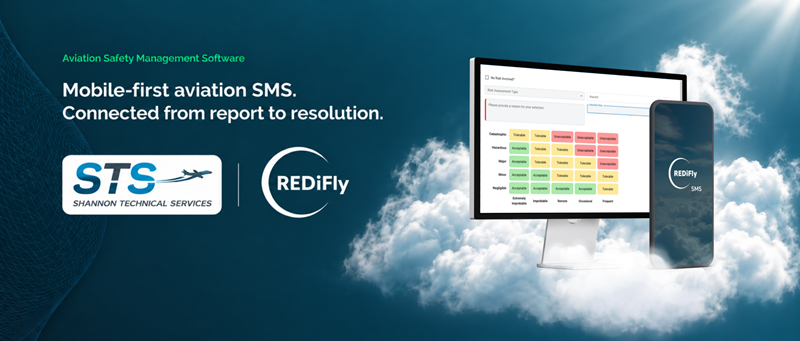
Shannon Technical Services (STS) has selected REDiFly SMS to give its safety and quality teams a connected, real-time view of reporting, risk and audit activity across the organisation.
For REDiFly, it is a particularly welcome partnership. Both companies are based in Ireland, and it means a great deal to see a domestic aviation business choose REDiFly as their SMS platform.
STS provides aviation technical services to airlines, lessors and MROs, with expertise across aircraft transitions, CAMO, Part 21 design and engineering, inspections, records, materials procurement and technical representation.
Headquartered in Shannon, Ireland, with additional hubs in Singapore and Malta, STS supports clients globally while maintaining a strong presence in one of Europe’s most established aviation centres.
A Connected View of Safety Performance
Prior to selecting REDiFly, STS managed much of its safety reporting through spreadsheets and shared folders, an approach that worked well in the early stages but became difficult to sustain as reporting volume and regulatory expectations grew. For STS, the priority was a system structured enough to support audit and regulatory readiness, without adding the complexity of a heavier platform to day-to-day operations.
REDiFly SMS connects reporting, risk, compliance and management of change into one system. A submitted report is automatically tracked through risk assessment, action and closure, one connected chain from start to finish.
For STS, that means less time spent assembling data from separate sources and more time spent acting on it, with trends and recurring issues surfacing automatically rather than staying hidden until they become findings.
The platform is also aligned with where aviation safety oversight is heading, including the requirements introduced under ICAO Annex 19 Edition 3 (Amendment 2), giving STS’s safety programme the kind of outputs that hold up in practice, not just on paper.
Configured Around How STS Already Works
The mobile-first design allows frontline staff to submit reports in under two minutes, while safety and compliance managers maintain a real-time view of risks, findings and audit status without the overhead of more complex platforms.
The platform is configured around existing workflows rather than forcing teams into predefined structures, giving STS full control over how its Safety Management processes are structured and operated. It is also designed to support EASA-regulated organisations, including Part-IS requirements.
Patrick Clancy, CEO, REDiFly – “STS has a strong reputation across aviation technical services, and it means a great deal to have a company with that standard of expertise put their trust in REDiFly SMS. We are proud to be building our presence in the Irish market with STS, and we’re looking forward to supporting them as their operation evolves.”
Eoin Byrne, Head of CAMO – “As STS continues to grow, so does the scope and complexity of our approvals, safety and compliance requirements. Partnering with REDiFly strengthens the systems behind that growth, providing greater visibility, control and traceability across our operations. It supports our strategy to scale with confidence and reinforce STS as the partner of choice for airlines, lessors and aviation organisations worldwide .”
About REDiFly
REDiFly develops aviation software for frontline operational workflows. REDiFly SMS is a cloud-hosted, user-friendly safety management platform connecting reporting, risk, compliance and management of change into one system, letting safety teams manage their safety, not their software. REDiFly also builds the REDiFly eTechlog, giving operators a connected, certified picture of their fleet’s technical status in real time.
Learn More about REDiFly SMS – (hyperlink https://redifly.com/sms/
About STS
Shannon Technical Services (STS) is a trusted global partner delivering comprehensive technical solutions across the aviation lifecycle. From aircraft transitions and CAMO support to engine management, materials procurement, and Part 21 design, STS offers nose-to-tail services that ensure compliance, efficiency, and peace of mind.
Learn more about Shannon Technical Services – hyperlink https://shannontechnicalservices.com/
NABLA Mobility’s “OBST” Now Powering AIRDO’s Flight Operations
Round-the-Clock Obstacle Response Strengthens Safety and Efficiency
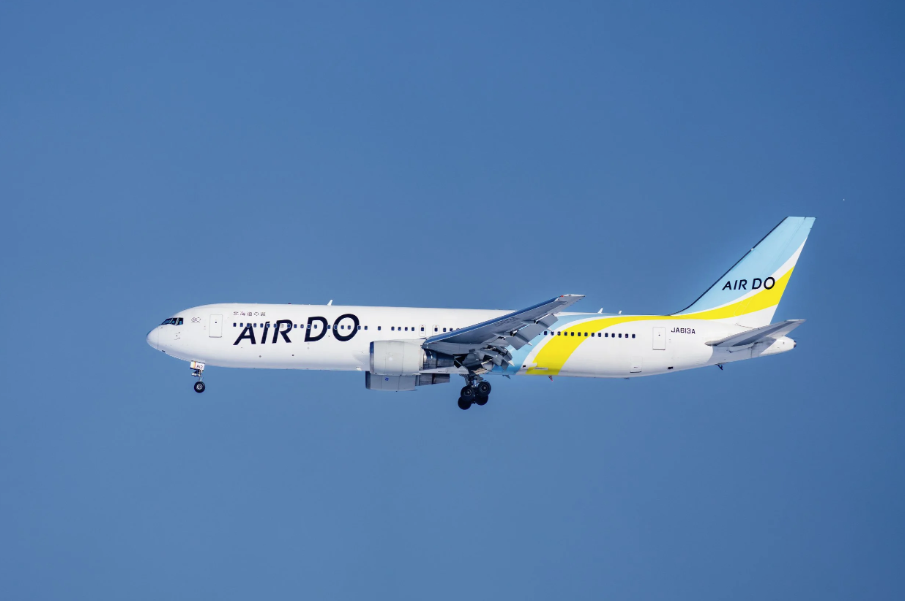
NABLA Mobility, Inc. (Headquarters: Chiyoda-ku, Tokyo; Founder and CEO: Shinji Tanaka; hereinafter “NABLA Mobility” or “the Company”) announced today that AIRDO Co., Ltd. (Headquarters: Sapporo, Hokkaido; Representative Director and President: Takahiro Suzuki; hereinafter “AIRDO”) has adopted the Company’s obstacle data management solution “OBST” for full operational use. AIRDO began trialing OBST in 2026, and following verification in its actual operating environment, has now moved to full-scale adoption.
【Background to the Adoption】
Accurately identifying obstacle information related to airport-area construction, crane installations, and similar activities, and reflecting it in flight go/no-go decisions and aircraft performance assessments, is a critical task airlines must perform to ensure safe and appropriate flight operations. At the same time, this information is continuously issued and updated through multiple sources, including NOTAMs※, and checking and managing it has required a great deal of manual work.
※NOTAM: Short for “Notice To Airmen,” a NOTAM is an official notice issued and managed by aviation authorities in each country to inform airlines and other stakeholders of information affecting flight operations that they need to know before flying that day, such as runway closures, facility outages, airspace restrictions, and construction work.
“OBST” is a solution that efficiently processes, organizes, and manages obstacle information contained in NOTAMs and other sources, supporting airlines’ flight operation decisions and performance assessment work. By structuring and visualizing information such as obstacle location and altitude, it helps reduce staff workload and improve the quality of their work.
For more information about OBST → our website
【Adoption Benefits Confirmed During the Trial】
During the trial, AIRDO used OBST in live operations to verify its effectiveness. Even obstacle information arising unexpectedly could be reflected in operations immediately, closing the gap that previously required staff to be on-site, and reinforcing AIRDO’s safety framework.
Automating the confirmation and measurement work also cut manual workload, reduced the risk of missed checks and delays, and freed up staff time for core tasks like monitoring flight status. Secondary checks by specialists were reduced as well, improving both operational quality and efficiency.
Based on these results, AIRDO decided to adopt OBST for full-scale use.
Through the trial, we were able to build a framework that lets us respond to obstacle information around the clock and reflect it in operations promptly, and this was a major achievement in further strengthening the framework that supports safe operations. In particular, we place high value on the fact that automating confirmation and measurement work that had previously relied on manual effort reduced the risk of missed checks and delayed responses. We will continue working with NABLA Mobility to build a safer and more efficient operational framework.
AIRDO Co., Ltd.
Takeshi Fujinuma, General Manager, Operations Support Department
We are deeply honored that AIRDO has adopted OBST. With this full-scale adoption, we are delighted to have contributed to supporting safe operations, establishing a round-the-clock response framework for obstacle information and automating work, without requiring major changes to on-site workflows. Going forward, we will continue working closely alongside airlines on the ground, developing and delivering solutions that support safer, more efficient operations, and contributing to the safety and operational quality of the aviation industry as a whole.
NABLA Mobility, Inc.
Shinji Tanaka, Founder and CEO
About NABLA Mobility
NABLA Mobility develops and provides digital solutions that help airlines improve the efficiency and resilience of their flight operations and support decarbonization. Leveraging data analytics and AI/ML, the Company supports more sophisticated decision-making in complex, real-world flight operations. Alongside its flagship product “Weave,” NABLA Mobility offers a range of products, including “Operational Forecaster,” which predicts flight delay risk for operations control staff, and “OBST,” which enhances the management of obstacle data such as NOTAMs for aircraft performance engineers.
To support further business growth, NABLA Mobility is actively strengthening its team while developing new products. We are looking for members who share our mission and want to take on the challenge of improving efficiency and decarbonization across the aviation industry. If you are interested, please contact us or apply through our careers page.
For the latest career opportunities → our careers page
About AIRDO
Founded in 1996, AIRDO launched service on the Sapporo–Tokyo route in December 1998. Based in Hokkaido, the airline operates a route network connecting Hokkaido with Honshu and Fukuoka, flying a fleet of Boeing 767-300 and 737-700 aircraft.
<Press Contact>
NABLA Mobility, Inc.
Public Relations email:press@nabla-mobility.com
MJets Air Renews Long-Term Partnership with AIR SUPPORT® for PPS Flight Planning®
MJets Air recently renewed its partnership with AIR SUPPORT®, continuing a strong collaboration built on reliability, efficiency, and long-term operational value.

Supporting Daily Operations with Better Visibility
For MJets Air, PPS Flight Planning® plays a central role in daily operations, supporting planning processes and improving overall operational awareness.
The platform helps enhance planning efficiency and accuracy in flight preparation, while reducing manual workload across operational teams. This enables both crews and operations staff to work with more consistent and reliable information when making time-sensitive decisions.
“AIR SUPPORT supports our daily operations by improving planning efficiency, giving our team better situational awareness, and helping ensure greater accuracy in flight preparation,” explains Paveen Nair, Head of Operations Control Center at MJets Air.
Reducing Complexity and Supporting Faster Decisions
Beyond improving visibility, PPS Flight Planning has helped MJets Air simplify a range of operational processes.
Key capabilities such as flight planning, route optimization, and operational visibility support the team in reducing workload and improving decision-making, particularly during dynamic operational situations.
“The most valuable capabilities are those that help us plan more accurately and operate more efficiently,” says Paveen Nair. “Our team values tools that reduce complexity, save time, and support better decisionmaking during both routine and time-sensitive operations.”

Reliable Software Supported by Responsive Assistance
In addition to system functionality, MJets Air highlights the importance of responsive support in maintaining smooth operations.
When operational challenges arise, timely assistance helps ensure continuity and minimizes disruption to flight operations.
“When we needed quick support related to an operational issue, AIR SUPPORT responded promptly and helped us resolve the matter efficiently, and this minimized disruption and allowed us to continue operations smoothly,” says Paveen Nair. “That combination of reliable software and accessible support has had a clear positive impact on our operation.”
From Planning Tool to Operational Backbone
Since its initial implementation, MJets Air’s use of PPS Flight Planning has evolved significantly.
What began as a focused planning tool has gradually become an integrated part of the airline’s broader operational workflow, used consistently across daily activities.
“As our familiarity with the platform grew, so did the value we were able to extract from it,” Paveen Nair adds.
A Trusted Operational Partner
For MJets Air, the value of PPS Flight Planning extends beyond features and functionality. The combination of reliable software and responsive support has made AIR SUPPORT a trusted long-term partner in their operations.
“AIR SUPPORT is a trusted partner because they consistently deliver both dependable solutions and professional support. In our environment, trust is built on responsiveness, reliability, and the ability to support operational needs without unnecessary complexity. AIR SUPPORT has demonstrated those qualities, which is why we see them as a valued long-term partner,” says Paveen Nair.
About MJets Air
MJets Air is a Malaysia-based air cargo operator and a flagship entity within the MMAG Aviation Consortium (MAC), operating from Kuala Lumpur International Airport. The company provides a range of air freight and logistics services supported by its dedicated aircraft fleet and aviation infrastructure.
MJets Air holds an AOC issued by the Civil Aviation Authority of Malaysia (CAAM), along with additional operational licenses from the Malaysian Aviation Commission (MAVCOM), enabling a broad scope of aviation and cargo operations.
With a focus on efficiency, reliability, and service quality, MJets Air plays an active role in regional logistics and serves as a strategic gateway for air cargo distribution across ASEAN.
LOT Polish Airlines Equips Pilots with Flight Path Optimization from StorkJet
Katowice, Poland – 28.05.2025
LOT Polish Airlines and StorkJet are continuing to build on a collaboration that began in 2019 with the implementation of StorkJet’s Advanced APM (Aircraft Performance Monitoring) and has grown steadily ever since. As the next step in fuel-efficient flying, LOT has decided to equip its pilots with FlyGuide FPO for Flight Path Optimization.
FlyGuide FPO helps pilots make the most of every flight. The application turns complex performance, weather, and aircraft-specific data into clear in-flight recommendations for optimal speeds and altitudes during climb, cruise, and descent. As a result, pilots can identify fuel-saving opportunities more easily and support more efficient flight execution in daily operations.
“Achieving fuel efficiency requires consistent operational decisions grounded in real flight conditions. FlyGuide FPO enables pilots to optimize speeds and altitudes by combining aircraft performance data with weather and contextual flight information,” said Mateusz Dziudziel, Director of Fuel Department at LOT Polish Airlines
As part of the post-implementation cooperation, StorkJet visited LOT’s briefing room to meet with pilots, discuss fuel efficiency initiatives, and answer questions about the application over a cup of coffee.
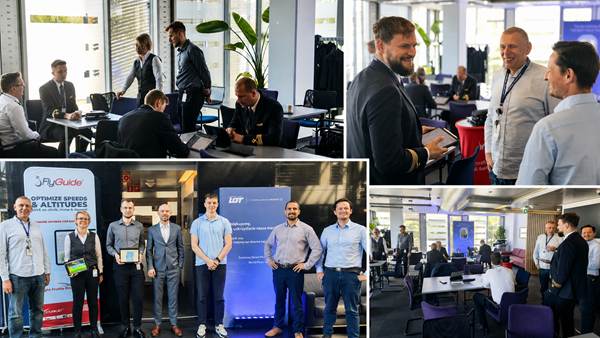
Storkjet employees also had opportunity to observe FlyGuide app use throughout the flight. Team gathered feedback which is very valuable for purpose of customizing the app to better meet LOT operational context.
Pilots confirmed that FlyGuide and FlyGuide FPO are highly practical tools for day-to-day operations. They described FlyGuide as intuitive and easy to navigate, with information that is directly relevant to their daily work. Pilots particularly valued the expected taxi-out and taxi-in routes, anticipated arrival shortcuts, speed and altitude recommendations, and the clear presentation of fuel-saving opportunities.
“We are excited to continue working with LOT and to extend our solutions to support their flight opertions,” said Renata Niedziela, CEO of StorkJet. “FlyGuide FPO was designed to give pilots clear, data-driven guidance for making efficient in-flight decisions, so we are especially pleased to see how positively it has been received by the pilot community.”
A big thank you to the LOT team and all the pilots for their openness, engagement, and feedback. We are delighted to see our cooperation with the Polish national carrier continue to grow.
About LOT
LOT Polish Airlines is a modern carrier connecting Central and Eastern Europe with the rest of the world. LOT’s offer includes direct long-haul flights to airports in the United States, Canada, India, Japan, and South Korea. The Polish carrier has been consistently increasing the number of its flights to those destinations, thus strengthening its position in Central and Eastern Europe. It operates its long haul flights with the Boeing 787 Dreamliner, one of the most advanced wide-body aircraft in the world. Present in the sky since 1929, the Polish carrier is the 11th oldest airline worldwide and one of the most internationally recognisable Polish brands.
About StorkJet:
Fuel Efficiency and Aircraft Performance
Our passion, your savings
StorkJet provides IT solutions and consulting services that help airlines cut fuel costs, reduce emissions, and improve flight operations by turning flight data into actionable guidance. With StorkJet, carriers get equipped with precise tools for aircraft performance monitoring, fuel planning, pilot decision support across all flight phases, and post-flight feedback – thanks to combining machine learning, physics-based modeling, and big data analytics.
Airlines working with StorkJet gain a single partner for all fuel efficiency needs – flexible, data-driven, and focused on real operational goals. Trusted by the world’s leaders in sustainable aviation.
Boeing and Sun PhuQuoc Airways Announce Order for Up to 40 787 Dreamliner Jets
- New luxury airline makes first direct jet purchase to grow tourism and economy on Vietnam’s largest island
WASHINGTON, Feb. 18, 2026 /PRNewswire(opens in a new tab)/ — Boeing [NYSE: BA] and Sun PhuQuoc Airways today announced the new Vietnam-based carrier has ordered up to 40 787 Dreamliner jets to serve as the backbone of its widebody fleet. The airline will leverage the ultra-efficient, long-range 787 Dreamliner to connect international travelers to its Vietnam hub at Phu Quoc International Airport.
“Our partnership with Boeing establishes a strong foundation for building a world-class airline that operates in sync with the tourism and resort ecosystem Sun Group has developed,” said Dang Minh Truong, chairman of Sun Group, the airline’s Vietnam-based parent company. “We selected the Boeing 787-9 not only for its superior operational performance, but because it is the most suitable aircraft type to realize our vision of bringing Phu Quoc to the world and bringing the world to Phu Quoc.”
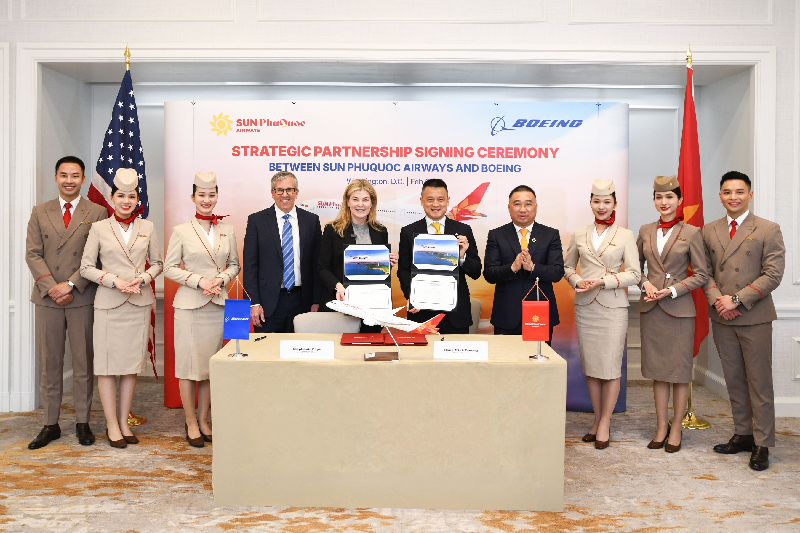
General Secretary To Lam and U.S. government representatives joined airline and Boeing leaders to recognize Sun PhuQuoc’s previously unidentified purchase, which is the largest Boeing widebody order in Vietnamese history.

With a range of 7,565 nautical miles (14,010 km), the 787-9 will position Sun PhuQuoc Airways to efficiently connect Phu Quoc with major cities and other tourist destinations across Asia, Europe and North America.
The 787 Dreamliner delivers superior comfort to passengers with the largest windows of any widebody airplane flying today and air that is pressurized at a lower cabin altitude, allowing passengers to arrive at their destinations feeling more refreshed.
“We are excited to work with Sun PhuQuoc Airways as they join other global airlines in flying the 787 Dreamliner, which connects the most countries of any widebody fleet,” said Stephanie Pope, president and CEO of Boeing Commercial Airplanes. “The 787-9’s unmatched range, fuel efficiency and passenger comfort will give the airline flexibility to open new long‑haul markets, lower operating costs and contribute to local tourism growth.”
Since airlines began flying the 787 Dreamliner family in 2011, the global fleet has helped launch more than 535+ new nonstop routes globally and carried more than 1.2 billion passengers, further enhancing connectivity and expanding global travel options.
With Southeast Asia poised for significant air travel growth over the next 20 years, Vietnam is expected to be the region’s fastest-growing aviation market with annual passenger growth of nearly 8% by 2030.
About Sun PhuQuoc Airways
As Vietnam’s first airline named after an island, Sun PhuQuoc Airways is developed by Sun Group under a “resort aviation” model with a hub-and-spoke network strategy. The airline directly connects Phu Quoc to major domestic and international tourism and economic centers through non-stop flights, competitive fares, and a seamless experience integrated with the island’s comprehensive ecosystem. With plans to expand its fleet to 100 aircrafts by 2030, Sun PhuQuoc Airways is well positioned to capture the next wave of premium tourism demand, contributing to the sustainable global rise of both Phu Quoc and Vietnam.
About Boeing
A leading global aerospace company and top U.S. exporter, Boeing develops, manufactures and services commercial airplanes, defense products and space systems for customers in more than 150 countries. Our U.S. and global workforce and supplier base drive innovation, economic opportunity, sustainability and community impact. Boeing is committed to fostering a culture based on our core values of safety, quality and integrity.
Contact
Boeing Media Relations
media@boeing.com
Boeing and SCAT Airlines Announce Order for Five 737 MAX Jets to Support Growth
- Kazakhstan carrier will add capacity and range with the 737-9 to serve growing air travel demand and expand international routes
- First Central Asian 737 MAX operator continues fleet modernization with fuel-efficient airplanes
SHYMKENT, Kazakhstan, April 29, 2026 /PRNewswire(opens in a new tab)/ — Boeing [NYSE: BA] and SCAT Airlines today announced the carrier will expand its fleet and boost capacity with the fuel-efficient 737 MAX. The airline’s previously unidentified order for five more 737-9 jets will support operational efficiency and expand longer-range single-aisle service, including more routes to Europe.
SCAT also converted five 737-8 jets from a previous order to the larger 737-9.

Boeing and Kazakhstan’s SCAT Airlines announced that the carrier will expand its fleet and boost capacity with the fuel-efficient 737 MAX.
SCAT Airlines will leverage its larger 737-9 fleet to operate long-haul flights from Kazakhstan and pioneer seventh-freedom routes from Central Asia across Europe and Asia. The airline recently launched a landmark Prague-Sanya service, connecting the Czech Republic and China with a technical stop in Bishkek, Kyrgyzstan ─ a journey of more than 14 hours.
“This fleet update allows SCAT Airlines to better meet growing passenger demand while maintaining the flexibility to serve a diverse and expanding route network,” said Vladimir Denissov, president of JSC SCAT Airlines. “Converting five of the previously ordered 737-8s to 737-9s, together with the new firm order for five 737-9s, enhances our seating capacity per flight and will improve schedule reliability as we expand our international network.”
The 737 MAX family delivers exceptional efficiency and performance, reducing fuel use by 20% compared to the airplanes it replaces. The 737-9 seats up to 220 passengers and has a range of up to 6,110 kilometers (3,300 nautical miles), giving airlines the capacity and extended range to open new routes and profitably serve high-demand markets.
“SCAT’s decision to grow its 737-9 fleet highlights the versatility and economic advantages of the 737 MAX family,” said Paul Righi, Boeing vice president of Commercial Sales and Marketing for Eurasia, India and South Asia. “The 737-9 offers the right combination of capacity, range and efficiency to help airlines expand their networks while lowering operating costs. We’re proud to support SCAT as it connects Central Asia with more destinations across Europe and beyond.”
Based in Shymkent, Kazakhstan, SCAT Airlines operates an extensive domestic and international network across Central Asia and the Commonwealth of Independent States with nearly 40 Boeing jets in service. The airline was the first in Central Asia to fly the 737 MAX and currently operates nine 737-8 and five 737-9 airplanes.
A leading global aerospace company and top U.S. exporter, Boeing develops, manufactures and services commercial airplanes, defense products and space systems for customers in more than 150 countries. Boeing’s global workforce and supplier base drive innovation, economic opportunity, sustainability and community impact. The company is committed to fostering a culture based on its core values of safety, quality and integrity.
GE Aerospace Expands Use of Aireon’s Space-Based ADS-B Data Across SaaS Solutions
MCLEAN, VIRGINIA – 25 February 2026 – GE Aerospace has implemented broader use of Aireon’s space-based Automatic Dependent Surveillance–Broadcast (ADS-B) data, delivering enhanced situational awareness and advanced analytics across its full suite of Event Measurement System (EMS) flight analytics solutions.
In 2024, GE Aerospace integrated Aireon data into its Airspace Insights solution, enabling airlines to identify airspace inefficiencies, optimize flight paths, and maximize airspace performance by reducing fuel consumption and increasing operational capacity.
Building on this collaboration, the new agreement extends Aireon’s global ADS-B data across all GE Aerospace EMS solutions — beyond Airspace Insights — providing airlines with more precise, consistent, and truly global flight tracking. This expanded data integration delivers deeper insight into fuel utilization, aircraft operating efficiency, and other key performance indicators critical to improving airline performance.
“We are delighted to grow our cooperation with the GE team and to hear the value that Aireon data delivers to its customers,” said Jennifer Andersson, Director of Sales for Commercial Data Services at Aireon. “With these integrations, GE Aerospace customers will gain access to the most precise, consistent, and trusted global flight tracking data available today across all GE Aerospace EMS products. These insights drive meaningful improvements in operational performance.”
About Aireon LLC
Aireon has deployed a space-based air traffic surveillance system for Automatic Dependent Surveillance-Broadcast (ADS-B) equipped aircraft throughout the entire globe. Aireon is harnessing next-generation aviation surveillance technologies that were formerly ground-based and, for the first time ever, is extending their reach globally to significantly improve efficiency, enhance safety, reduce emissions, and provide cost savings benefits to all stakeholders. Space-based ADS-B surveillance covers oceanic, polar, and remote regions, and augments existing ground-based systems that are limited to terrestrial airspace. In partnership with leading ANSPs from around the world, like NAV CANADA, AirNav Ireland, ENAV, NATS and Naviair, as well as Iridium Communications, Aireon is providing a global, real-time, space-based air traffic surveillance system, available to all aviation stakeholders. For more information, please visit www.aireon.com.
About GE Aerospace
GE Aerospace is a global aerospace propulsion, services, and systems leader with an installed base of approximately 49,000 commercial and 29,000 military aircraft engines. With a global team of approximately 53,000 employees building on more than a century of innovation and learning, GE Aerospace is committed to inventing the future of flight, lifting people up, and bringing them home safely. Learn more about how GE Aerospace and its partners are defining flight for today, tomorrow and the future at www.geaerospace.com.
JetBlue signs for Skywise Fleet Performance+ solution
Orlando, United States, 21 April 2026 – Skywise, Airbus’ recently launched digital services company, announced at MRO Americas that it has signed an agreement with JetBlue to deploy its advanced Skywise Fleet Performance+ (S.FP+) solution. The contract will extend the digital solution capabilities across JetBlue’s A320 Family aircraft and its growing A220 fleet, supporting improved aircraft availability and maintenance planning.

As one of Airbus’ most advanced digital services, S.FP+ enables airlines to integrate real-time monitoring, accelerated troubleshooting, and enhanced reliability assessments. By leveraging aircraft data and predictive analytics, this platform optimises maintenance scheduling to reduce operational disruptions and ensure consistent, data-driven fleet performance.
“By implementing state-of-the-art technology like Skywise Fleet Performance+, JetBlue is giving our Technical Operations team more advanced tools to monitor aircraft condition and health, respond more quickly, and plan maintenance more effectively,” said David Marcontell, Vice President Technical Operations at JetBlue. “That helps us improve fleet dependability, strengthen reliability and operate with an important edge in efficiency and execution.”
The JetBlue agreement expands Skywise’s presence in North America and reflects growing adoption of digital services across the region. It also marks one of the first customer agreements announced since the launch of Skywise earlier this month, echoing Airbus’ ambition to seamlessly continue supporting airline operators with integrated and scalable solutions.
Airbus’ Global Services Forecast for North America, also announced at MRO Americas, highlights connectivity and digital solutions as the fastest-growing segment of the aviation services market over the next two decades, creating valuable solutions for more efficient operations and savings for the industry.
With operations in the U.S., Canada and Colombia, Skywise brings together Airbus expertise in aircraft systems, flight operations, and data analytics to support airline customers globally.
WinOps announces new partnership with SolitAir
WinOps is proud to announce our new partnership with SolitAir as a new WinOps customer. We highly value the trust SolitAir has placed in WinOps, and we look forward to a long-term partnership where WinOps can contribute to the growth and success of SolitAir’s operations.
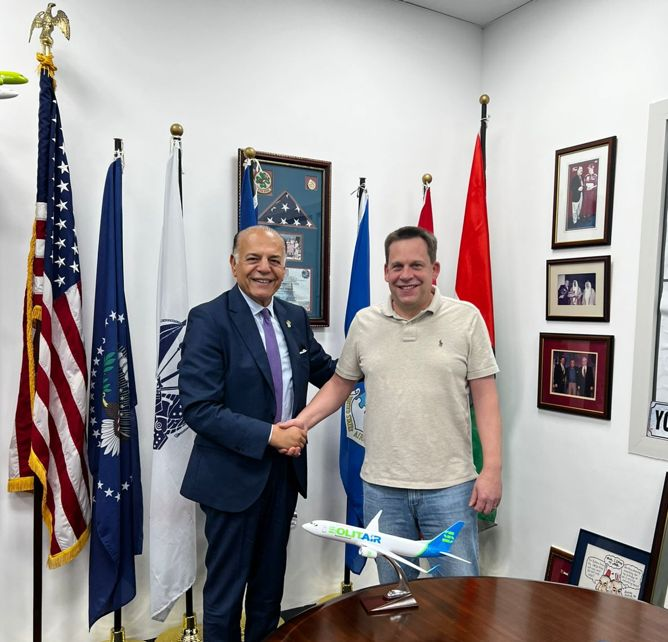
As SolitAir continues to expand its express cargo network, we are excited to support its teams with efficient, scalable, and operationally focused solutions. This collaboration reflects a shared commitment to innovation, reliability, and operational excellence in the air cargo industry, and we are excited about what we can achieve together.
About SolitAir
Headquartered at Dubai World Central (DWC), SolitAir continues to accelerate its regional and international expansion as the UAE’s dedicated B2B, Middle Mile, airport-to-airport, express cargo airline.
With a rapidly growing network across the Middle East, Africa, the Indian Subcontinent, CIS, China, and beyond, the airline is strengthening trade lanes that connect the Global South to the world.
SolitAir operates a 220,000 sq. ft. state-of-the-art cargo facility at Dubai World Central (DWC) with direct runway access and full custodial control, ensuring fast, secure, and high-volume cargo movement. Designed for efficiency and compliance, the facility enables seamless airside and landside operations.
Operating a modern fleet of Boeing 737-800 freighters, SolitAir is on track to expand from 7 to 20 aircraft by the end of 2026. While the original target was to connect 50 cities by 2026, SolitAir has already achieved 38 active routes today, underscoring the rapid pace of its network expansion. These include key hubs such as Hong Kong, Mumbai, Dhaka, Nairobi, Johannesburg, Istanbul, Riyadh, and Almaty.
About WinOps
WinOps is a global aviation technology company focused on simplifying and strengthening airline and operator operations through intelligent, purpose-built software.
Headquartered in Switzerland, with a dedicated Product Development hub in in Spain, WinOps combines Swiss precision with world-class engineering expertise. Our international footprint reflects how we think about aviation: global by nature, uncompromising on quality, and built for real operational complexity.
WinOps was created by aviation professionals who understand the realities of daily operations; fragmented systems, regulatory pressure, tight margins, and the need for real-time clarity. That insight drives everything we build. Our platform unifies flight operations, crew management, training, compliance, scheduling, and commercial workflows into one connected ecosystem, giving airlines a single source of operational truth.
www.winops.aero
www.solitairholding.com
Solomon Airlines Selects SkyNet Aviation REACH NG as their new OCC software platform
SkyNet Aviation is pleased to welcome our newest REACH Aero Next Gen customer – Solomon Airlines!
Solomon Airlines has selected the REACH NG as their centralised web-based OCC hub. Solomon Airlines will transition from multiple legacy, disconnected applications to the REACH Next gen platform for their scheduling, rostering, tracking, record keeping, and more.
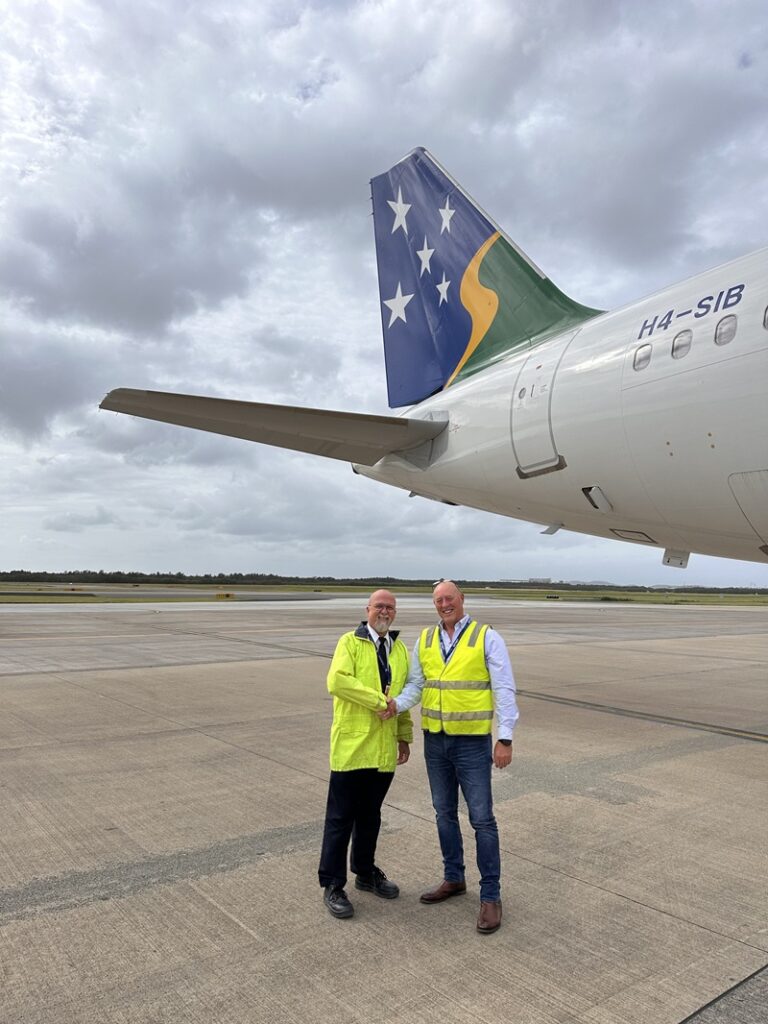
The REACH Next Gen platform is being implemented under the guidance of Flight Operations Manager Capt. Mark Purdie and SkyNet Aviation General Manager Paul Chevalier.
Solomon Airlines selection of REACH Next Gen highlights the desire for small to medium sized airline fleets to modernise and centralise their OCC software for improvements in safety, efficiency, and capability.
SkyNet Aviation REACH Aero Next Gen offers total control over scheduling, rostering, real-time day-of-operations management, flight following, and seamless, two-way integrated Jeppesen Dispatch or ForeFlight.