
Articles
| Name | Author |
|---|
CASE STUDY: ZIPAIR tackles turbulence with predictive real-time data
Author: Kenichi Ura, Flight Operations team, ZIPAIR
SubscribeTurbulence data from SkyPath with Starlink in-flight connectivity makes flying more comfortable and safer, as Kenichi Ura, Flight Operations team, ZIPAIR, explains.
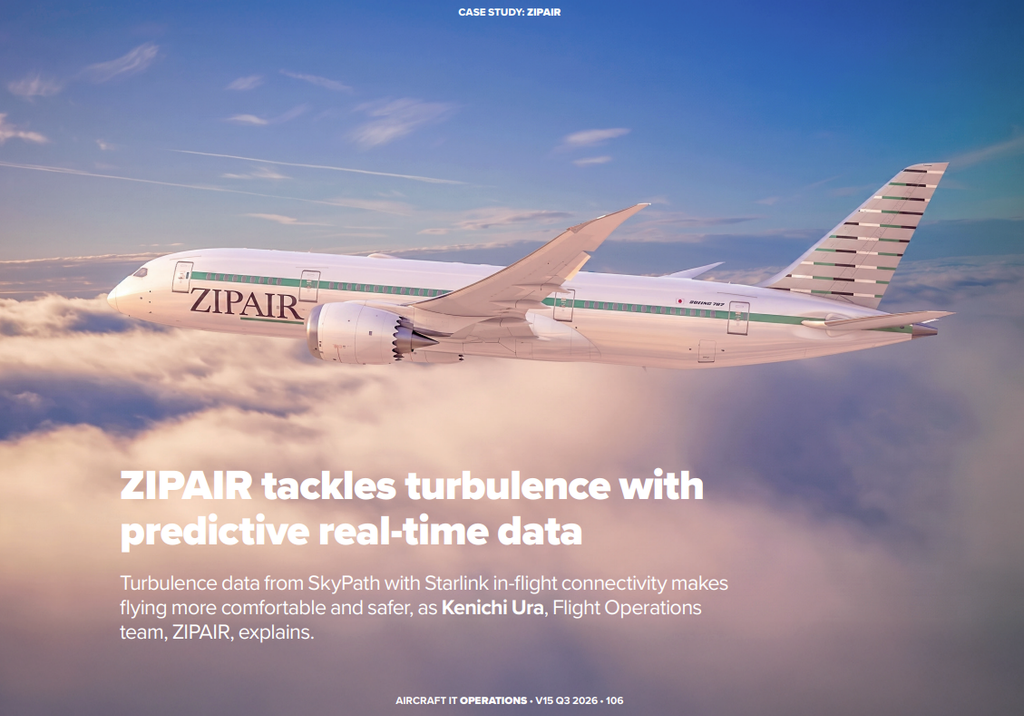
We often feel turbulence before we see it, making it hard to take corrective action in time. The solution is for pilots to access accurate data in real-time that alerts them if they are heading towards turbulence. In this case study, I will summarize how ZIPAIR relies on SkyPath turbulence mitigation and Starlink in-flight connectivity to achieve smoother journeys.
INTRODUCING ZIPAIR
Let me begin by sharing a little about ZIPAIR, which we describe as a ‘new basic’ airline (figure 1).
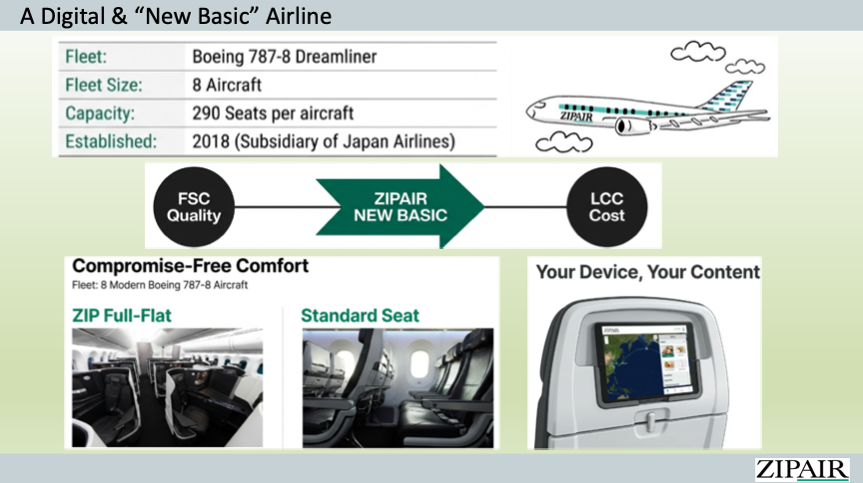
Figure 1
Founded in 2018 as a subsidiary of Japan Airlines, ZIPAIR is based out of Narita, Japan, flying a fleet of eight Boeing 787-8 Dreamliners. We combine our parent company’s strong safety culture with a highly digital operating model, which enables us to adopt advanced technology tools, like SkyPath.
CONNECTIVITY PIONEER
As a young airline, we had a choice: follow the traditional model or build our operations around data from the start. We chose the second option.

Figure 2
To support our digital model, we took a major technology step by becoming the first airline in Asia to introduce Starlink connectivity (figure 2). This provides us with fast and stable internet, not only for passengers but also for the pilots. It sets a new standard for in-flight connectivity.
A LESS TURBULENT FUTURE
As we expand our long-haul operations to North America, real-time turbulence management has become even more critical.
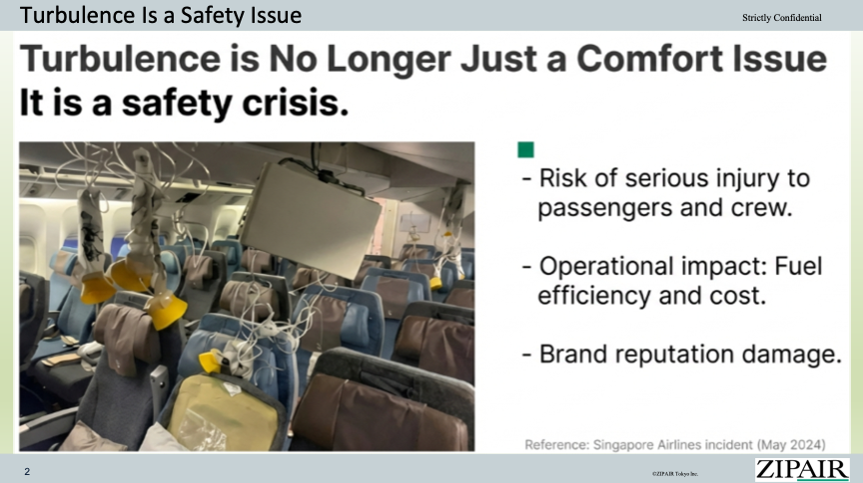
Figure 3
Turbulence is no longer just a comfort issue; it is a serious safety concern, with a risk of injury to passengers and crew (see figure 3). From an operational perspective, turbulence can reduce fuel efficiency, which has a negative impact on costs.
Increasing risks from turbulence
Even when turbulence is expected, it cannot always be avoided. However, doing something about it gains greater urgency as the environment around us changes.
Climate change is strengthening the jet stream, increasing severe clear-air turbulence, and this is not a temporary spike (figure 4). It represents a structural shift in how we fly
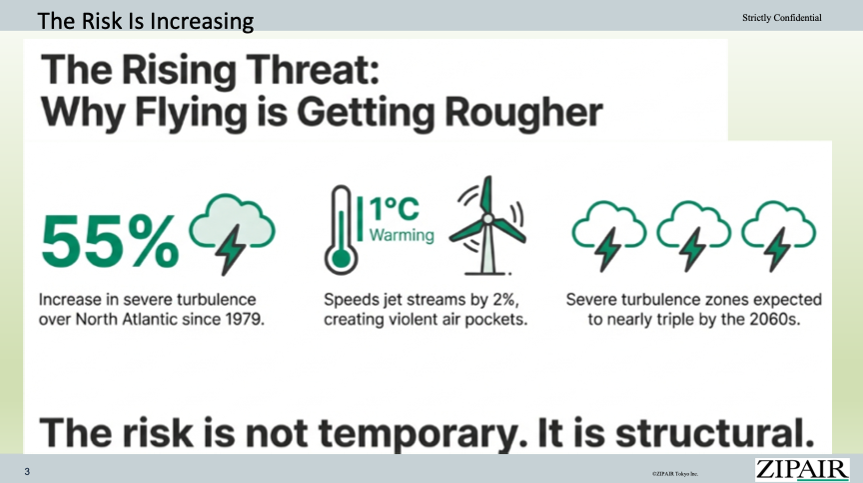
Figure 4
For example, severe air turbulence over the North Atlantic has increased dramatically since 1979, and severe turbulence zones are forecast to nearly triple by the 2060s. The problems with turbulence are that it is largely invisible – you cannot see it on a radar – it is increasing, and it is highly dynamic. In short, this makes it very difficult to manage and often we only feel turbulence when it hits.
AUTOMATED TURBULENCE DATA
Being able to act before turbulence occurs requires real-time data. Our solution was to introduce SkyPath running directly on our EFB (Electronic Flight Bag) iPads (see figure 5).
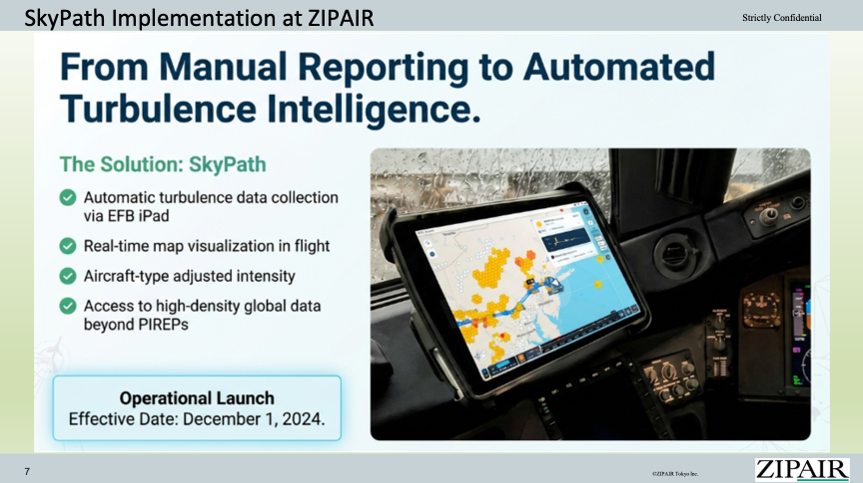
Figure 5
SkyPath automatically collects turbulence data with no extra workload required for the crew. SkyPath transforms how we operate, from a reactive turbulence response to proactive management. Recently, we operated Japan’s first direct charter flight to Orlando, Florida, which was our longest route. On such a lengthy flight, Starlink enhanced passenger comfort and provided our cockpit with high-quality real-time data.
Strategic vs Tactical Turbulence Management
As you can see in figure 6, managing turbulence risk in real-time is the core of our SkyPath solution.
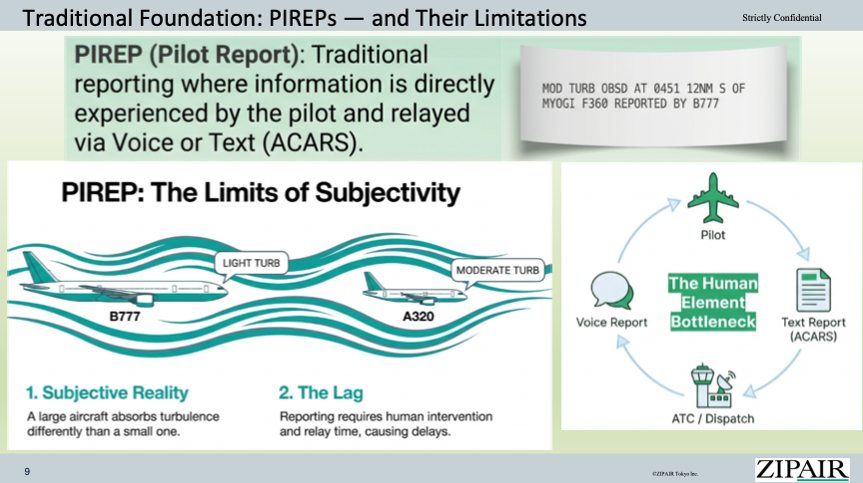
Figure 6
Traditionally, aviation has relied on PIREPs (Pilot Reports), but these are subjective. What feels okay in a heavy Boeing 777 may feel worse in an Airbus 320, and because reporting is manual, there is always a time lag. We needed SkyPath to deliver data that was both objective and immediate.
TACKLING THE MANAGING MOUNTAIN WAVE RISK
Here’s a real operational example that illustrates the challenges posed by turbulence and how we used to deal with it (see figure 7).
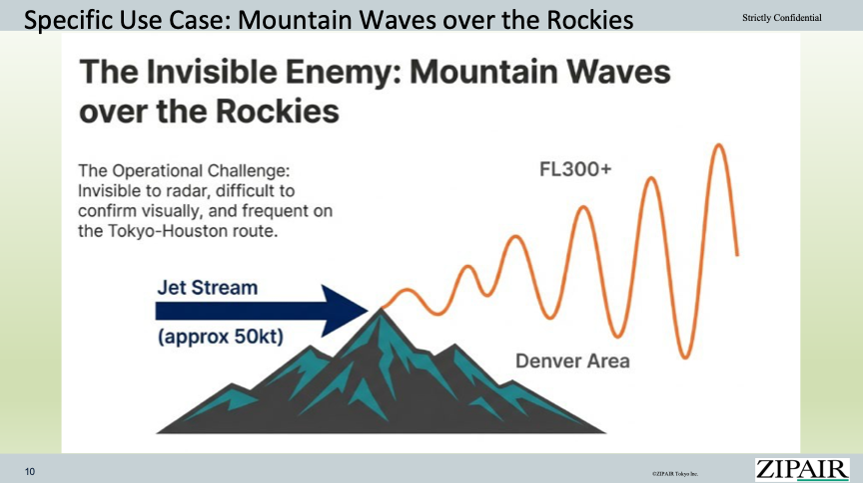
Figure 7
We were flying from Tokyo to Houston on a route that crossed the Rocky Mountains on the US West Coast. On the eastern side, near Denver, strong mountain waves frequently occur, sometimes above 40,000 feet, which presents a significant risk.
Data-driven route optimization
We managed this risk by first reviewing the National Weather Service’s Graphical Turbulence Guidance (GTG) before departure (figure 8).
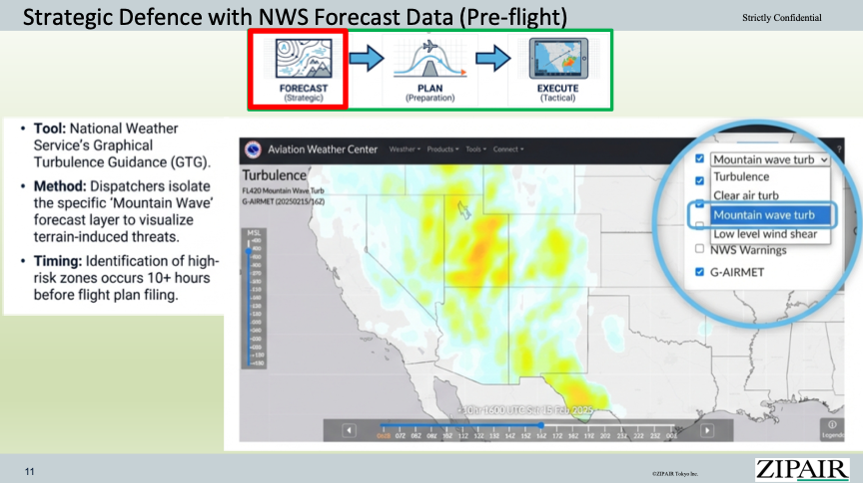
Figure 8
This enabled our dispatchers to optimize the route based on the GTG data. If moderate or stronger turbulence is expected, we can plan a route in advance, which gives us a strong strategic head start.
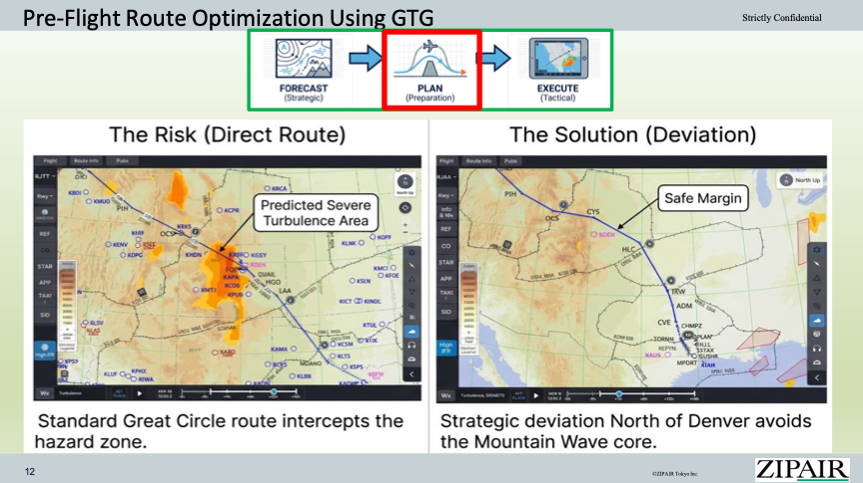
Figure 9
As figure 9 shows, our strategic preparation involved adjusting the route in advance to avoid the forecast turbulence. However, these decisions are often made more than ten hours before crossing the Rocky Mountains, and the actual conditions can still evolve.
SKYPATH’S NOWCAST
Real-time tactical monitoring with SkyPath is an essential tool once we are airborne (see figure 10).
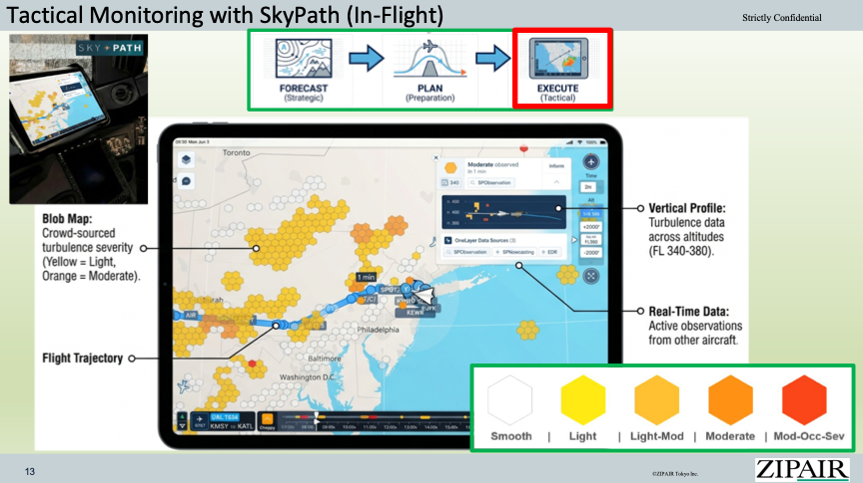
Figure 10
When the flight has taken off, we make the switch and receive live turbulence data plus predictions of turbulence ahead, with voice alerts and pop-up notifications for the crew. This shifts our focus from forecast-based avoidance to dynamic in-flight risk management.
ZIPAIR’s recent flight 16 from Tokyo to Houston illustrates the benefits of SkyPath’s ‘Nowcast’ (figure 11). The flight was last November and I was onboard, sitting in the back of the cabin.
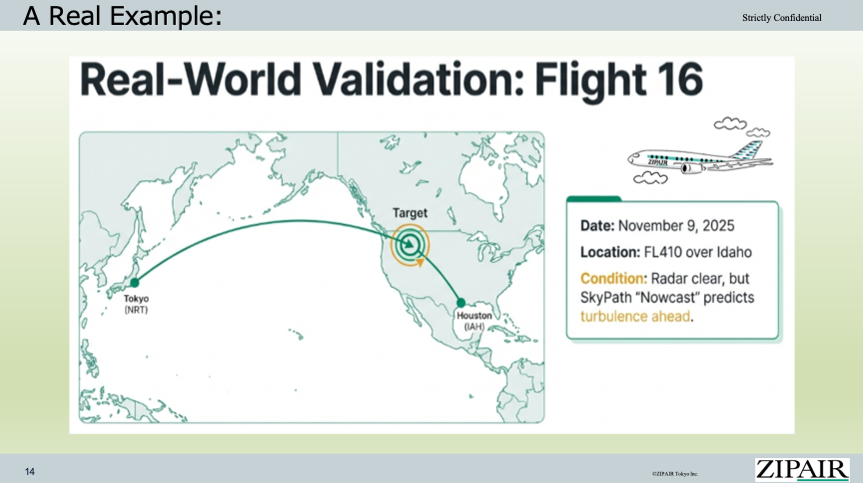
Figure 11
We were cruising at 41,000 feet over Idaho (figure 12 below). The sky was perfectly clear. The weather radar showed nothing but on the cockpit iPad, SkyPath’s Nowcast showed a large turbulence area ahead.
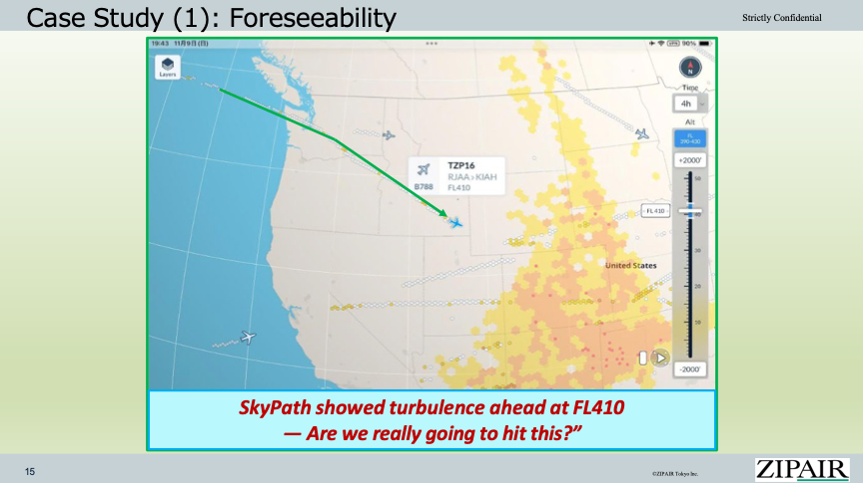
Figure 12
The crew trusted the data and turned on the seatbelt sign before any bumps started. Shortly afterwards, we felt the turbulence. The light-to-moderate turbulence was exactly where and when SkyPath predicted. Because of the early warning, there was no surprise and no panic, and everyone was safely seated when it happened.
Later, as we crossed Oklahoma, the air became smooth again and because the crew could see the real-time data, they turned the seatbelt sign off. There was no guessing or waiting. This is the power of real-time information: it reduces passenger anxiety and maximizes safety.
A PARADIGM SHIFT
SkyPath represents a true paradigm shift in how we operate. It is more than just a technology upgrade; it is a change in the way we manage risk.
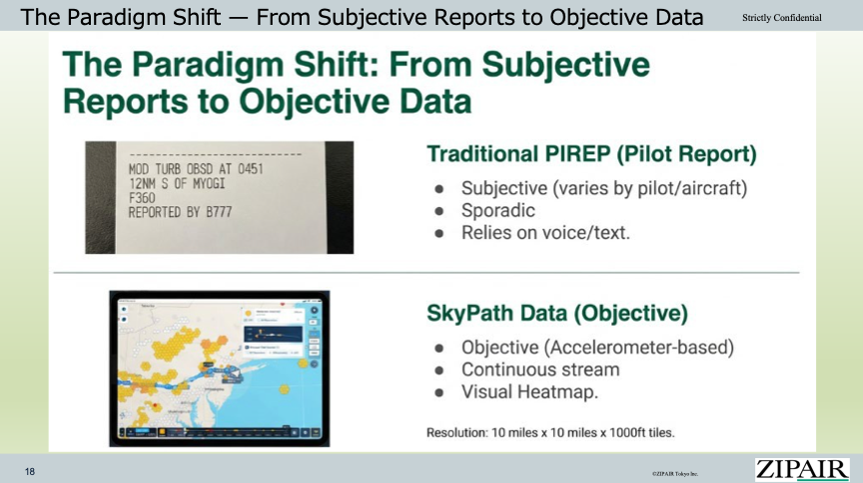
Figure 13
As I said earlier, in the past, we relied on subjective reports (figure 13). Today, we access objective data. Before, we had to wait to feel turbulence; now we can see it before it happens, and that changes cockpit decisions. It also changes dispatcher planning and how we protect our passengers.
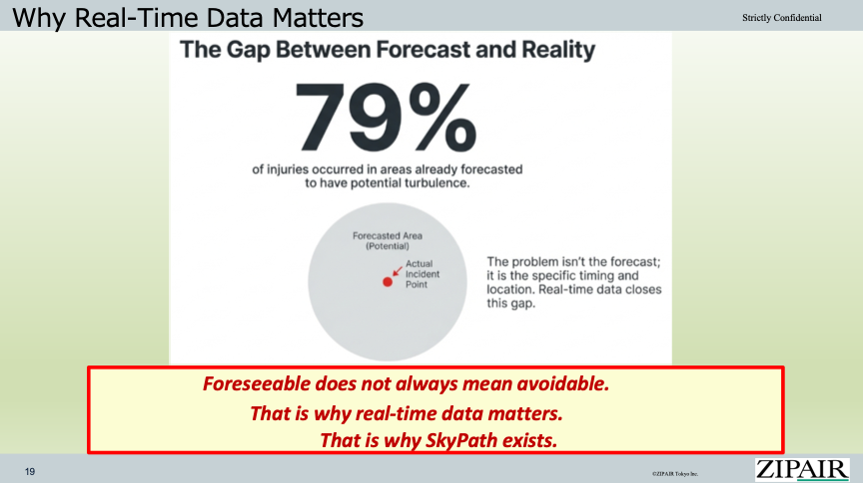
Figure 14
Nearly 80% of turbulence injuries occur in areas already identified as potentially turbulent (figure 14). But while a forecast can only predict when and where turbulence might happen, real-time data tells you exactly when and where to act, which is where SkyPath makes the difference.
As we move towards safer skies, we are making an important shift from feeling to seeing. It really comes down to something very simple: turning the seatbelt sign on at exactly the right moment and turning it off with the same precision. By seeing the risks of turbulence, instead of waiting to feel it, we can be more confident in how we protect our passengers and crew.
Comments (0)
There are currently no comments about this article.
To post a comment, please login or subscribe.