
Articles
| Name | Author |
|---|
CASE STUDY: ITA Airways adopts AI for more agile dispatch workflows
Author: Andrea Pergola, Technical Flight Dispatcher & Flight Dispatcher Instructor, ITA Airways
Subscribe
Integrated data streams and AI-driven analytics enhance dispatch efficiency and decision-making, explains Andrea Pergola, Technical Flight Dispatcher & Flight Dispatcher Instructor at ITA Airways
Fragmented data sources are a headache for dispatchers but, as this case study shows, an integrated approach with a streamlined, single source of information using The Weather Company’s Maverick™ Dispatch platform provides a time-saving solution.
SMALL START – BIG AMBITION
ITA Airways was keen to tackle daily operations challenges with smart technology from the beginning. The airline started in October 2021, soon after the Covid-19 pandemic, by taking over the operations, assets and most of the people from Alitalia. ITA Airways began with 50 aircraft and today we have a fleet of over 100, flying to more than 60 destinations, with our two main centers at Rome’s Leonardo da Vinci-Fiumicino Airport (FCO) and Milan Linate Airport (LIN) as you can see in figure 1.
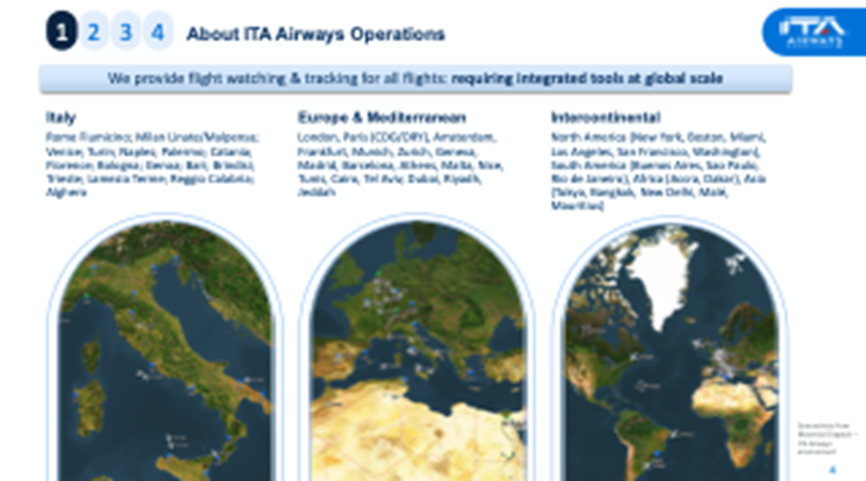
Figure 1
We cover most Italian cities, as well as many European capitals, along with some Mediterranean and Middle Eastern destinations. Our intercontinental operation covers a big chunk of the world, except Australia and the Pacific Ocean.
FRAGMENTED DATA
Our flight watching and flight tracking relied on multiple tools receiving information from all around the globe. The daily challenge was running different applications, each with its own window open on screen at the same time. Our dispatchers faced alert overload and the unconnected systems hindered situational awareness and slowed decision-making, meaning they might miss important information, which could lead to possible errors (figure 2).
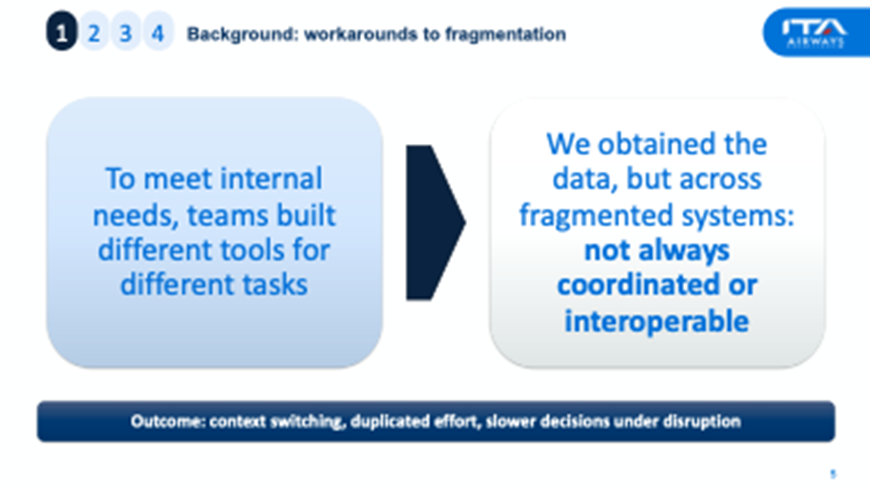
Figure 2
ALL-IN-ONE SIMPLIFICATION
We wanted to integrate everything into a single application – all in one place to make life easier for dispatchers (figure 3). This would enable them to use their time better and make the right decisions at the right moment, instead of having to hunt for data across a mass of different sources.
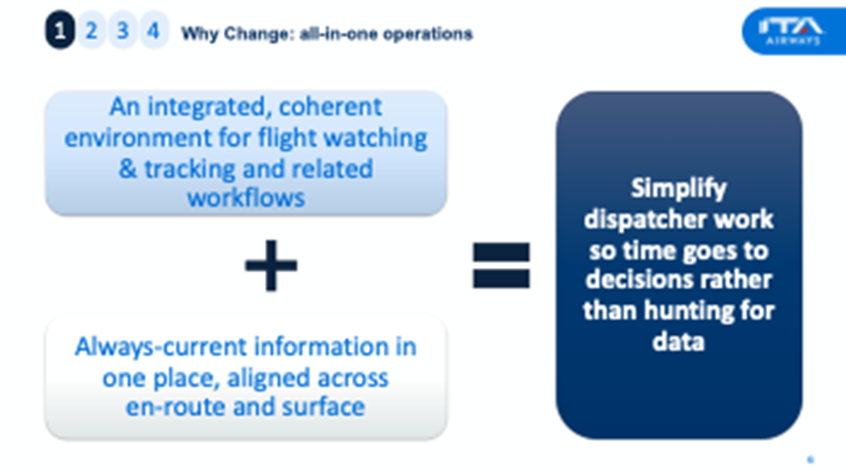
Figure 3
BESPOKE SOLUTION
The solution for us was close to hand as we already had a well-established partnership with The Weather Company through Alitalia, which had been a long-term Fusion customer (figure 4). However, Fusion is a legacy tool, and like all good legacy tools, it has its limitations, especially when you need speed, integration with other systems, and the right level of customization for your specific operations. After all, not all airlines are the same in terms of their data needs and the information they want displayed on a single screen.
Following a presentation by The Weather Company of its Maverick™ Dispatch platform, we recognized that this was the next-generation tool we needed. It also gave us the opportunity to stay with The Weather Company, which has always provided us with high-quality weather forecast and observation data.
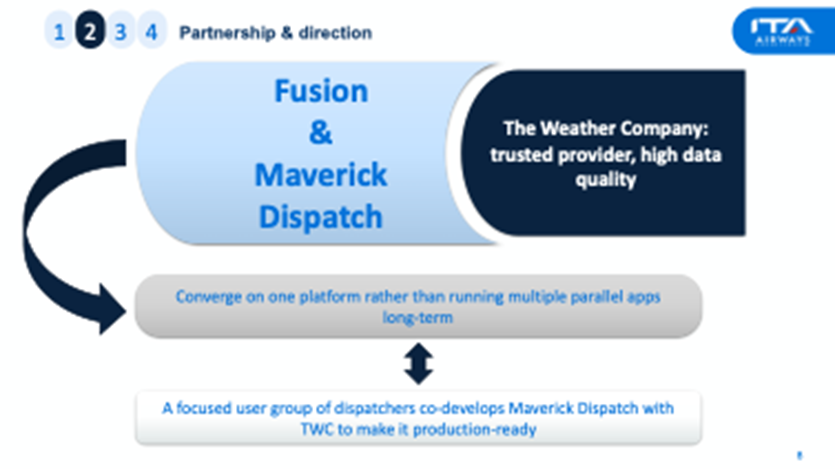
Figure 4
However, we realized that Maverick™ Dispatch was not ready yet for our requirements, so we would need to work with The Weather Company to make it production-ready for us. That meant investing time and people to work together on a bespoke application that provided a single source for what we needed in our daily operations. The transition is progressing well, as you can see from the following selection of Maverick™ Dispatch capabilities.
SURFACE MOVEMENT
The live-tracking Surface Movement screen allows dispatchers to simply scroll through and zoom into an airport, where they receive color-coded information that they can easily glance through. For example, for runway configurations, we can see clearly which are the departures in the arrival flows, and whether there is any congestion in the departure areas (figure 5).
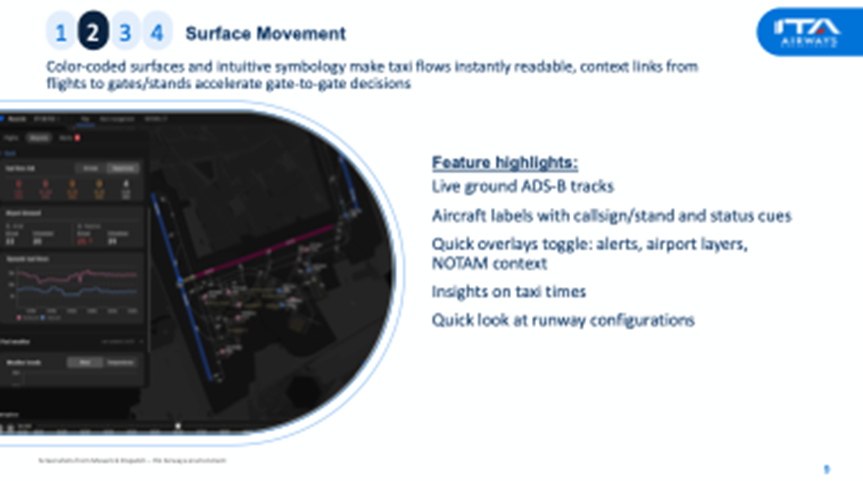
Figure 5
We can check what has occurred in the last few hours, about taxi times, and what is predicted to happen in the next few hours. This is a huge advance because we want a quick overview, especially to find alternate routes for flights. We also use it to check a destination to understand what’s going on there without having to look at data on individual flights.
ON THE ALERT
While Alerts were already good in The Weather Company’s Fusion system, they are even better with Maverick™ Dispatch. They help to reduce the cognitive load for dispatchers and enable faster responses to operational disruptions. We sort alerts by object, such as an airport, like our main hub at Rome airport, which is shown in figure 6.
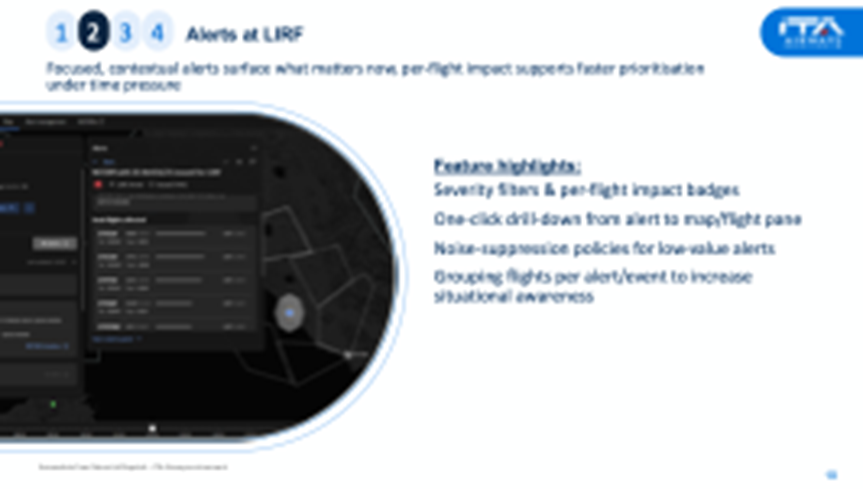
Figure 6
We can check all the flights that have an alert related to the object to see how many might be affected by the possible issue, enabling us to better understand the scale of a potential disruption.
SMART NOTAMS
Another huge benefit of the new system is AI-driven smart NOTAM (NOTice to AirMen) summaries, which help dispatchers to filter critical information rapidly. Sometimes, when you look at an airport, you see multiple NOTAMs, so you have to quickly check whether or not the airport is usable or not. Contained within the stacks of NOTAM pages is critical information that you don’t want to miss or waste time digging around to find (see figure 7).
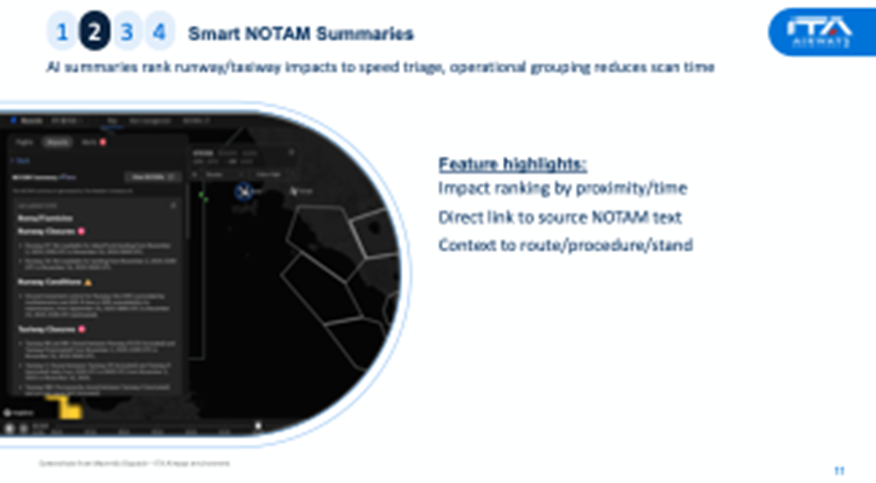
Figure 7
The AI functionality categorizes NOTAMs by importance, such as closures and conditions on the approach and on the runway. We quickly obtain an overview of what is going on at an airport and whether we can use it. We can check several airports very quickly, then, once the dispatcher has decided which airport to use, they carry out a deep dive into the NOTAMs for that location. This is a great advantage for us because previously you had to hope that the airport you thought was the best one to use didn’t contain any surprises on the last NOTAM you read – such as it being closed.
TERMINAL VIEW
We find Terminal View a tremendous support, especially its tracker feature, which shows the arrival and departure corridors at an airport (figure 8). This is helpful because the convective situation can affect departures and arrivals. Before, the dispatcher had to estimate how the forecast might change and which corridors it might affect. For example, at Rome airport, arrivals and departures are northbound, southbound, eastbound and westbound, so the situation can be complex.
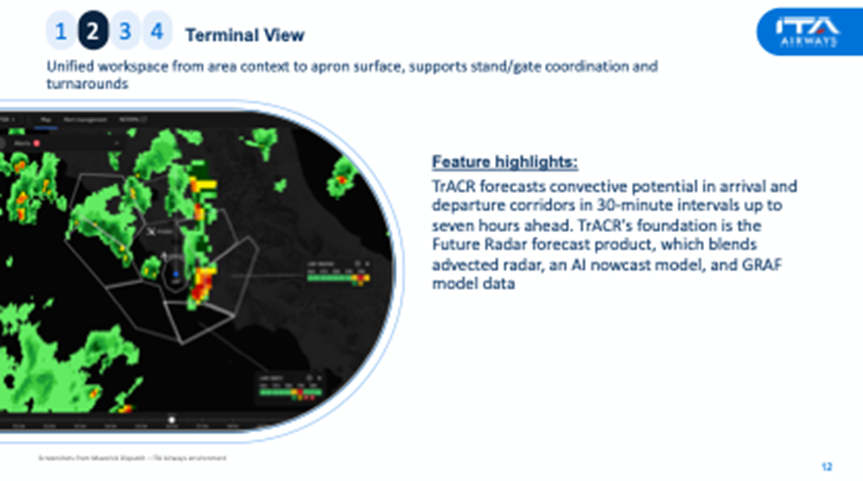
Figure 8
The tracker feature allows us to receive alerts for a specific corridor and for convective potentials in 30-minute intervals and for several hours ahead. The system automatically gives alerts only on those flights that are affected, so dispatchers can act quickly and reroute or replan flights, if required.
WEATHER AVOIDANCE
Continuing on the weather theme, Maverick™ Dispatch provides weather avoidance routes in a similar way to Fusion (figure 9).
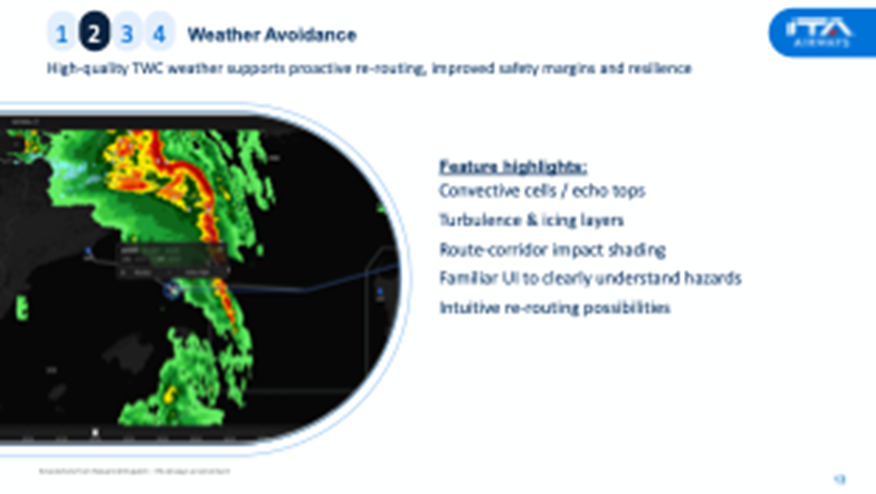
Figure 9
We have always received very good quality data from The Weather Company, helping us to quickly understand where we have to reroute flights to safer areas.
HANDLING CHANGE
Currently, we are working closely with The Weather Company, going through iterative design stages of our bespoke Maverick™ Dispatch. We set up a focus group of dispatchers to liaise with The Weather Company, who take on board our feedback with each design and will continue to do so until it is ready to use. Of course, this requires some effort on our part but, on the other hand, we are co-designing our new dispatch workflow and the policies relating to it, so we can be sure that what we receive at the end is what we really need for our operations (figure 10).
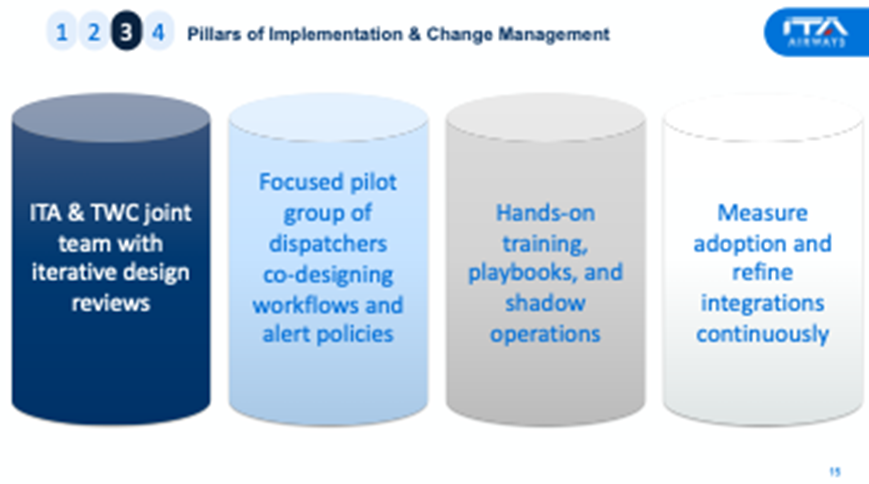
Figure 10
At this stage, our dispatchers are working with the old system and the new system in parallel, checking if what they are seeing is helping and saving them time – which it is. We have observed a reduction in the time people need to understand a situation and assess all the issues, so they can respond faster.
GROWING ENTHUSIASM
Our staff who are directly involved in the project are enthusiastic about the new software and our approach (figure 11).
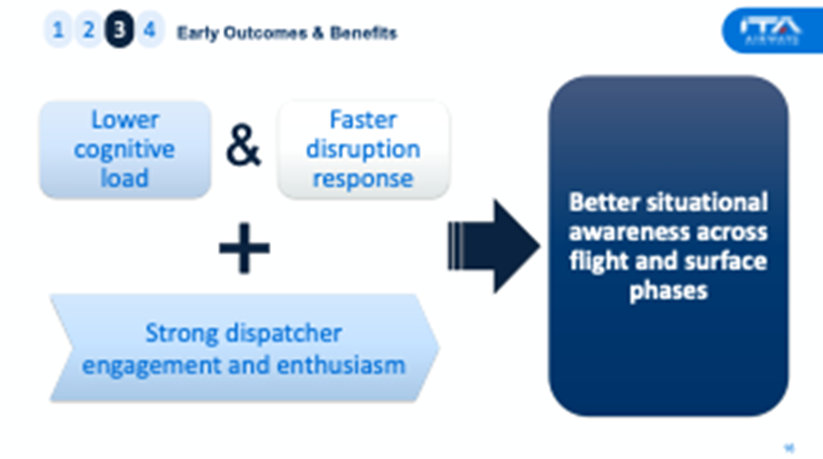
Figure 11
We have strong engagement with dispatchers who are gaining better situational awareness across all flight phases, from the ground to in-flight and then back to the ground.
NEXT STEPS
Our plan is to retire Fusion along with all the other apps that provide data to operations when we implement Maverick™ Dispatch (figure 12).
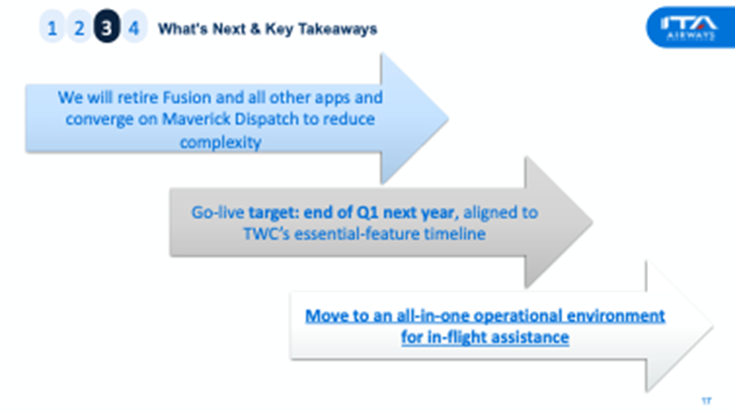
Figure 12
This single, trusted source of information for dispatchers is due to go live during the first quarter of 2026.
Comments (0)
There are currently no comments about this article.
To post a comment, please login or subscribe.