

flydocs and Tigerair Taiwan partner to accelerate aircraft records digitisation across the airline’s fleet
flydocs and Tigerair Taiwan sign a five-year agreement at MRO Asia-Pacific 2026 to digitise and streamline records management using the advanced Digital Records Management (DRM) Next Generation.
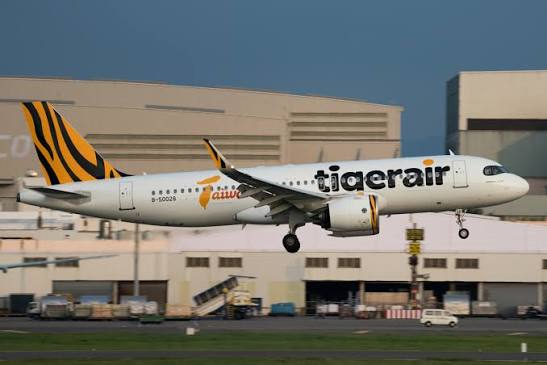
Tigerair Taiwan will implement flydocs’ advanced DRM Next Generation platform, gaining greater control over aircraft records, reducing manual processes, enhancing compliance readiness, and improving data accuracy and visibility.
flydocs, the global aviation leader in digital records, asset management, and engineering services, today announced the signing of a five-year agreement with low-cost carrier Tigerair Taiwan, a China Airlines Group company, during MRO Asia-Pacific 2026 in Singapore. flydocs will digitise and streamline records management using its advanced Digital Records Management (DRM) Next Generation across the airline’s extensive regional network and fleet of 17 aircraft.
The partnership was formally signed by Pierluigi Calù, Vice President-Digital Tech Ops Ecosystem, Asia-Pacific, Swiss AviationSoftware (Swiss-AS) and Kevin Kuo, Senior Manager of Engineering & Maintenance, Tigerair Taiwan, during MRO Asia-Pacific, one of the region’s leading events for the commercial aviation aftermarket and MRO industry.
“Today’s partnership marks an important step in strengthening collaboration across the Digital Tech Ops Ecosystem in the Asia-Pacific region. By bringing together our digital capabilities and industry expertise, we are creating new opportunities to improve operational efficiency, enhance connectivity and deliver greater value for our customers. By adopting flydocs’ DRM Next Generation, Tigerair Taiwan will reduce manual effort, enhance compliance readiness, and have more accurate, reliable asset data. These capabilities will help streamline operations, support informed decision-making and enable long-term value creation across its fleet. We are delighted to formalise this collaboration with Tigerair Taiwan at MRO APAC in Singapore and look forward to translating our shared vision into meaningful outcomes for the aviation industry.”
— Pierluigi Calù, Vice President-Digital Tech Ops Ecosystem, Asia-Pacific, Swiss AviationSoftware (Swiss-AS)
As part of the partnership, DRM Next Generation features a completely refreshed interface designed to streamline user journeys and speed up daily tasks. flydocs will deliver a comprehensive digital solution for managing aircraft records and asset data, ensuring smooth integration. With flydocs’ streamlined Onboarding and process adoption, this long-term partnership with Tigerair Taiwan will also optimise their processes.
“We are pleased to partner with Tigerair Taiwan as it advances its vision of becoming a fully digitised airline. Through our flagship DRM Next Generation solution, the airline will gain enhanced visibility, stronger data integrity and greater control over its aircraft records across the entire fleet lifecycle. As a fast-growing carrier operating in a highly competitive regional market, Tigerair Taiwan’s selection of flydocs as its Partner of Choice is a testament to the value and innovation our solutions deliver. We look forward to supporting the airline’s digitisation transformation journey and working together to drive measurable efficiencies, long-term value, and sustainable success.”
— Jennifer Ioannidou, Chief Product Officer, flydocs
“Partnering with flydocs, a trusted and global leader in digital records and asset management with extensive experience, marks an important step in enhancing the efficiency and accuracy of our technical records management. We are looking forward to adopting their DRM Next Generation and innovative approach to streamline our processes, maximise efficiency, and ensure real-time compliance, thereby positioning Tigerair Taiwan for future expansion of digital services.”
— Kevin Kuo, Senior Manager of Engineering & Maintenance, Tigerair Taiwan
MRO Asia-Pacific 2026
Join us at MRO Asia-Pacific 2026 from 23–24 September 2026 at Booth #1902, Singapore Expo Convention and Exhibition Centre.
About the Digital Tech Ops Ecosystem
Lufthansa Technik’s Digital Tech Ops Ecosystem is a flexible, multi-application suite consisting of AVIATAR, the independent platform for data and analytics; AMOS, the world-leading software for maintenance and engineering; and flydocs, global leaders in digital records and asset management; enhanced by Digital Tech Ops Engineering. Each solution operates independently but is designed to work seamlessly together, offering modular, integrated services through a customer-centric, collaborative approach along the whole value chain of technical operations. The Ecosystem is designed to boost process efficiency, reduce technical operating costs, enhance operational stability, and maximise aircraft availability and asset value across the full lifecycle, including lease transitions.
About Tigerair Taiwan
Tigerair Taiwan launched its first route in 2014. As Taiwan’s first and only low-cost carrier (LCC), it operates routes across Asia, providing travelers with affordable, reliable, and convenient options. Focusing on a warm, passionate, and genuine service while upholding safety as its core value, Tigerair Taiwan continues to expand its footprint and add more destinations in Asia. Learn more at www.tigerairtw.com.
About flydocs
flydocs is an asset management solution provider with the aviation industry’s most comprehensive solution for creating value out of aircraft maintenance data. We offer the tools and expertise that allow all industry stakeholders to drive sustainable innovation to help build the future of the commercial aviation asset lifecycle.
Recognised as a global leader in digital records management, flydocs was founded in 2007 and is 100% owned by Lufthansa Technik. With over 300 employees across multiple locations worldwide, flydocs is trusted by over 75 airlines, lessors, and MROs to deliver measurable, long-term operational and cost efficiencies.
Lufthansa Technik Philippines prepares for future growth with AMOS
- Lufthansa Technik Philippines (LTP) has signed a contract with Swiss-AS to implement AMOS
- AMOS will integrate and standardise LTP’s maintenance processes
- Key areas include maintenance operations, planning, inventory management and data integration
- AMOS will support alignment and common ways of working across the Lufthansa network
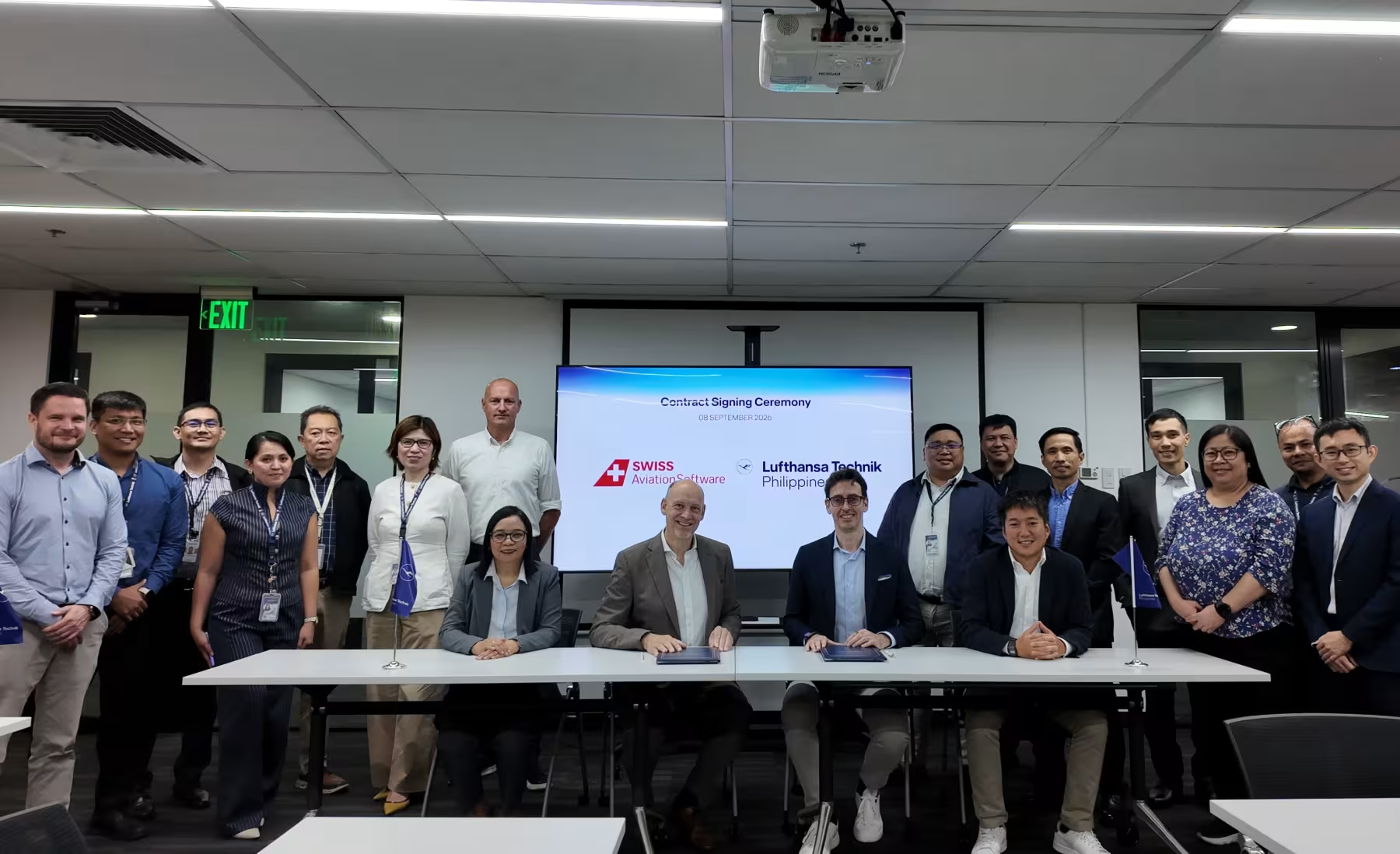
Lufthansa Technik Philippines (LTP) has signed a contract with Swiss-AS for the implementation of AMOS, supporting the company’s ongoing digital transformation and expansion plans.
LTP selected AMOS for its strong functionality in managing aircraft maintenance operations, flexibility and ability to provide a more integrated and standardised approach to maintenance processes. Key priorities included usability, reliability, data integration and visibility, digital enablement, and the ability to support the company’s continued growth.
“We were looking for a system that could provide a strong foundation for further digitalisation and process improvement, rather than simply replacing our existing system.’’
Reginald Baltazar, Vice President for Information Technology at LTP
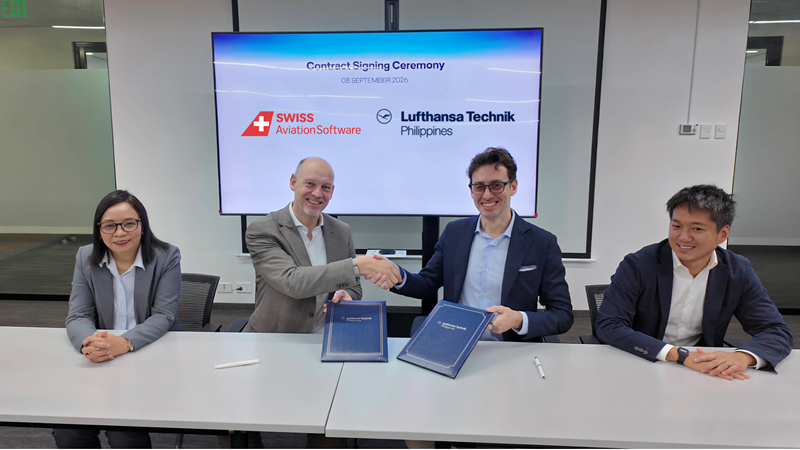
From left to right: Rubi Pioquinto, Senior Vice President and Chief Finance Officer, LTP; Holger Beck, President & CEO, LTP; Pierlugi Calu, Vice President, Digital Tech Ops Ecosystem APAC, Swiss-AS; and Jun Sato, Head of APAC Operations, Swiss-AS.
With AMOS, LTP aims to improve the efficiency, productivity, and consistency of its maintenance processes while reducing reliance on manual and fragmented ways of working. The system will help teams access and use maintenance information more effectively.
AMOS will support several key areas of LTP’s operations, including maintenance operations and planning, inventory management, and data integration. Bringing these activities together on a central platform will help align data and processes, improve coordination across functions, and reduce duplicate effort and rework.
“A key objective is to establish a single, reliable and integrated source of maintenance information, giving teams better visibility of data and enabling more informed and timely decision-making. Ultimately, we are looking at AMOS to drive efficient, consistent, transparent and high-quality maintenance operations.’’ said Reginald.
The implementation also supports LTP’s wider growth plans. AMOS will strengthen the company’s current Base Maintenance operations in Manila while helping provide best-in-class processes and systems as LTP expands into its upcoming Clark International Airport MRO facility.
“Every generation has the opportunity to leave its mark on an organisation, and for Lufthansa Technik Philippines (LTP), AMOS is that opportunity. Together with LTP, we are laying the digital foundation for more scalable, consistent and customer-focused maintenance operations, from today’s base in Manila to the future paperless facility in Clark.”
Pierluigi Calu, Vice President Digital Tech Ops Ecosystem APAC, Swiss-AS
The implementation also builds on the established presence of AMOS across the Lufthansa network, supporting greater alignment and common ways of working.
For LTP, the project represents more than a technology implementation. The company sees the initiative as an opportunity to transform its business and its people by optimising and standardising processes, digitalising tasks, and enabling teams to focus on more value-adding activities.
“Swiss-AS will be a crucial partner for us to realise our objectives for this project. But more than a technology implementation, we see this initiative as a way to transform our business and our people.’’ added Reginald.
By adopting AMOS, LTP is strengthening the way maintenance data, processes and teams work together. This will help the company deliver more consistent maintenance execution, make better use of operational information and support reliable service for its customers as it grows. For MRO organisations facing higher demand, cost pressure and increasing complexity, the project shows how an integrated system can create value beyond software. It can improve daily work, support scalability and build a stronger foundation for future operations.
“This program can become a true tailwind for LTP, helping us accelerate our transformation, strengthen our competitiveness, and prepare the company for the next chapter of growth, including the exciting opportunities ahead in Clark. With AMOS already established across the Lufthansa network, its implementation at LTP will enable greater alignment, support common ways of working, and provide a strong foundation for our continued digital transformation.”
Holger Beck, President and CEO of Lufthansa Technik Philippines
About Lufthansa Technik Philippines
Established in 2000 as a joint venture with the Philippines’ MacroAsia Corporation, Lufthansa Technik Philippines offers a comprehensive range of MRO services. Specialized base maintenance services combined with a broad portfolio of integrated services ensure cost-efficient and reliable flight operations for customers.
To meet growing demand, Lufthansa Technik Philippines is significantly expanding its footprint with a new facility at Clark International Airport. This new site will span 157,000 square meters, can accommodate up to nine widebody aircraft bays, and create 1,200 highly skilled jobs. First operations are scheduled to commence in 2028.
About Swiss AviationSoftware and AMOS
Swiss-AS, part of the Lufthansa Technik Digital Tech Ops Ecosystem, is a leading provider of aviation maintenance management software, which offers an end-to-end integrated, highly intelligent software suite designed to manage the entire spectrum of maintenance activities.
AMOS, in combination with its mobile package, empowers its large and loyal aviation customer base – ranging from pure operators of all sizes, major low-cost, regional and flag carriers, to large airline groups to MRO providers – to digitalize and automate their maintenance processes.
For more information, please contact us via sales@swiss-as.com
Condor goes live with AMOSeTL
- Condor successfully went live with AMOSeTL across its full fleet of approximately 60 aircraft in July 2026
- Condor supported the transition with a structured rollout, extensive hands-on experience and training, achieving 100% completion across pilots, cabin crew and mechanics before go-live
- The rollout moves its tech log process from paper to a fully digital process within AMOS
Swiss-AS is pleased to announce that Condor has successfully gone live with AMOSeTL, the fully integrated electronic tech log solution within AMOS. Following a structured preparation and testing phase, the German airline transitioned its entire fleet to AMOSeTL in July 2026.
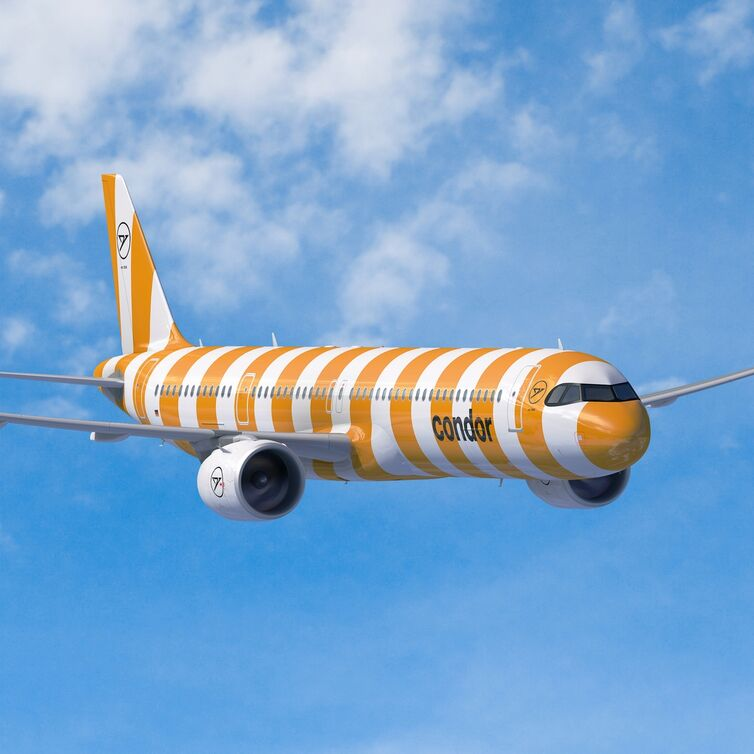
The implementation covers Condor’s full fleet of approximately 60 aircraft, comprising both Airbus A330neo and Airbus A32S aircraft. Condor is using all AMOSeTL modes: PILOT, CABIN and MAINT, providing a fully digital workflow across its cockpit, cabin crew, internal and external maintenance teams, thereby helping reduce handovers and improve visibility across the full tech log process.
With a direct connection to AMOS, AMOSeTL enables tech log entries and reported defects to be transferred directly into the airline’s maintenance system, giving maintenance control and maintenance teams reliable and timely access to the information they need.
“The successful completion of Condor’s fleet-wide AMOSeTL implementation is an important milestone in its ongoing digitalisation journey. Moving a process as operationally critical as the tech log from paper to digital across an entire fleet requires careful coordination and commitment from teams across the organisation. Condor’s successful go-live demonstrates what can be achieved when technology, operational requirements and user needs are brought together from the outset.”
Gavin Gronert, Business Consultant, Swiss-AS
For airlines considering the transition from a paper-based tech log to an electronic tech log, Condor’s implementation demonstrates how a structured rollout, in-depth training and the right connectivity infrastructure can support a smooth transition across the entire fleet.
Planning for a smooth transition
Condor took a phased approach to its AMOSeTL implementation, allowing its teams to become familiar with the solution well before the official go-live.
Since December 2025, all aircraft had been equipped with AMOSeTL and connected to the AMOS Production environment. Selected users were then able to perform digital tech log flights whenever operational circumstances allowed. Running AMOSeTL in parallel with the paper tech log over an extended period gave pilots, cabin crew and mechanics the opportunity to gain hands-on experience in real operational conditions.
For an airline implementing an electronic tech log, user adoption is a key consideration. Condor addressed this through a mandatory training programme, achieving 100% completion across all pilots, cabin crew and mechanics by the end of June 2026.
This combination of extensive practical experience and comprehensive training meant that users were already familiar with the digital workflow when go-live arrived. This helped support confident user adoption from day one.
“Going live with AMOSeTL across the entire Condor fleet marks an important step in the digitalization of our technical operations. Moving from a paper-based tech log to one integrated digital process creates a consistent workflow across our operational and maintenance teams. Thanks to thorough preparation, extensive training and the strong commitment of everyone involved, we were able to make this transition successfully across the entire fleet.”
Sandra Volk, Director Airworthiness / NPCA, Condor
One connected Electronic Tech Log
By connecting tech log processes directly with AMOS, AMOSeTL helps airlines take another step towards a more connected maintenance operation, with information readily available across teams.
The go-live marks an important step in Condor’s digital maintenance journey. It also demonstrates how AMOS customers can extend existing processes with AMOSeTL while maintaining control and continuity across their maintenance operations.
About Condor
Condor has been connecting travelers with destinations around the world since 1956. Today, the airline carries around 10 million guests annually to more than 70 destinations across Europe, Africa, Asia, and North America. With more than 5,000 employees and a fleet of around 60 aircraft, Condor is continuously investing in a modern and efficient fleet, including the Airbus A330neo for long-haul operations and aircraft from the A32Xneo family for short- and medium-haul routes.
Since 2022, Condor’s distinctive striped aircraft design has represented diversity, joy, and freedom, making the airline one of the most recognizable brands in European aviation.
Further information and high-resolution images are available in the Condor Newsroom.
About Swiss AviationSoftware and AMOS
Swiss-AS, part of the Lufthansa Technik Digital Tech Ops Ecosystem, is a leading provider of aviation maintenance management software, which offers an end-to-end integrated, highly intelligent software suite designed to manage the entire spectrum of maintenance activities.
AMOS, in combination with its mobile package, empowers its large and loyal aviation customer base – ranging from pure operators of all sizes, major low-cost, regional and flag carriers, to large airline groups to MRO providers – to digitalize and automate their maintenance processes.
For more information, please contact us via sales@swiss-as.com
Adinin Visi Aeroteck and AircraftCloud sign strategic partnership
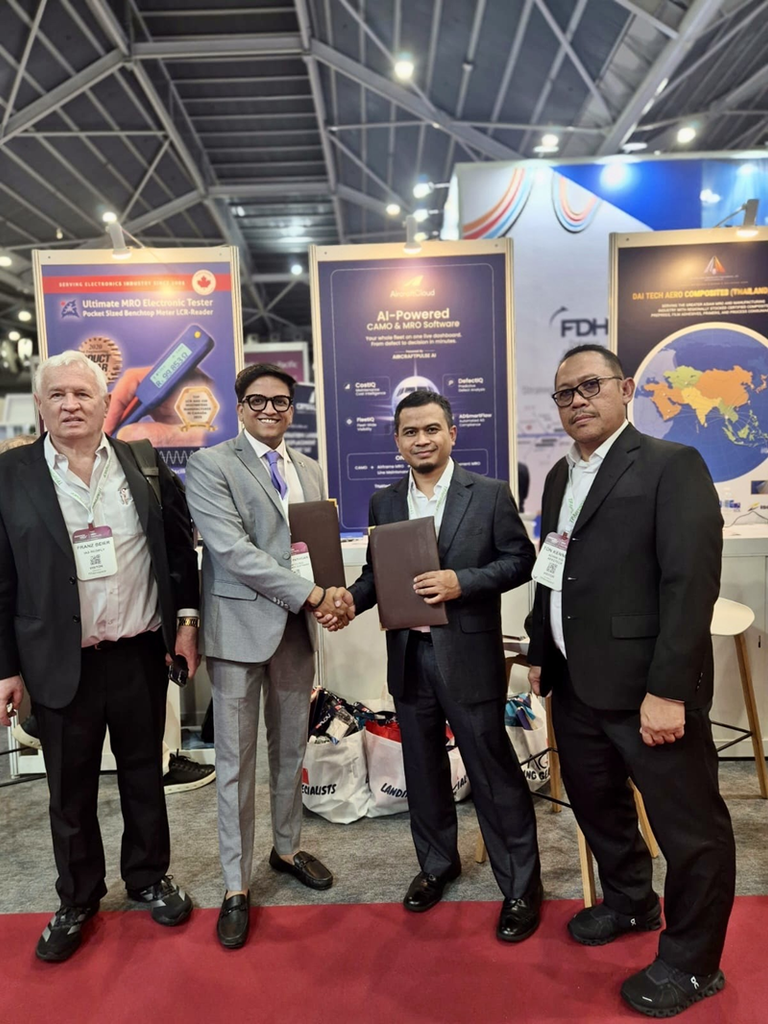
Singapore, 23 September 2026. Adinin Visi Aeroteck (VTDI), an Indonesia-based MRO, and AircraftCloud, the Singapore-headquartered provider of AI-powered CAMO and MRO software, signed a strategic partnership at a signing ceremony held in Singapore this week.
The partnership brings together VTDI’s operational expertise in maintenance, repair and overhaul with AircraftCloud’s cloud-native platform and AircraftPulse AI suite, with a shared focus on operational efficiency, stronger fleet maintenance capability and the growth of the regional aviation ecosystem.
“This collaboration marks a significant milestone for Adinin Visi Aeroteck,” said Iman Sajidin, CEO of Adinin Visi Aeroteck. “By combining our operational expertise with AircraftCloud’s advanced cloud-based solutions, we are set to deliver real value to our partners and help shape a smarter, more efficient and fully integrated future for the MRO industry.”
“I spent 15+ years working with legacy aviation software and saw the same challenges again and again, on systems built for a different era,” said Saidhar Pathigari, CEO of AircraftCloud. “Whether you run three aircraft or three hundred, you deserve a platform that is modern, simple to use and ready for AI, without the legacy baggage. Signing with VTDI on day one of MRO Asia-Pacific means a great deal to us.”
Veryon Unveils Next Generation Defect Analysis, Pulling Aircraft Faults and Part Failures into Every Chronic
Powered by a new agentic AI Adaptive Clustering engine, grounded in over a decade of curated maintenance outcomes – built to get sharper with every fleet.
SAN FRANCISCO, Calif. (September 9, 2026) —Veryon, the leading provider of aviation maintenance software and data intelligence solutions, today announced the next generation of its Defect Analysis platform, now expanded to incorporate aircraft faults and part failures, directly into every chronic – accelerating an investigation process that has historically taken engineering teams weeks to cross-reference data sources and confirm repeat-defect candidates before a task card can be issued.
The announcement comes as operators face mounting pressure to move from reactive to proactive maintenance, eliminating chronic defects, which drive delays, cancellations, and unnecessary parts and labor costs. Veryon’s next generation platform is designed to compress what used to be a lengthy, root-cause analysis into same-day, AI-assisted detection – flagging a chronic issue, and the part driving it, before it grounds another tail.
Built Against a Verified Benchmark, Not Just a Model
Most AI in aviation maintenance today is pattern-matching on raw data with no ground truth behind it. Veryon takes a different approach: rather than tuning its clustering algorithm against isolated operator provided assumptions, Veryon updated its “golden dataset” incorporating chronic defects – independently reviewed and verified by aviation maintenance experts – and used it as a standing benchmark for every AI model change. That updated benchmark work, now coined, Veryon’s Verified Data Set, has driven accuracy improvements to be the highest in the industry.
“Most vendors show you an accuracy number and ask you to trust it. We work with our customers to demonstrate results that they can trust, incorporating their operational data into a benchmark.” said Vinay Kumar, CTO, Veryon. “That’s the difference between an AI system getting more aggressive and hallucinating vs an AI powered system getting more correct – and in a regulated environment, that difference is the whole point.”
A Retraining Loop the Maintenance Desk Controls
Veryon’s Verified Data Set gives every operator a common, expert-reviewed foundation for detecting chronic defects. On top of that foundation, an agentic AI engine learns from each operator’s own maintenance team – the combination is what Veryon calls Adaptive Clustering – a proprietary method that tunes defect-detection accuracy to each operator’s specific fleet and operating history.
The system stays under human control at every step. Every AI-generated suggestion passes through review before any action is taken. When an engineer approves, splits, or merges a chronic, that decision doesn’t just update a single grouping; it feeds a retraining loop that adapts the clustering logic for that operator’s fleet going forward. Before any of those updates take effect, the operator’s own maintenance desk reviews them, so the AI’s judgment evolves under the same review discipline that already governs the maintenance record.
A Platform for Maintenance & Reliability Teams
Veryon’s next generation Defect Analysis includes new maintenance insights, alongside an expanded interface and a set of AI-powered tools:
- Chronic Detection powered by AIRE Adaptive Clustering — Veryon’s Verified Data Set paired with an agentic engine that learns from engineers’ approve/split/merge decisions, tuned to each aircraft make and model, and gated through operator review before any change goes live.
- Veryon AIRE Assist — a natural-language assistant that lets maintenance teams investigate fleet defects conversationally, grounded entirely in that operator’s own defect and chronic history.
- Fault Data Integration — embeds fault data directly into the defect lifecycle, closing the fix-confirmation loop without the 30-to-45-day wait maintenance teams previously faced.
- AI-Generated Chronic Summaries — a single narrative per chronic issue, synthesizing logbook entries, sensor faults, parts history, and utilization trends into one readable summary.
- Rogue-Parts Detection — flags components statistically linked to recurring chronic defects across the fleet, so operators can act on the part driving a chronic, not just the chronic itself.
- Fix Agent powered by Fleetwide Data Intelligence — a conversational fix-recommendation layer drawing on field-tested solutions from decades of maintenance outcomes across commercial and business aviation fleets.
About Veryon Defect Analysis
Veryon Defect Analysis is built on more than a decade of confirmed, human-reviewed maintenance outcomes, drawn from roughly 30% of the world’s fleet – a dataset no OEM or single operator holds on its own. Clustering accuracy is measured continuously against Veryon’s Verified Data Set, combined with the operator’s uniquely trained agentic algorithms trained to independently verify chronic defects for their fleet, with every model change tested against that benchmark before release.
About Veryon
Veryon is the leading provider of aviation software and information services, trusted by nearly 6,000 customers, 75,000 maintenance professionals, and more than 100 OEMs in nearly 150 countries. Powered by the world’s largest de-identified aviation maintenance dataset, the all-in-one Veryon suite combines OEM-authorized publications, intuitive cloud-based maintenance workflows, and AI driven insights to help operators, MROs, and OEMs maximize flying time without compromising safety or compliance.
Veryon’s Fleet Performance Partnership program, brings together Veryon’s platform capability with expert guidance, structured training, and ongoing support to help operators realize faster adoption and stronger operational outcomes. Drawing on Veryon’s 50+ years of experience and support from experts who understand aviation, Veryon customers have achieved up to a 75 percent reduction in troubleshooting time for new technicians and up to a 23 percent reduction in downtime costs. Learn more at veryon.com.
Ramco Systems Signs MoU with Safran Helicopter Engines
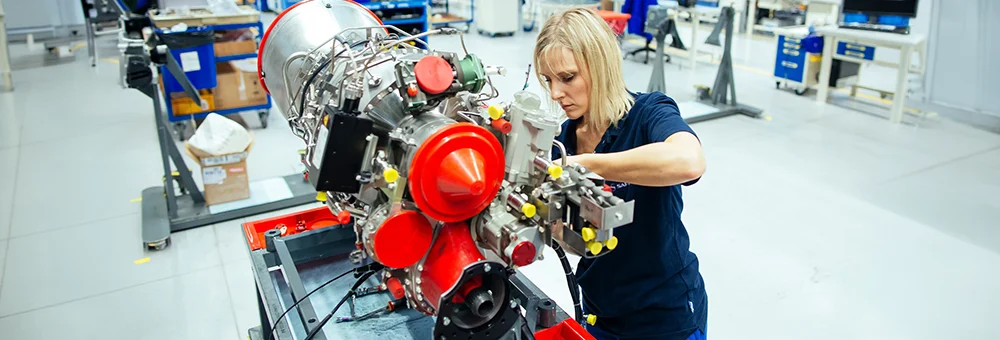
Chennai, INDIA – September 03, 2026 – Global aviation software provider Ramco Systems announced that it has signed a Memorandum of Understanding (MoU) with Safran Helicopter Engines, world’s leading manufacturer of rotorcraft turbines, to collaborate on enabling seamless integration of Safran’s engine data with Ramco Aviation Software.
Through this MoU, Ramco and Safran Helicopter Engines will work together to enable engine information post shop visits to flow directly from Safran into the Maintenance Information System (MIS) within Ramco Aviation Software, reducing manual data entry for helicopter operators and allowing them to focus more on keeping aircraft in service. The outcome of this collaboration will be the award by Safran Helicopter Engines of the EngineLife® Connect label, which identifies the best connectivity solutions compatible with its range of products and services.
As part of the MoU, the companies will work on enabling engine configuration, usage metrics, and maintenance events to be automatically ingested into Ramco Aviation Software, improving data accuracy and consistency across maintenance operations.
The partnership will focus on enabling:
- Engine data ready to use: Building the technical link to allow Safran’s engine information, including configuration, hours, and events, to be directly loaded into Ramco Aviation Software.
- A trusted data exchange: Defining joint business processes to ensure reliable and continuous both way data flow between Safran and Ramco.
- Better digital services for operators: Using improved data flow to strengthen the digital services provided by Safran to its customers.
The collaboration will also include joint evaluation of data exchange formats and establishment of operational processes to ensure ongoing compatibility.
For operators, the partnership is expected to reduce the time and effort required for engine data initialization within the MIS, while improving the structure, quality, and consistency of data supporting airworthiness and maintenance planning.
Sam Jacob, Executive Vice President & SBU Head – Aviation, Aerospace and Defense, Ramco Systems, said, “With several of the world’s largest helicopter operators on our platform, Ramco sits at a unique intersection of the aviation MRO ecosystem — connecting OEMs and operators through a single digital backbone. We’re delighted to partner with a leader like Safran Helicopter Engines to enable this seamless digital exchange: Safran gains richer engine maintenance data to strengthen reliability, while operators receive OEM information directly into their systems, cutting manual work and improving productivity. Powered by AI and agentic automation, Ramco Aviation Software is built to make exactly this kind of connected, intelligent ecosystem possible.”
Ramco Aviation Software is trusted by 24,000+ users to manage 4,000+ aircraft globally. With 90+ Aviation organizations onboard, Ramco is the solution of choice for top Airlines, 3rd party MROs, large Heli-Operators, leading Defense organizations, and major Urban Air Mobility companies around the world. Available on cloud, Ramco Aviation Suite provides accessibility with ‘Anywhere Apps’, significantly accelerating organizational efficiency and agility. Ramco is changing the paradigm of enterprise software with Artificial Intelligence based solutions, intelligent voice enabled user experience, and advanced features such as digital task cards, offline maintenance capability, conversational chatbots, HUBs and cognitive solutions.
About Safran Helicopter Engines:
Safran Helicopter Engines is the world’s leading manufacturer of helicopter engines, with more than 75,000 produced since being founded. It offers the widest range of helicopter turboshafts in the world and has more than 2,500 customers in 155 countries.
Veryon Acquires Polaris Aero, Adding Safety Management to its Aviation Maintenance Software Suite
The move strengthens Veryon’s role as the aviation industry’s most comprehensive provider of maintenance software solutions.
SAN FRANCISCO, Calif. (September 3, 2026) —Veryon, a leading provider of software solutions for the aviation industry, has acquired Polaris Aero, an aviation software company headquartered in Scottsdale, Arizona. Since 2007, Polaris Aero has delivered innovative safety management solutions to aircraft operators and MROs worldwide.

“We are thrilled to bring Polaris Aero’s proven safety solutions into the Veryon software suite,” said Bethany Little, Chief Executive Officer of Veryon. “It’s a pivotal step towards a better alignment between aviation safety and maintenance, enabling smarter and safer decisions across every phase of customers’ operations.”
The acquisition adds over 200 new customers to Veryon’s portfolio, further reinforcing its position as the aviation industry’s most comprehensive provider of maintenance software solutions. Polaris Aero’s products include VOCUS SMS, FlightRisk, and GroundRisk, which are widely used by corporate flight departments, charter operators, and MROs to streamline compliance, assess risk, and enhance operational safety.
The move also combines Polaris Aero’s de-identified data from 112,000+ safety reports, 32 million+ FlightRisk assessments, and 174 million+ flight hazards with Veryon’s dataset of 100 million+ maintenance events, creating the industry’s most extensive source of aviation safety and maintenance data. This expanded dataset will sharpen the accuracy and reach of Veryon AIRE, its AI-powered data intelligence platform, giving operators more precise insights into both safety risks and maintenance needs.
“Joining forces with Veryon is an exciting next chapter for Polaris Aero,” said Chris Connor, Chief Executive Officer of Polaris Aero. “Our mission has always been to help operators manage risk and streamline compliance through smarter safety programs. With Veryon, we can scale that mission even further, integrating safety and maintenance in ways that deliver more value, more efficiency, and ultimately, safer operations for our customers.”
In the short term, Polaris Aero will continue operating as its own business unit, with all current products, contracts, and support continuing unchanged. Over the coming months, both companies will carefully map out and implement their long-term integration plan. The end goal is to enable aircraft operators and maintainers to manage operations more safely and efficiently. Benefits will include:
- One partner, complete coverage: Customers will be able to access maintenance tracking, MRO management, safety management, and more from a single provider.
- Two teams, one point of contact: Polaris Aero’s safety specialists and Veryon’s maintenance specialists will support the same customer together, ensuring operators get more informed and aligned guidance.
- More data, better decisions: Polaris Aero’s and Veryon’s AI-powered tools will work hand in hand to connect safety insights with maintenance and reliability data.
- Streamlined compliance: AD/SB tracking, SMS reporting, and audit prep will be able to run across multiple solutions.
- Insights flow both ways: Safety data will more easily inform maintenance decisions, with maintenance data informing safety practices.
“Safety and maintenance have always been two sides of the same coin, but they’ve rarely been managed that way,” said Pete Bunce, former CEO of GAMA and Senior Advisor to Veryon. “Bringing Polaris Aero’s safety intelligence together with Veryon’s maintenance data gives operators a single, connected view of risk and reliability. That’s exactly the kind of data-driven decision-making our industry needs right now.”
For more information about Veryon and Polaris Aero, please visit their respective websites at veryon.com and polarisaero.com.
About Veryon
Veryon is the leading provider of aviation software and information services, trusted by over 5,500 customers, 75,000 maintenance professionals, and more than 100 OEMs in nearly 150 countries. Powered by the world’s largest de-identified aviation maintenance dataset, which contains over 100 million events, the all-in-one Veryon suite combines OEM-authorized publications, intuitive cloud-based maintenance workflows, and AI-driven insights to help operators, MROs, and OEMs maximize flying time without compromising safety or compliance. Committed to helping customers achieve long-term success, Veryon brings together innovative aviation software, expert guidance, structured training, and ongoing support to help organizations realize faster adoption and stronger operational outcomes. Drawing on Veryon’s 50+ years of experience and support from experts who understand aviation, Veryon customers have achieved up to a 75 percent reduction in troubleshooting time for new technicians and up to a 23 percent reduction in downtime costs. Learn more at veryon.com.
About Polaris Aero
Polaris Aero, headquartered in Scottsdale, Arizona, has been helping operators manage risk and maintain compliance for over a decade with data-driven safety management solutions. Its suite of products, including VOCUS SMS, FlightRisk, and GroundRisk, empowers operators to identify hazards, mitigate risk, and streamline compliance across flight, maintenance, and ground operations.
Ontario’s provider of air ambulance and critical care transport services, Ornge achieves paperless maintenance operations with Ramco’s Digital Task Card and Mobile Apps
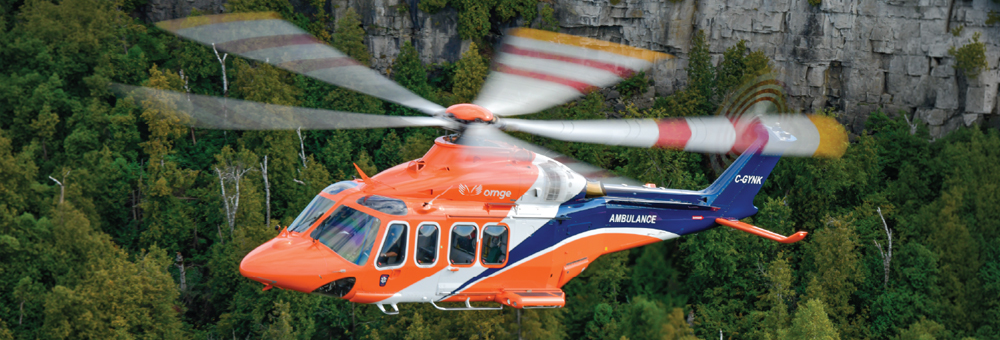
Successful implementation transforms maintenance execution across its AW-139 and PC-12 fleets, driving digital-first operations across all maintenance bases
Mississauga / Vancouver, CANADA — August 25, 2026 — Enterprise aviation software provider Ramco Systems Canada Inc., a subsidiary of Ramco Systems Limited, announced that its long-time customer, Ornge, has successfully gone live with Ramco’s Digital Task Card with eSign-off and Mechanic Anywhere Mobile Application across all of its maintenance bases. The rollout marks a significant milestone in Ornge’s digital transformation journey, transitioning its maintenance execution operations from paper-based task cards to a fully mobile-enabled, paperless workflow across its AW-139 and PC-12 fleets.
Ramco’s eSign-off solution has been designed to meet Transport Canada’s sign-off compliance requirements, enabling technicians to execute and digitally sign off maintenance tasks in real time. As part of the implementation, Ornge’s existing authored task cards were migrated to an eSign-off-ready format, and Work Summary Reports were introduced to support Ornge’s audit and regulatory compliance needs.
With Mechanic Anywhere, Ornge’s technicians can now access documentation, execute maintenance tasks, and complete digital sign-offs from anywhere, eliminating the delays and inefficiencies associated with paper-based execution. The move to Digital Task Card with eSign-off has also given Ornge’s maintenance and quality teams near real-time visibility into work progress, sign-off status, and task completion, improving compliance through standardized work-step execution.
Robert Zwanenburg, Technical Services Manager, Ornge, said, “In addition to helping us go paperless, Ramco’s Digital Task Card and Mechanic Anywhere app is well positioned to help us in our efforts to ensure timely maintenance turnaround times. We are working as a team to ensure our front-line maintenance crews (AMEs) have the tools they need wherever they’re working.”
Manoj Kumar Singh, Chief Customer Officer – Aviation, Aerospace & Defense, Ramco Systems, said, “Aviation maintenance is moving toward a mobile-first, paperless future, and Ornge’s achievement is a great example of what that looks like in practice. This go-live reflects years of investment in building AI-powered tools that are purpose-built for the realities of maintenance execution, and for an organization whose speed is mission-critical, and where precision matters even more. Milestones like this are what long-term partnerships like ours with Ornge are built on.”
Ramco Aviation Software is trusted by 24,000+ users to manage 4,000+ aircraft globally. With 90+ Aviation organizations onboard, Ramco is the solution of choice for top Airlines, 3rd party MROs, large Heli-Operators, leading Defense organizations, and major Urban Air Mobility companies around the world. Available on cloud, Ramco Aviation Suite provides accessibility with ‘Anywhere Apps’, significantly accelerating organizational efficiency and agility. Ramco is changing the paradigm of enterprise software with Artificial Intelligence based solutions, intelligent voice enabled user experience, and advanced features such as digital task cards, offline maintenance capability, conversational chatbots, HUBs and cognitive solutions.
About Ornge:
Ornge provides high quality air ambulance and critical care transport to people who are critically ill or injured across the province of Ontario, Canada.
AIXI’s first executive hire from outside its founding team brings a decade of commercial aviation leadership.
RALEIGH, N.C., August 20, 2026 — AIXI, a developer of AI-enabled solutions for aviation reliability and asset uptime, today announced that John Bowell has joined the company as Chief Revenue Officer. Bowell’s appointment is AIXI’s first executive hire from outside its founding team, a milestone the company points to as an early signal of its next phase of growth.
Bowell joins AIXI after more than a decade at flydocs, where he most recently served in various roles, EVP of Engineering, Board Member, and most recently as Chief Commercial Officer. In that role, he built a unified sales, marketing, and client success model that brought roughly one-third of the global commercial aircraft market into the flydocs platform. He also founded and scaled flydocs’ Digital Engineering Services division, delivering 25% year-over-year growth through data-led maintenance and asset management solutions.

“John has the background and expertise we wanted for this new role. He’s lived the problems aviation is facing and spent a career turning that experience into commercial results,” said Cameron Byrd, Founder and CEO of AIXI. “John understands aviation from the inside and can help decipher pain points. He shares our conviction that the industry’s next breakthrough isn’t more data. It’s cleaning, making sense of, and using the data airlines already have.”
Bowell said the move reflects a belief he has developed over 25 years of watching aviation invest in digitization – first building Systems of Record for maintenance, operations and compliance, then Systems of Insight for analytics and reporting. “Today, we have more data than ever before. But data isn’t the problem anymore. Understanding is,” Bowell said. “I believe the next evolution is creating a useful System of Intelligence that sits alongside today’s technology, connecting information, organizational knowledge, and human expertise to help people make better decisions. That’s exactly what attracted me to AIXI.”
AIXI is not seeking to replace existing systems or the people who use them, but to help the industry unlock more value from the data, technology and expertise it already has. Bowell will lead AIXI’s go-to-market strategy as the company works with airlines, MROs, lessors, and OEMs to bring that vision to market.
###
About AIXI
AIXI creates AI-enabled solutions that improve reliability and asset uptime for the aviation industry. Our industry-specific language models (ILMs) and AI implementations scan, recognize, assimilate, and aggregate an airline’s foundational MRO data to improve safety and reduce delays. AIXI’s technology first went live and in production at a major US airline in 2022.
Media Contact
Alicia Smith, Head of Business Development
919.522.7010 | ASmith@aixi.co
Leading engine MRO services and accessory repair provider, Pem-Air Selects Ramco Aviation

Brooksville, Florida / Princeton, New Jersey, UNITED STATES – August 19, 2026 – Enterprise aviation software provider Ramco Systems Corporation, USA (RSC), a subsidiary of Ramco Systems Limited, announced that Pem-Air, an FAA and EASA-certified engine MRO services and accessory repair provider, has selected Ramco Aviation Software as the technological foundation for its engine MRO operations.
Pem-Air has been rapidly growing, adding support for larger engine platforms such as the GE90 and Trent 700, as well as next-generation engines, including CFM LEAP. Ramco Aviation Software will power operations across this expanded engine portfolio as Pem-Air meets the demands of tomorrow’s fleets.
With modules for Maintenance Planning, Engine Maintenance, Supply Chain, Quality & Compliance, Engineering, and Finance, Ramco Aviation Software will provide Pem-Air with a single integrated system that connects every stage of a shop visit. In addition, Ramco Anywhere mobile applications will support technicians with digital task cards and electronic sign-offs, enabling Pem-Air’s move toward paperless operations.
Ramco Aviation Software’s capabilities extend deep into the engine MRO workflow, covering Contracting and Configuration Management, Work Scoping and Production Planning, Marshalling and Kitting, and Technical Publications, with Resource Optimization supporting smarter staffing and workload planning across every shop visit.
The engagement also brings several AI-led capabilities to Pem-Air’s operations. Ramco’s Service Bulletin Agent unlocks value from unstructured technical content, using data from Service Bulletins and Airworthiness Directives to help create Engineering Orders with the required parameters. Users will also be able to leverage Gen AI based assistants to review predefined reports and check real-time operational status. The platform will also recommend corrective actions for maintenance discrepancies based on prior resolutions, helping technicians standardize decisions and resolve issues faster.
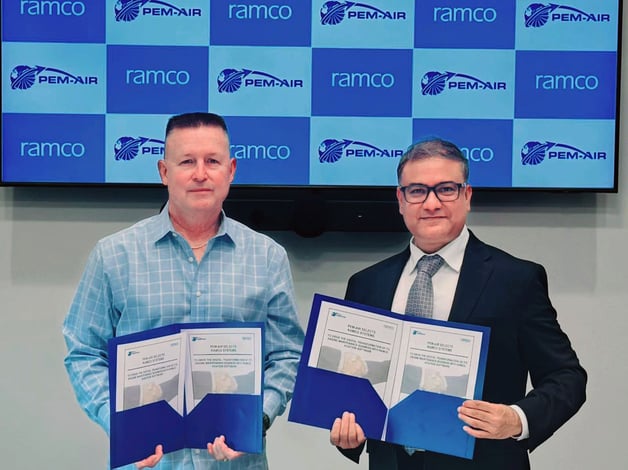
(L-R) Virgil Pizer, Chief Executive Officer, Pem-Air, and Manoj Kumar Singh, Chief Customer Officer – Aviation, Aerospace & Defense, Ramco Systems, during the signing ceremony held at Pem-Air’s office in Brooksville
Virgil Pizer, Chief Executive Officer, Pem-Air, said, “As we scale our engine MRO capabilities, we needed a platform that could keep pace with that growth. Ramco stood out in our evaluation for its end-to-end lifecycle coverage, deep engine MRO expertise, and strong credibility in the U.S. market. We built our name on quality and reliability, and we are confident that Ramco Aviation Software will enable us to continue exceeding what our customers expect from every repair.”
Manoj Kumar Singh, Chief Customer Officer — Aviation, Aerospace & Defense, Ramco Systems, said, “It’s an honor to be chosen by Pem-Air, a company with leadership spanning over four decades in this industry, as its technology partner. We’ve built Ramco Aviation Software to meet the segment’s evolving demands, and AI sits at the center of that work, helping Pem-Air continue adding value to its customers by, for example, reducing turnaround times. We look forward to supporting Pem-Air in the years to come.”
Ramco Aviation Software is trusted by 24,000+ users to manage 4,000+ aircraft globally. With 90+ Aviation organizations onboard, Ramco is the solution of choice for top Airlines, 3rd party MROs, large Heli-Operators, leading Defense organizations, and major Urban Air Mobility companies around the world. Available on cloud, Ramco Aviation Suite provides accessibility with ‘Anywhere Apps’, significantly accelerating organizational efficiency and agility. Ramco is changing the paradigm of enterprise software with Artificial Intelligence based solutions, intelligent voice enabled user experience, and advanced features such as digital task cards, offline maintenance capability, conversational chatbots, HUBs and cognitive solutions.
About Pem-Air:
Pem-Air, based in Brooksville, Florida, is a premier provider of maintenance, repair, and overhaul (MRO) services for commercial turbofan engines with full overhaul capabilities. With a commitment to excellence and innovation, Pem-Air offers a comprehensive range of engine MRO services to its global customer base. Combining technical expertise with a flexible customer-first approach, Pem-Air reduces downtime while tailoring services to customer needs. Pem-Air partners with lessors and operators to ensure uninterrupted, high-quality customized support from start to finish in the MRO process. For more information, please visit Pem-Air’s website at https://pem-air.com.