

DextraData Aviation Technologies GmbH Signs Long-Term Agreement with Keyvan Aviation in preparation of the launch of their new Next-Gen EFB solution Talora
Essen, Germany – January 26, 2026 – DextraData Aviation Technologies GmbH is proud to announce the signing of a long-term strategic agreement with Keyvan Aviation, marking a significant milestone in the development of its next-generation Electronic Flight Bag (EFB) solution Talora.

Set to debut at the end Q1 2026, Talora will be powered by cutting-edge navigation, charting, safety, and efficiency datasets from Keyvan Aviation. This collaboration opens new horizons for flight operations, promising enhanced situational awareness, operational efficiency, and data-driven decision-making for aviation professionals worldwide.
“This partnership represents a leap forward in aviation technology,” said Phil Tanthatsawat, Chief Product Officer at DextraData Aviation Technologies GmbH. “Together with Keyvan Aviation, we are redefining what pilots and operators can expect from an EFB solution.”
Talora is designed to meet the evolving demands of modern aviation, integrating advanced data capabilities to support safer and more efficient flights.
About DextraData Aviation Technologies
DextraData Aviation Technologies GmbH, a wholly owned subsidiary of DextraData GmbH, develops cutting-edge digital solutions for commercial aviation.
Its products are user-centric, secure, and built for rapid onboarding, enabling airlines to scale efficiently while reducing operational complexity. From concept to deployment, DextraData Aviation Technologies equips carriers to thrive in an increasingly digital world.
About Keyvan Aviation
Keyvan Aviation is a globally recognized provider of aeronautical and navigation data solutions, delivering EASA-approved databases, digital flight charts, and real-time operational data to airlines, airports and aviation stakeholders worldwide. With comprehensive global coverage and internationally recognized certifications, Keyvan Aviation supports safe, efficient and data-driven flight operations across civil and government aviation sectors.
AEROBOND Defence partners with Tracware to strengthen defence capabilities
AEROBOND Defence has selected Tracware as its software provider of choice to strengthen its defence capabilities, and undergo a company-wide digital transformation utilising Tracware’s newest Web & Mobile innovations.

Headquartered in Adelaide, Australia, AEROBOND Defence is an advanced manufacturing company
operating globally across the aviation, defence, and space sectors. The company employs state-ofthe-art design methodologies and strategic problem-solving to deliver high-quality products and engineering solutions for customers worldwide. They have CASA-certified facilities and serves major clients such as Qantas, Virgin Australia, BAE Systems, and Cobham.
Since 1999, Tracware has supported aviation teams worldwide with their process control software Aerotrac. Aerotrac is a fully integrated platform for managing quoting, job control, inventory, compliance, documentation, and financials – enabling teams to meet regulatory requirements while improving service turnaround times. Their new Web & Mobile solutions build on this foundation by allowing teams to access essential tools and reports from anywhere, while engineers can update tasks in real time across hangars and workshops.
James Maley, Managing Director at Tracware, said: “We’re proud to be supporting AEROBOND Defence as they continue to set new standards in defence manufacturing. Our Web & Mobile innovations are designed to give teams greater visibility and control, and we’re confident they’ll deliver lasting value to AEROBOND’s operations.”
Justin Struik, Managing Director at AEROBOND Defence, said: “This is an exciting time for us at AEROBOND Defence, and it’s great to be working with Tracware to implement their Web & Mobile solutions across our sites. We’re confident these systems will greatly enhance our operations and help us achieve our long-term business goals.”
Luke Foster, Executive Manager advocates the implementation of the new system as it will greatly reduce administration burden, increase program visibility and provide direct measurable insight through all departments which will result in the company’s DIFOT goals to clients.
The digital transformation is expected to be completed in Q3 of 2026.
AVTECH’s partnership with the Met Office sets a new gold standard in flight optimization
As aviation faces mounting challenges from climate change, fuel efficiency demands, and an increase in turbulence events, one partnership is redefining how airlines can navigate the skies more safely and sustainably.
AVTECH Sweden AB collaborates directly with the UK Met Office, a global authority in meteorology now powered by a new supercomputer. This technological leap will enable more accurate and higher-resolution weather forecasts than ever before – crucial for predicting complex phenomena such as clear-air turbulence, storm systems, and jet-stream shifts.
AI-Enhanced Forecasting: The Future of Weather Intelligence

The Met Office’s transition to a cloud-based supercomputer infrastructure represents a major step forward in meteorological science. With machine learning and AI techniques embedded in the forecasting process, this system analyses over 50 billion weather observations daily, providing the ability to model atmospheric dynamics at ultra-fine scales.
According to the Met Office, future AI-driven capabilities will continue to sharpen forecasts of complex weather patterns, potentially providing better understanding of evolving turbulence layers and developing storm cells. This improved capability would give pilots and flight planners earlier, more precise warnings and optimization opportunities.
These advances will directly enhance AVTECH’s suite of real-time flight optimization tools, which leverage the Met Office’s high-resolution (10 km) model, surpassing the industry standard of 140 kilometre and 3-hourly.
AVTECH + Met Office: Turning Forecasting Power into Operational Advantage
AVTECH turns Met Office’s raw numerical weather forecasts and translate them into actionable, flight-specific guidance and services tailored to fit each airline. Rather than presenting pilots or dispatchers with generic weather maps, AVTECH processes high-resolution forecast data along each individual flight’s four-dimensional trajectory: latitude, longitude, altitude and time. These tailored forecasts are then integrated into flight planning systems, pilot briefing tools and directly into the aircraft’s Flight Management Computer. Rather than presenting pilots or dispatchers with generic weather maps, AVTECH processes high-resolution forecast data along each individual flight’s four-dimensional trajectory: latitude, longitude, altitude and time. These tailored forecasts are then integrated into flight planning systems, pilot briefing tools and directly into the aircraft’s Flight Management Computer.
The result is practical decision support for pilots and airline flight operations: optimized flight levels, more accurate time and fuel predictions, and improved awareness of turbulence and hazardous weather.

“One of our most prominent commercial features is our partnership with AVTECH Sweden AB. The Swedish software company and the Met Office provide flight optimisation services that help pilots avoid turbulence through real-time route adjustments based on live weather data.” — Lauren Donohue, Aviation Business Manager at the Met Office
Why the Met Office’s “Optimal Blend” Is So Exciting for Aviation
From AVTECH’s perspective, the partnership with the Met Office was always driven by one core requirement: access to the most accurate, high-resolution weather data available for aviation operations. Independent analysis of tens of thousands of flights has consistently shown that higher-resolution wind and temperature forecasts significantly reduce forecast error compared with standard, coarse-grid aviation weather products. That accuracy directly underpins safer, more efficient flight operations, better fuel planning and more reliable decision-making for pilots and airlines.
Today, that value proposition is being taken even further as the Met Office invests in next-generation forecasting science — including its transition to a powerful cloud-based supercomputer and its development of what it calls an “optimal blend” of physics-based and machine-learning approaches to weather prediction.
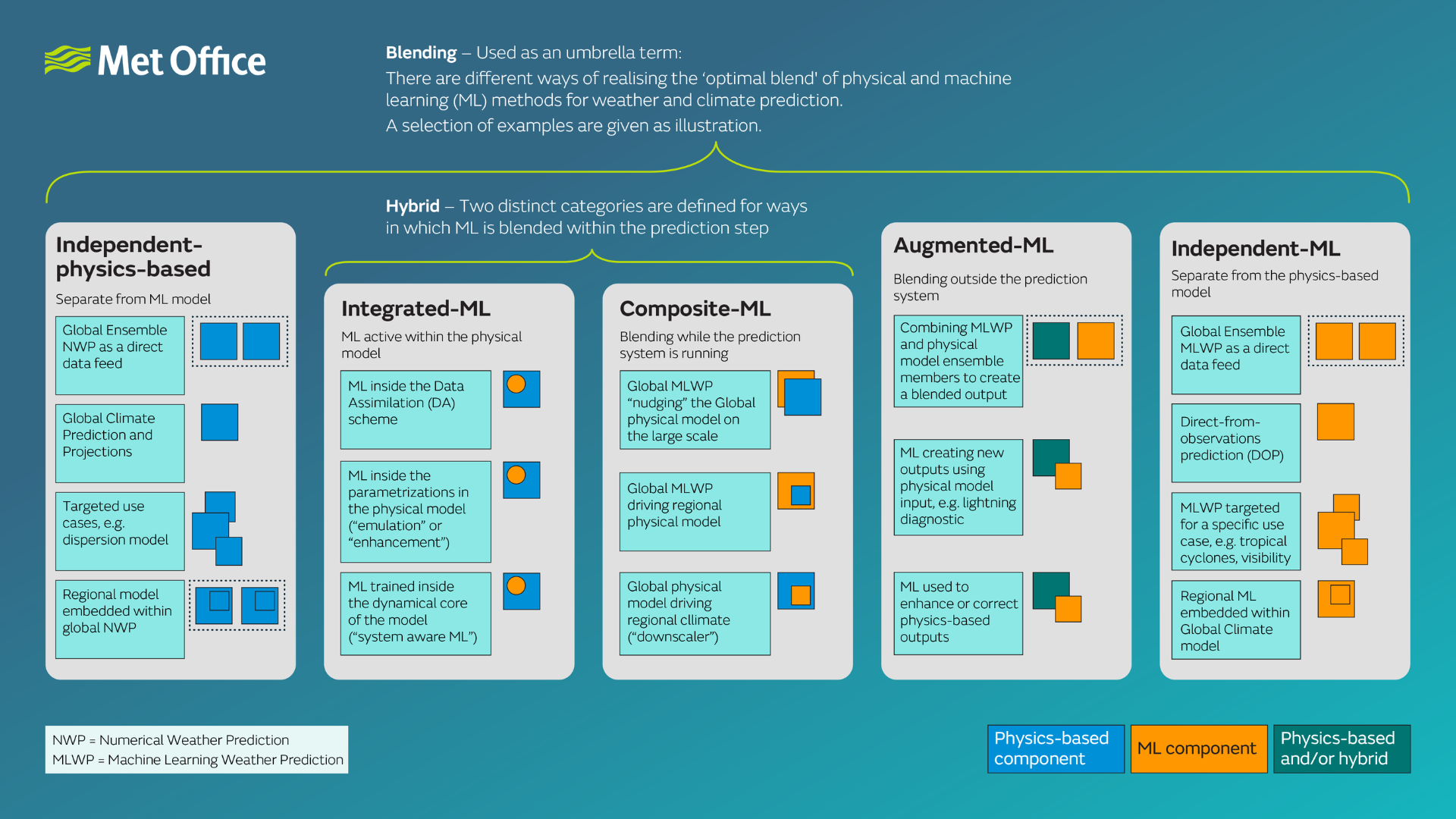
The Met Office’s concept of an “optimal blend” reflects a strategic shift in how forecasts are produced. Traditional physics-based numerical weather prediction remains the backbone of forecasting, using fundamental equations of atmospheric motion that are trusted, explainable and physically consistent. Machine-learning approaches, by contrast, learn patterns from vast archives of data and can produce forecasts or enhancements far more quickly. Rather than choosing one over the other, the Met Office is actively exploring how to combine them, through hybrid and augmented approaches, to extract the best qualities of both.
For aviation, this has several important implications:
Speed and timeliness. Machine-learning components can dramatically reduce computation time or post-processing delays, enabling more frequent forecast updates. In an operational aviation context, faster access to updated wind, temperature or convective information improves situational awareness for time-critical decisions such as route adjustments, altitude changes or departure and arrival planning.
Accuracy and uncertainty handling. Machine learning can help correct systematic biases or refine outputs from physics-based models using real-world patterns, while physics ensures robustness during rare or extreme events. For airlines, even marginal improvements in forecast precision can reduce unnecessary fuel burn from weather deviations, improve turbulence and icing alerts, and support more confident operational decisions.
Richer use of diverse data sources. AI and ML methods excel at ingesting large volumes of heterogeneous data — including satellite observations, radar and aircraft-generated data. The Met Office is already making increasing use of aircraft observations within its modelling systems, creating a virtuous cycle where aviation data contributes to better forecasts, which in turn support better flight operations.
Tailored and scalable forecast products. The blended approach opens the door to more aviation-specific indices, probabilistic outputs or statistically tuned products designed around real operational needs rather than generic weather parameters. For AVTECH, this creates opportunities to deliver even more aviation-centric decision support, differentiated by relevance and usability rather than raw data volume.
Turning Better Forecasts into Safer Skies
These advances in weather modelling have a direct bearing on one of aviation’s most persistent challenges: turbulence. As the Met Office’s forecasting capabilities evolve, AVTECH translates that enhanced precision into practical hazard detection that crews can act on.
Clear-air turbulence, in particular, has long been difficult to anticipate. It forms in fine-scale atmospheric structures—wind shear zones, jet-stream boundaries and stability gradients—that standard forecasts often fail to resolve. Higher-resolution modelling, combined with AVTECH’s advanced post-processing, now makes it possible to identify turbulence-prone regions along a flight’s specific trajectory, shifting the approach from reactive response to proactive avoidance.
How AVTECH Detects All Major Turbulence Types
By leveraging the Met Office’s high-resolution data and integrating real-time observational feeds, AVTECH provides pilots with precise, flight-specific alerts for every significant turbulence category:
- •Clear Air Turbulence (CAT): Invisible to onboard radar and occurring in cloudless skies, CAT is notoriously difficult to detect. AVTECH identifies CAT-prone regions using forecast wind shear and stability data, giving crews the advance warning needed to adjust altitude or secure the cabin before passengers are at risk.
- •Mountain Wave Turbulence: When stable air flows over mountainous terrain, it can generate powerful waves that propagate to cruising altitudes—often far from the mountains themselves. AVTECH’s detection services identify these patterns, helping pilots steer clear of the downdrafts and rotors that make mountain wave encounters particularly hazardous.
- •Convective Turbulence (CB): Additionally, AVTECH has the capability to detect convective turbulence associated with thunderstorms and cumulonimbus clouds—some of the most severe turbulence pilots encounter. Through Cb-Global integration, AVTECH’s ProFlight delivers real-time convective alerts, enabling proactive routing around developing storm cells.
Together, these capabilities illustrate how the AVTECH–Met Office partnership extends beyond route optimization. By transforming forecast intelligence into actionable hazard awareness, the collaboration helps airlines protect passengers and crew while maintaining the efficiency gains that drive their operations.
Looking Ahead
Over the next five to ten years, the relationship between advanced weather modelling and flight optimisation is likely to deepen further. As forecast resolution increases, update cycles shorten and AI-enhanced methods mature, weather data will become even more tightly embedded in both strategic planning and real-time flight operations. For airlines, this means not just incremental efficiency gains, but a shift toward continuous, weather-aware optimisation that supports safety, sustainability and operational resilience.
For AVTECH, continued collaboration with the Met Office ensures access to the forefront of atmospheric science — enabling the translation of cutting-edge forecasting innovation into practical tools that pilots and airlines can trust, understand and use every day.
Yonder Partners with airBaltic
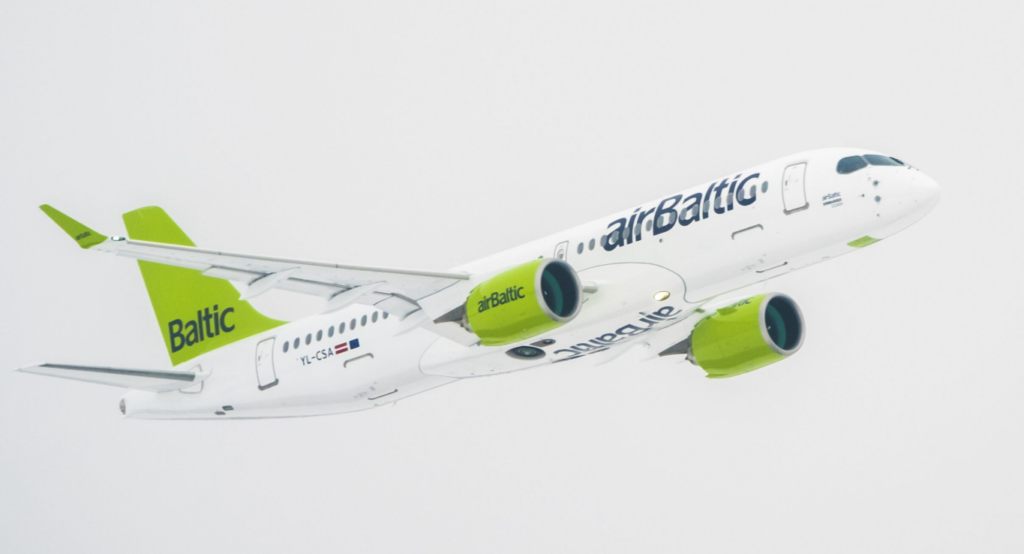
Yonder has established a new partnership with airBaltic on management platform, further strengthening the airline’s commitment to safe, efficient, and digitally enabled operations. The partnership will support the airline in streamlining the management of operations manuals, company documents, and OEM revisions while giving crews faster, role-based access to the information they need.
Elevating digital documentation
Yonder will be used to manage the airlines manuals in a structured XML format, leveraging dynamic modular content. This enables pilots, cabin crew, and ground personnel to see only the information relevant to their role and mission, reducing information overload and improving day-to-day usability.
Through automation of OEM manual imports, revision handling, and compliance monitoring, Yonder will help the airline further reduce manual effort in keeping documentation up to date and aligned with regulatory changes. This frees subject matter experts to focus on safety and operational quality rather than repetitive administrative tasks.
Aligned on safety and efficiency
The collaboration underlines a shared focus on operational safety, regulatory compliance, and user-centric design. With Yonder, airBaltic can link documentation directly to regulations, enabling proactive identification and handling changes that impact manuals and company documents.
End users will benefit from Yonder’s intuitive reader, offering offline capability, powerful search, and role-based filters, while ensuring that critical procedures, checklists, and updates are always accessible and up to date – whether in the cockpit, cabin, or on the ground.
“We are thrilled to welcome airBaltic to the Yonder community. From the very first workshops, their team impressed us with how highly motivated and technically up to speed they are. This level of preparation and professionalism contributed significantly to the speed and overall success of the implementation, and it is exactly the kind of partnership that allows smart documentation to unlock its full potential.”
Beat Reusser
Chief Customer Officer, Yonder
About Yonder
Yonder is a smart content management platform that transforms static manuals and regulations into dynamic, role-based content for aviation, airports, and defense organizations. By combining powerful automation for document managers with an intuitive, offline capable reading experience for end users, Yonder enables organizations to manage critical information more efficiently, safely, and in full compliance with regulatory requirements.
About airBaltic
airBaltic (Air Baltic Corporation AS) is the leading airline in the Baltics and one of Europe’s fastest-growing carriers. As a hybrid airline, it leverages the upsides of both traditional network and low-cost carriers. Founded in 1995, today airBaltic operates one of Europe’s youngest fleets, consisting of 52 Airbus A220-300 aircraft, and employs nearly 3 000 people. In 2025, airBaltic became the first European airline to offer free high-speed SpaceX Starlink internet on its flights.
The company is majority-owned by the Latvian state, holding 88.37% of the voting rights, while Deutsche Lufthansa AG holds 10%, and the remaining 1.63% are held by other private shareholders.
AMOS 25.12 is here
AMOS 25.12 is here – with a strong focus on smarter planning, stronger supply chains, and better control.
This release delivers meaningful improvements across planning, material management, engineering, and finance, helping operators work more efficiently in daily operations.
Key customer highlights:
✅ Material Companion extensions with clearer KPIs, actionable recommendations, and simulation capabilities to support better supply chain decisions
✅ Requisition Management enhancements enabling multi-line requisitions, configurable fields, and seamless handover from planning to procurement
✅AI-supported document scanning to speed up receiving and quotation processes while improving data quality
✅ Advanced Reorder Proposal improvements with more precise vendor selection, lead-time calculations, and entity-specific stock strategies
✅ Planning enhancements around AVIATAR ‘s Maintenance Planning Optimisation (MPO), giving planners better transparency, direct unlock options, and clearer handling of optimisation results
✅ Improved configuration and compliance handling, including effectivity corrections, approval controls, and clearer audit trails
✅ Modernised administration and security, including OAuth 2.0 support and improved AMOScentral diagnostics
AMOS 25.12 continues to reduce manual effort, improve data consistency, and support informed decision-making across the entire maintenance and engineering process.
Parata Air goes live with AMOS
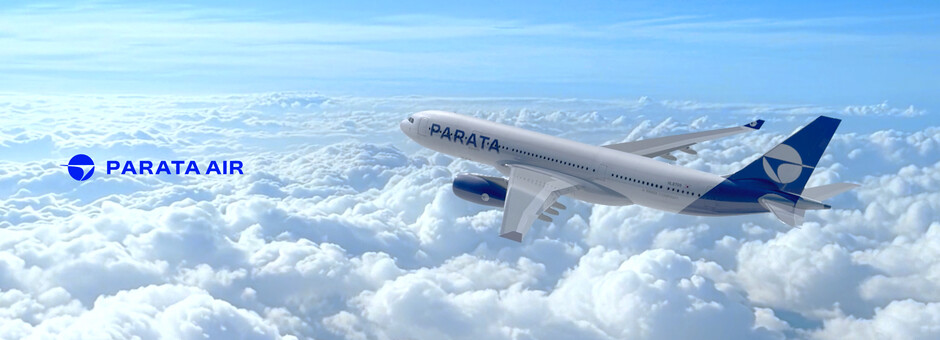
Parata Air, a South Korean start-up airline, has gone live with AMOS, the maintenance and engineering solution from Swiss AviationSoftware (Swiss-AS), to support the start of its commercial operations and future growth.
Parata Air entered the market with a fleet of four aircraft, consisting of two Airbus A330 and two Airbus A320 aircraft. At go-live, one A330 and one A320 are in active operation, with the remaining two aircraft scheduled to enter service shortly. The airline operates domestic routes within South Korea as well as international services, including routes to Japan and Southeast Asia.
Parata Air has implemented the AMOS Airline Edition as the backbone for its maintenance and engineering activities. The system went live in November 2025, supporting maintenance planning, execution, and compliance from day one of operations.
“Going live with AMOS is a major milestone for Parata Air as we grow our operations with clear, compliant maintenance processes. We selected AMOS as our core maintenance system from the beginning because our review confirmed it aligns strongly with airworthiness authority requirements. It also standardises workflows and records across planning, engineering, line maintenance, and materials, giving us the visibility and control we need every day.” says Director of Aircraft Maintenance Division at Parata Air.
A smooth implementation for a start-up environment
As a start-up airline, Parata Air benefited from a focused and efficient implementation approach. Many members of the technical team had prior experience working with AMOS, enabling a rapid setup and clear process alignment. The initial implementation scope covers core maintenance processes required for daily operations and regulatory compliance. Parata Air plans to extend its use of AMOS in a future phase to include financial management processes, further strengthening its integrated airline IT landscape.
A stable foundation for growth
With AMOS live from the start of operations, Parata Air has established a proven digital backbone for maintenance and engineering. The solution provides transparency, standardised processes, and scalability, supporting the airline’s operational stability and planned expansion.
About Parata Air
Parata Air is a Korean airline dedicated to providing safe, reliable, and customer-centric air travel services.
Building on a strong foundation of operational stability, the company operates both domestic and international routes across Northeast and Southeast Asia.
Parata Air offers differentiated onboard experiences, including its Business Smart class and thoughtfully curated in-flight services. Safety and service excellence remain the core pillars of its operations.
Through continuous innovation and responsible growth, Parata Air aims to establish itself as a trusted and competitive carrier in the regional aviation market.
About Swiss AviationSoftware and AMOS
Swiss-AS, part of the Lufthansa Technik Digital Tech Ops Ecosystem, is a leading provider of aviation maintenance management software, which offers an end-to-end integrated, highly intelligent software suite designed to manage the entire spectrum of maintenance activities.
AMOS, in combination with its mobile package, empowers its large and loyal aviation customer base – ranging from pure operators of all sizes, major low-cost, regional and flag carriers, to large airline groups to MRO providers – to digitalize and automate their maintenance processes.
Weathernews Launches SkyAviators: Integrated Aviation Weather Intelligence
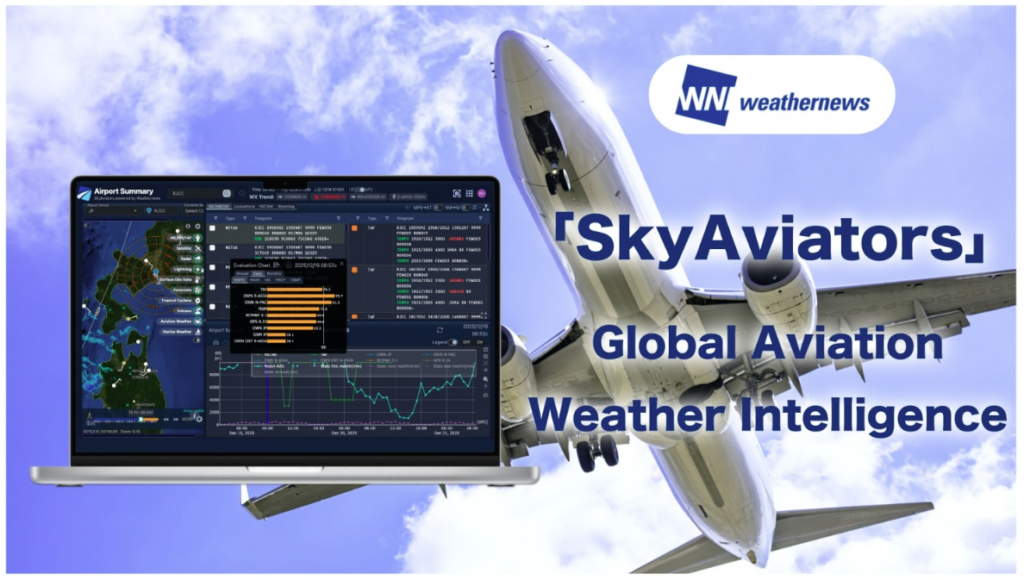
Built on 40 years of aviation meteorology expertise, SkyAviators supports flight operations teams in monitoring weather risk and making confident operational decisions.
Smarter Risk Detection, Not Just Data Coverage
SkyAviators doesn’t just display weather information. The platform automatically analyzes real-time conditions at 3,500+ key airports, extracting and prioritizing risks based on wind speed, visibility, and ceiling thresholds. Critical risks are highlighted instantly, so your team can focus on what matters most.
See Which Forecasts You Can Trust
Conflicting TAFs and model outputs? SkyAviators visualizes forecast accuracy at each airport, giving you the evidence to make confident go/no-go decisions—based on data, not guesswork.
Whether you’re bridging experience gaps in your team or managing a growing network, SkyAviators delivers the clarity and speed modern aviation demands.
👉 Discover SkyAviators—and see the difference 40 years of expertise makes:
- Press Release: https://global.weathernews.com/news/18686/
- Product Introduction: https://wxtech.weathernews.com/en/products/sky/aviators/
DextraData Aviation Technologies is launching it’s new product Talora this year – their Next-Gen EFB Solution for Modern Flight Operations.
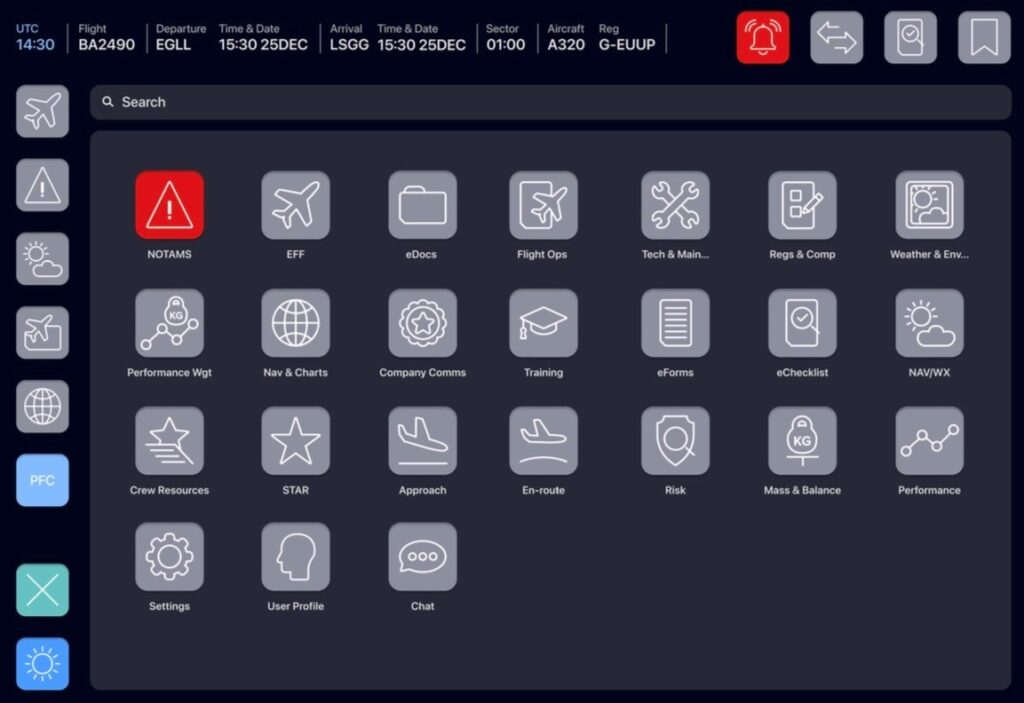
DextraData Aviation Technologies is launching it’s new product Talora this year – their Next-Gen EFB Solution for Modern Flight Operations.
Talora is designed to set a new standard for usability, integration, and operational clarity.
Talora has been developed as their next step in their EFB portfolio, building on years of operational experience and close collaboration with flight crews and operators.
Over the coming months, they will share more details about Talora, including capabilities, transition options, and future developments.
Trax expands Air Atlanta Icelandic relationship with eMobility suite and cloud hosting
Miami– Trax, the preeminent aviation maintenance enterprise resource planning system and provider of integrated role-based mobile apps, signed a multi-year contract expansion with Air Atlanta Icelandic. A Trax customer for more than 25 years, Air Atlanta Icelandic upgraded to Trax’s eMRO platform in 2024. Today, it was announced that Air Atlanta Icelandic will add Trax’s eMobility and cloud hosting solutions to further streamline maintenance, improve efficiency, and enhance compliance.

Air Atlanta Icelandic’s deployment of additional Trax solutions will empower mechanics to manage defects digitally, enable line controllers to coordinate aircraft turnaround more effectively, and transition the airline to electronic task card execution for maintenance workflows. Pilots will benefit from a fully electronic logbook while technical teams gain mobile access to manuals and documentation, reducing paper dependency and ensuring real-time accuracy. Hosting all applications in Trax’s cloud will provide Air Atlanta Icelandic greater scalability, security, and reliability while reducing the airline’s infrastructure overhead.
“Trax has supported Air Atlanta Icelandic for decades and is excited to be at the center of their strategic transformation,” said Omar Santos, Trax’s Vice President of Global Services and Support. “Their deployment of eMobility and cloud hosting is a prime example of how an expanded suite of Trax solutions can enable customers to further boost productivity, enhance safety, and deliver a more agile operational model.”
“eMobility enables our maintenance and operations teams to work more efficiently, with real-time access to data wherever it’s needed,” said Gnupur Halldorsson, Air Atlanta’s Director of IT. “Combined with Trax’s cloud hosting, this gives us a future-proof platform that supports both day-to-day operations and long-term innovation.”
About Trax
For over 25 years, Trax has powered the digital transformation of airlines, MROs, and cargo operators worldwide. A pioneer in aviation maintenance software and a wholly owned subsidiary of AAR CORP. (NYSE: AIR), Trax’s scalable, innovative suite adds agility and drives efficiencies by automating and modernizing maintenance operations. For more information, visit https://trax.aero/.
About Air Atlanta Icelandic
Air Atlanta Icelandic was established in 1986, initially operating Boeing 707s for charter projects. Today, the Air Atlanta brand comprises two sister airlines: Air Atlanta Icelandic, headquartered in Iceland, and Air Atlanta Europe, founded in 2021 in Malta.
Porter Airlines modernises maintenance operations with AMOS
A process-driven digital transformation for scalable growth
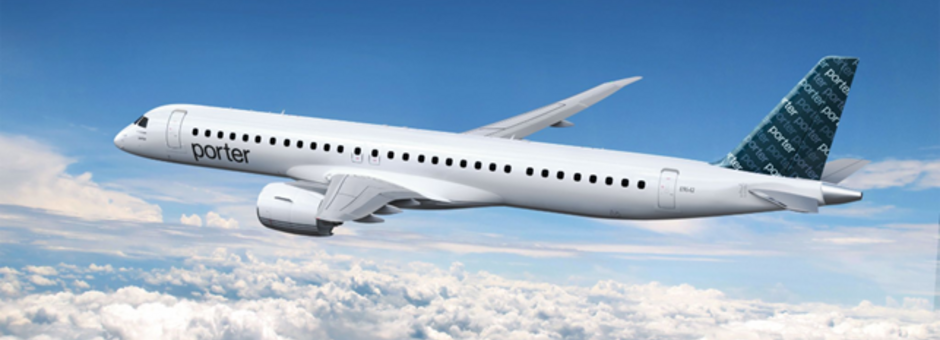
Porter Airlines is one of the fastest-growing airlines in North America. With a mixed fleet of over 70 Dash 8-400 turboprops and Embraer E195-E2 jets, high operational reliability is business-critical. To support its growth strategy and passenger-first service promise, Porter set out to modernize its maintenance and engineering operations with a fully integrated digital solution.
At the core of this transformation is AMOS, Swiss-AS’ maintenance and engineering solution, combined with mobile applications and selected Ecosystem components.
One integrated platform for end-to-end maintenance
Porter chose AMOS in 2021 as the single backbone for its technical operations. The goal was clear. Replace fragmented tools and paper-based processes with a consistent, integrated platform that supports planning, execution, compliance, and continuous improvement.
Today, AMOSdesktop forms the foundation for maintenance control, engineering, planning, stores, and purchasing. AMOSmobile/EXEC and electronic signatures extend these processes to the line, giving mechanics and engineers real-time access to work packages, task cards, and electronic work instructions.
The consistent user interface across desktop and mobile applications reduced training effort and supported fast user adoption across teams.
Digital execution and real operational value
By digitizing maintenance execution, Porter Airlines achieved clear operational improvements across line maintenance and engineering.
Paper-based task tracking was replaced with digital work packages and mobile execution. Mechanics receive tasks electronically, update progress in real time, and provide immediate feedback to planning and engineering teams. This improves coordination and reduces delays caused by manual handovers.
Real-time visibility into task status, open defects, and resource usage enables faster reactions during turnarounds and operational disruptions. Workloads can be balanced more effectively, while technical issues are identified earlier.
Aircraft turnaround times were reduced through better task prioritization and more efficient resource use. At the same time, data quality and consistency improved, as information is captured directly at source.
Electronic records and signatures create a reliable audit trail. Compliance is embedded into daily operations, simplifying audits and reducing administrative effort using the Flydocs DRM solution fully integrated with AMOS.
“The implementation and continuous process improvements of AMOS and the additional digital Tech Ops ecosystem allows us quickly identify and reduce risks to aircraft safety and operations. As we continue to work with Swiss-AS to implement new features of AMOS we are seeing clearer data related to reliability, finance, inventory, people power and resource requirements” says David McMurtrie, Manager Technical Operations, Training and Systems Support at Porter Airlines.
A structured path to transformation
Porter’s journey was deliberately process-driven. Existing workflows were analysed, optimized, and then mapped into AMOS. The rollout followed an iterative approach. Pilot phases were used to gather feedback, refine processes, and scale step by step.
A key success factor was the establishment of an internal AMOS Competence Center. This ensures sustainable system ownership, continuous improvement, and close alignment between business needs and system evolution.
Preparing for the next phase
Building on its current AMOS setup, Porter Airlines is further expanding its digital maintenance landscape to support efficiency, visibility, and compliance.
With AMOSeTL, the Electronic Technical Logbook integrated with AMOS, paper-based processes are replaced by digital defect recording and aircraft release. Information flows directly into AMOS, reducing handovers, minimizing errors, and ensuring a complete audit trail.
In parallel, AMOS Line Maintenance Manager (LMM) introduces advanced planning and optimization. Automatic task assignment and real-time workload visibility support faster turnarounds and quicker decisions during operational disruptions.
The AMOS component shop modules provide structured oversight of internal and external components, including work packages, resource requirements, and controlled recertification processes, strengthening planning reliability and compliance.
As part of the Digital Tech Ops Ecosystem, the planned integration of flydocs’ Lifecycle Asset Management (LAM) further enhances document control and audit readiness by ensuring approved technical documentation is available directly within operational workflows and fleet management capabilities, thereby gaining real-time visibility of Porter Airlines’ assets to meet lease return conditions.
Ready for growth
By investing in an integrated digital maintenance platform, Porter Airlines created a scalable foundation for future growth. The combination of optimized processes, mobile execution, and end-to-end visibility enables the airline to expand its fleet and network while maintaining industry-leading reliability and compliance.
For Porter, digital transformation is not an IT project. It is a continuous journey focused on operational excellence, supported by strong partnership and a clear focus on value.
About Porter Airlines
Porter Airlines is a Canadian airline headquartered at Billy Bishop Toronto City Airport in Toronto.
It is the third largest airline in Canada, Porter operates regularly scheduled flights from its bases in Eastern Canada, primarily Ottawa, Toronto–Billy Bishop and Toronto–Pearson airports, to destinations across Canada, the United States, Mexico, Costa Rica and the Caribbean using a fleet of De Havilland Canada DHC-8-400 turboprop and Embraer 195-E2 jet aircraft.
Porter’s operation at Toronto City Airport, located on an island near downtown was launched in 2006.
Porter continues to expand, adding more destinations and planes.
About Swiss AviationSoftware and AMOS
Swiss-AS, part of the Lufthansa Technik Digital Tech Ops Ecosystem, is a leading provider of aviation maintenance management software, which offers an end-to-end integrated, highly intelligent software suite designed to manage the entire spectrum of maintenance activities.
AMOS, in combination with its mobile package, empowers its large and loyal aviation customer base – ranging from pure operators of all sizes, major low-cost, regional and flag carriers, to large airline groups to MRO providers – to digitalize and automate their maintenance processes.